Pet Care Tips
Creating a consistent axolotl night routine is one of the best things you can do to keep your new pet calm, healthy, and stress-free.
Axolotls are naturally more active after dark, so the way you prepare their tank in the evening plays a big role in how well they rest and explore overnight.
This guide breaks down everything new owners need to know, from lighting and water conditions to feeding timing and simple nightly check-ins.
With the right routine, you’ll help your axolotl feel safe and supported while also catching small issues before they become big problems.
Think of this as your easy, beginner-friendly roadmap to creating the perfect nighttime setup for your little underwater companion.
Nighttime is when your axolotl naturally becomes more active, and understanding these habits is a huge part of good axolotl care.
Learning how they behave after dark helps you create a routine that supports their comfort and overall health.
Axolotls often come alive once the tank gets darker. You’ll notice more exploring, gentle swimming, and hunting-style movements.
This instinct goes back to staying safer in low light, making nighttime their most natural and energetic period.
Compared to many amphibian pets, axolotls are especially sensitive to bright light.
They relax and behave more naturally in dim or fully dark surroundings. Keeping the lighting soft at night reduces stress and helps them settle comfortably.
Axolotls tend to eat better in the evening when they’re more alert.
Their calm, deliberate feeding style fits nighttime conditions perfectly, giving you a better chance to monitor eating habits and make sure they’re staying healthy.
A calm, well-prepared tank helps your axolotl settle into a healthy exotic pet routine. These simple nighttime setup steps make their environment safer, quieter, and more comfortable.
Keep the water cool and consistent overnight. Stable temperatures prevent stress, support healthy sleep patterns, and help your axolotl stay comfortable through natural nighttime activity.
Dim lighting or no lighting at all creates a soothing environment. Soft light reduces eye stress and keeps the tank closer to what axolotls experience in nature.
Axolotls, especially for beginner exotic pets, need secure hides. Caves, plants, or tunnels give them safe spaces to rest, explore, and feel protected throughout the night.
Avoid moving the tank or creating loud sounds nearby. Axolotls sense vibrations easily, and a quiet space keeps them relaxed during their most active hours.
A smooth, steady filter flow prevents harsh currents. Gentle filtration supports clean water without disturbing your axolotl’s natural movement or nighttime exploring habits.
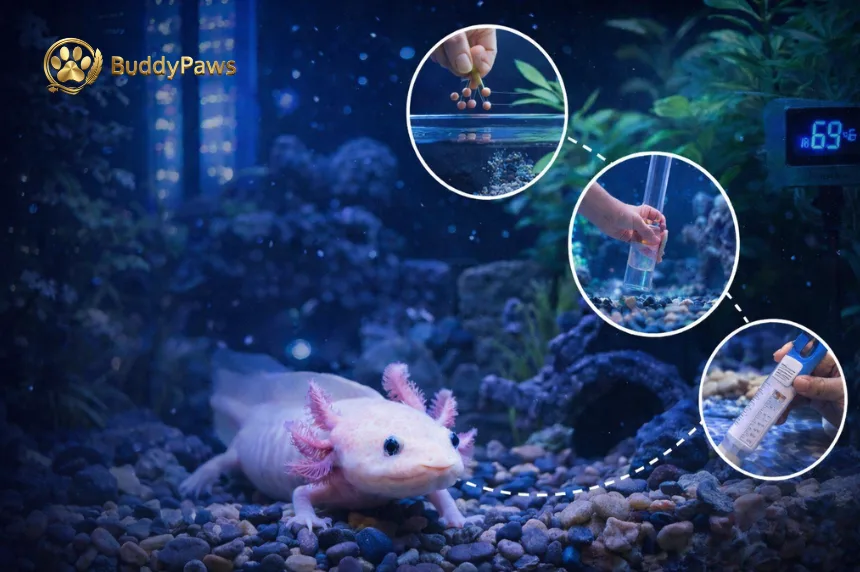
A consistent nighttime routine helps your axolotl feel secure and keeps their health on track. This simple process works for new owners and pairs perfectly with any axolotl feeding guide you’re already following.
Lower the tank’s light gradually to avoid sudden changes that might stress your axolotl. A slow shift into low light signals that it’s time for calmer movement and natural nighttime activity.
Before settling in for the night, confirm that the water temperature and basic levels look right. Stable conditions prevent stress, improve sleep quality, and support healthy behavior as the tank moves into nighttime mode.
Make sure hides are steady, plants are in place, and nothing blocks your axolotl’s usual paths. A quick check keeps the tank setup safe and helps them explore comfortably through the night.
Evening is the perfect time for a relaxed meal. Feed slowly, let your axolotl take its time, and remove leftovers to keep the water clean. This builds trust and supports healthier eating habits.
Use a small siphon or net to remove visible waste. A quick cleanup prevents ammonia spikes overnight and makes the tank feel fresh and safe for your axolotl.
A simple app for pet lovers helps you log feeding times, activity patterns, and small changes. Tracking habits makes it easier to catch early health signs and refine your night routine.
Axolotls are sensitive to vibrations, so keep the room calm. Avoid closing doors loudly or placing items on the stand. A quiet space helps them relax and stay stress-free overnight.
Look for calm breathing, normal posture, and steady gill movement. This last glance helps you catch small concerns before bedtime and ensures your axolotl is comfortable for the night.
Even with a solid axolotl night routine, small problems can still pop up after dark. Knowing what to watch for helps you respond quickly, keep your axolotl calm, and prevent minor issues from growing into bigger ones.
Some axolotls become overly active at night, darting around the tank. This often happens when something in their environment feels off, such as loud noise, bright lighting, or unexpected vibrations.
Dim the lights, reduce noise, and double-check that the tank area is calm. If restlessness continues, recheck water parameters for hidden stress triggers.
Floating can look alarming, but it’s usually linked to gas buildup, mild constipation, or slight water fluctuations. Nighttime makes it more noticeable because the tank is quieter and easier to observe.
Test the water, lower stressors, and skip feeding for 24 hours. If floating persists, consider offering smaller meals moving forward.
Some axolotls eat less at night when stressed or placed in a new setup. Proper axolotl care means understanding that appetite changes often signal discomfort in the tank or water quality issues.
Check temperature, ammonia, and nitrites. If everything looks normal, offer softer, smaller food pieces and reduce distractions during feeding.
While hiding is normal, staying tucked away all night may signal stress or poor tank conditions. Excessive hiding can also happen when lighting is too bright or flow is too strong.
Add or adjust hiding spots, soften the lighting, and make sure the filter flow is gentle. Keep the room quiet to encourage natural movement.
If your axolotl suddenly behaves differently every night, restless one day, sluggish the next—it may be reacting to environmental changes you haven’t noticed. Tracking helps reveal patterns sooner.
Use a simple pet lovers app to log activity, feeding, and tank conditions. Consistent tracking makes it easier to catch small issues early and adjust your nighttime routine.
Keeping your axolotl calm overnight is all about creating a stable, low-stress environment.
With the help of a pet community app, you can track habits, improve routines, and make sure your axolotl rests comfortably every night.
Keep lighting low and steady to reduce stress and support natural nocturnal activity.
Maintain cool, stable water so nighttime temperature shifts don’t disrupt comfort or behavior.
Offer a gentle filter flow that keeps water clean without creating harsh movement.
Provide secure hiding spaces where your axolotl can rest, explore, or retreat as needed.
Log nighttime behavior to catch early signs of stress and improve care over time.
A healthy axolotl night routine gives your pet the comfort and consistency it needs to thrive. When you create a calm, stable environment every evening, your axolotl learns what to expect and feels safer exploring, resting, and eating at its own pace.
Small steps like dim lighting, gentle filtration, clean water, and simple nightly check-ins can make a huge difference in your axolotl’s long-term health.
The more you observe their habits, the easier it becomes to adjust your routine and catch early signs of stress.
With the right approach, nighttime becomes one of the best opportunities to bond, monitor behavior, and support your axolotl’s natural rhythm.
A little effort each evening leads to a happier, healthier pet.
Loading blogs...