

Download Now


Share with your community!
Pet Community
Dogs constantly surprise us with their intelligence, emotional awareness, and ability to understand the world around them.
From recognizing their owners' voices to responding to facial expressions, dogs demonstrate impressive cognitive abilities every day.
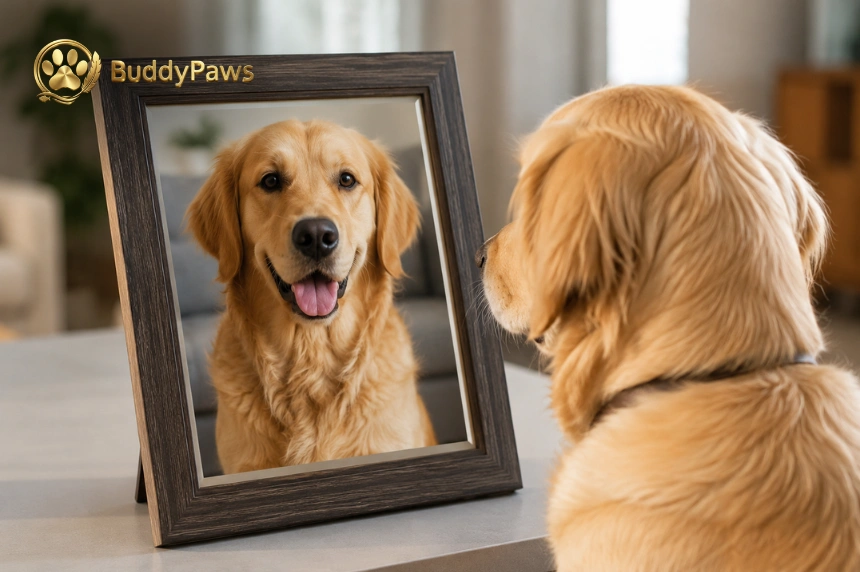
But one fascinating question continues to intrigue pet owners and researchers alike: can dogs recognize themselves in photos?
While humans can usually identify their own image instantly, scientists have long wondered whether dogs possess a similar level of self-awareness.
Understanding how dogs interpret photographs can provide valuable insights into canine cognition, perception, and memory.
In this article, we'll explore what scientific studies have discovered about dogs and self-recognition, how they process visual information, and what these findings reveal about the remarkable minds of our four-legged companions.
Understanding how dogs interpret the world helps researchers better understand dog intelligence and cognition. While dogs rely heavily on scent, they also use visual information to recognize people, objects, and familiar environments.
Dogs do not view photographs exactly as humans do. Their vision is optimized for detecting movement and contrast, meaning they may focus on different visual details when looking at pictures or screens.
Research suggests that dogs can recognize familiar human and canine faces in images. When shown photographs of owners or known dogs, many dogs display increased interest and attention toward those pictures.
Although dogs can interpret visual cues, scent remains their primary source of information. Photographs lack the smells that dogs rely on, which may limit how much meaning they attach to static images.
Researchers have spent years investigating dog self-awareness and whether dogs can identify themselves in mirrors, photos, or other visual representations. Scientific findings suggest dogs possess unique forms of self-recognition, though they may differ significantly from human self-awareness.
Unlike humans, dolphins, and some primates, most dogs do not pass the classic mirror self-recognition test. This suggests they may not rely on visual cues as their primary method of identifying themselves.
Many scientists believe dogs understand their identity through smell rather than sight. Studies indicate dogs can recognize their own scent, highlighting a different form of self-awareness than visual self-recognition.
Researchers and pet enthusiasts increasingly share observations of canine behavior through a pet community app, helping to gather insights into how dogs respond to photos, videos, and other visual stimuli in everyday environments.
Several studies suggest dogs can identify familiar people and other dogs in photographs. However, recognizing a familiar face is different from understanding that an image represents itself.
Dogs respond differently to photographs depending on factors such as familiarity, movement, and environmental context. Static images may provide fewer cues than real-life interactions, making recognition more challenging.
Research into canine self-recognition remains ongoing. As new technologies and behavioral studies emerge, scientists hope to better understand how dogs perceive themselves and interpret the visual world around them.
Researchers studying canine cognition continue exploring whether dogs can identify familiar individuals and objects in photographs. While dogs primarily rely on scent, certain behaviors suggest they may recognize visual cues linked to people, pets, and environments.
Dogs often spend more time looking at photographs of their owners or familiar animals than at unfamiliar subjects. This heightened attention may indicate recognition based on facial features, body shape, or previous visual experiences.
Some dogs display tail wagging, alert body language, or increased excitement when shown pictures of their owners. These responses suggest they may associate familiar faces with positive memories and experiences.
When presented with a photograph of their owner, certain dogs repeatedly glance between the image and the real person. This behavior may indicate an attempt to connect the visual representation with reality.
Many stories discussed within the pet lovers community describe dogs reacting differently to familiar photographs than unfamiliar ones, supporting the idea that some dogs can identify known faces through visual cues.
Dogs sometimes show interest in photographs featuring favorite toys, beds, or commonly used items. Familiar objects may trigger memories and associations that make certain images more meaningful than others.
Research suggests dogs often react more noticeably to videos than still photographs. Movement provides additional visual information, making it easier for dogs to recognize familiar individuals, animals, or everyday situations.
Research into canine cognition continues to reveal fascinating insights about how dogs think and interact with the world. Questions such as can dogs really sense bad people what science and dog behavior reveal highlight growing interest in understanding canine awareness.
Studies suggest dogs can identify familiar faces, voices, and routines. Their ability to remember important individuals demonstrates advanced cognitive skills that help strengthen social bonds and improve daily interactions with humans.
Dogs constantly gather information from their environment. By observing behavior patterns and outcomes, they develop associations that influence future decisions, showing an impressive capacity for learning and adaptation.
Research indicates that dogs can interpret human emotions through facial expressions, body language, and tone of voice. This sensitivity helps them respond appropriately to different social situations and emotional states.
While dogs may not recognize themselves in photographs the same way humans do, scientists believe they possess unique forms of self-awareness based on scent, memory, and environmental interactions.
Many dogs demonstrate creative problem-solving skills when faced with challenges. Their ability to adapt, learn new behaviors, and respond to changing situations reflects a sophisticated level of intelligence.
As canine cognition studies continue to evolve, platforms like BuddyPaws help pet owners share experiences, discuss behavior insights, and learn more about the remarkable intelligence and awareness of their dogs.
The question of whether dogs can recognize themselves in photos continues to spark curiosity among scientists and pet owners alike.
While current research suggests that dogs may not interpret photographs the same way humans do, these studies reveal just how complex and fascinating canine cognition can be.
Dogs rely heavily on scent, memory, and social cues to understand their surroundings, which means self-recognition may exist in forms different from visual identification.
Research into canine intelligence has shown that dogs can recognize familiar faces, understand emotions, solve problems, and adapt to changing situations.
These abilities highlight a level of awareness that continues to impress researchers.
As scientific discoveries advance, our understanding of dogs grows deeper, helping us appreciate their unique perspectives and strengthen the bond we share with these remarkable companions every day.
Loading blogs...