
Download Now


Share with your community!
Pet Community
Pets often display fascinating behaviours that leave owners wondering how they perceive the world around them.
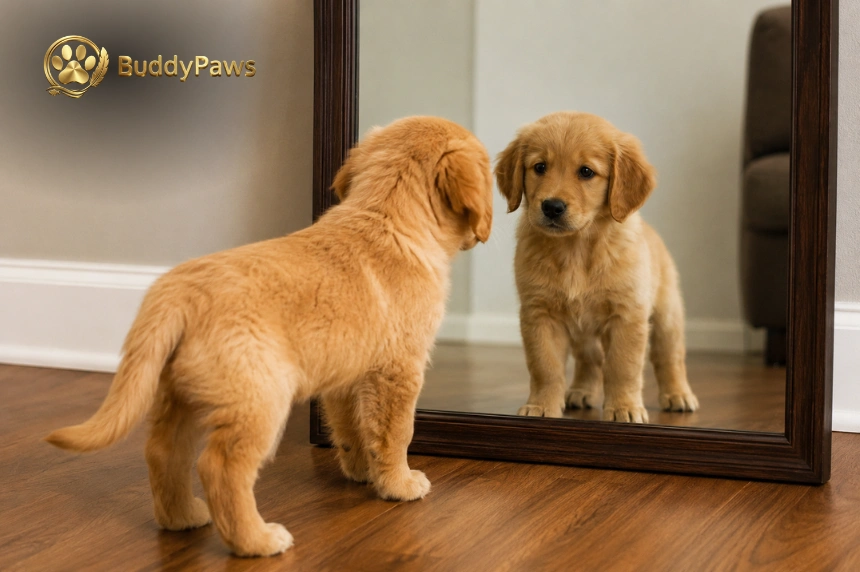
Many pet parents notice their dogs or cats reacting strangely when they see their reflection for the first time.
Some animals bark, stare, ignore the image, or even attempt to interact with it in unexpected ways. These reactions naturally raise questions about awareness, intelligence, and how animals understand their surroundings.
If you have ever wondered whether pets recognise themselves in a mirror, scientific research provides interesting insights into this behaviour.
Understanding mirror reactions can help explain how pets process visual information, use their senses, and interact with their environment in ways that may differ greatly from human perception and understanding.
Dog mirror test discussions often make pet owners curious about whether animals understand their own reflections and self-awareness.
Mirror recognition in pets involves sensory perception, behaviour patterns, and cognitive abilities that may differ from human understanding naturally.
Many pets initially respond to reflections as if another animal is standing nearby.
They may bark, stare, move closer, or display curiosity because they do not immediately understand what they are seeing.
Not all animals process visual information in the same way during mirror interactions.
Different species may demonstrate varying levels of self-awareness because cognitive abilities and sensory priorities can differ significantly.
Dogs and cats frequently rely on senses such as smell, sound, and environmental cues when understanding their surroundings.
Because of this, visual reflections alone may not always provide enough information for recognition naturally.
Cat mirror behaviour often creates curiosity among pet owners because animals can react differently when seeing reflections.
Scientific studies suggest that mirror recognition involves self-awareness, sensory processing, and cognitive abilities that vary across different animal species naturally.
Researchers commonly use mirror-based experiments to study self-recognition and awareness in animals.
These tests help scientists observe reactions and understand whether animals can identify reflections as representations of themselves rather than another animal.
Animal species process visual information differently because sensory priorities and cognitive abilities vary naturally.
Some animals may show curiosity toward reflections, while others display little interest or respond as if encountering another creature.
Many owners using a pet community app often share mirror-related behaviours and compare reactions among different pets.
Observing patterns across experiences can help people understand how animals respond differently to reflections and surroundings.
Communities and resources like BuddyPaws often discuss how repeated experiences may affect pet responses over time.
Familiar interactions and environmental exposure can sometimes influence how animals react when encountering reflections repeatedly.
Scientific research suggests that self-recognition involves more than visual identification alone during cognitive studies.
Animals that rely heavily on smell or hearing may process self-awareness differently compared with visually focused species.
Dogs frequently understand their environment using scent-based information rather than visual details alone.
Because smell plays a major role in communication, mirror reflections may provide limited information for recognition purposes naturally.
Cats may stare at mirrors, investigate movements, or briefly interact with reflections during encounters.
These reactions often reflect curiosity and environmental awareness rather than definite evidence of complete self-recognition abilities.
Scientific understanding of animal cognition and self-awareness continues to evolve through ongoing research efforts.
New findings may help explain how different species process information and understand themselves within their environments more effectively.
Pet intelligence influences how animals process surroundings, react to unfamiliar situations, and understand sensory information around them.
Dogs and cats often respond differently to mirrors because they rely on unique instincts, behaviours, and perception patterns during everyday interactions.
Dogs primarily use scent information to understand people, places, and surrounding environments during daily life.
Since mirrors provide visual reflections without scent cues, dogs may become confused or show limited interest over time naturally.
Cats are naturally observant animals and often react strongly to movement and visual changes around them.
Mirror reflections may attract their attention because moving images can trigger curiosity and encourage investigative behaviour during interactions.
Not every pet reacts to mirrors in the same way because personalities and experiences differ significantly.
Some pets may ignore reflections completely, while others display curiosity, excitement, or cautious behaviour during encounters naturally.
Many conversations on BuddyPaws and within a pet-lovers community discuss how experiences influence mirror behaviour in pets.
Daily interactions and environmental exposure can gradually affect how animals respond to unfamiliar reflections and surrounding situations.
Dogs and cats naturally prioritise different sensory inputs while understanding their environment.
These differences can influence behaviour and help explain why mirror experiences may create unique responses between different animal species effectively.
Pets exposed to mirrors frequently during early life may react differently from animals encountering reflections for the first time.
Familiarity and previous experiences can influence confidence levels and overall behavioural responses naturally.
Instincts often guide how animals investigate unfamiliar situations and surrounding objects.
Reactions to reflections may connect with inherited behavioural patterns that influence exploration and environmental awareness throughout daily activities consistently.
Noise, surrounding activity, and location can sometimes affect how pets react during mirror interactions.
Comfortable environments may encourage curiosity, while unfamiliar settings could create cautious or less interested behavioural responses naturally.
Many owners notice behaviours like 'the cat follows me everywhere' and wonder how pets understand people and surroundings so effectively.
Animals often rely on multiple senses beyond visual recognition to process information and interact with their environment naturally.
Pets often use scent as one of their strongest recognition tools during everyday interactions and experiences.
Familiar smells help them identify owners, environments, and objects while creating stronger emotional and social connections naturally.
Dogs and cats can detect sounds and small changes in their surroundings more effectively than humans.
Strong hearing abilities help pets recognise voices, movement, and environmental activity while improving awareness and communication patterns.
Physical interaction such as petting, grooming, and gentle contact can help pets feel secure and comfortable.
Touch-based experiences often strengthen emotional relationships while creating trust and positive responses during daily interactions consistently.
Many discussions on platforms like BuddyPaws explain how pets develop understanding through repeated experiences and interactions.
Daily routines and familiar situations help animals recognise patterns while improving emotional comfort and behavioural understanding naturally.
Communities such as BuddyPaws often discuss how pets observe and remember human actions over time. Familiar movements, routines, and behaviour patterns can help animals understand expectations and respond to situations effectively.
Pets regularly observe their surrounding environments and changes occurring during daily activities.
Recognising locations, sounds, and familiar objects helps them understand situations while supporting comfort and improving interaction with their surroundings naturally.
Pets can remember people, places, and repeated experiences through long-term memory processes. Familiar memories help animals identify important relationships while improving their ability to react and respond during future interactions effectively.
Pets usually depend on several senses together rather than relying only on visual information.
Combining smell, sound, touch, and environmental awareness helps them understand their surroundings while supporting stronger recognition abilities naturally.
Understanding how pets react to mirrors offers interesting insights into the way animals perceive themselves and the world around them.
While some animals may show curiosity or react to reflections, scientific studies suggest that many pets rely on more than visual recognition alone.
Dogs and cats often depend heavily on scent, sound, memory, and environmental cues to understand people, objects, and surroundings.
Because animals experience the world differently from humans, mirror recognition may not always be the best measure of intelligence or self-awareness.
Every pet has unique behaviours and responses shaped by personality, experiences, and sensory preferences.
Observing these reactions can help pet owners better understand their companions and appreciate how they communicate and process information.
Learning more about these behaviours can strengthen relationships and improve everyday interactions with pets.
Loading blogs...