
Download Now


Share with your community!
Pet Care
Understanding chinchilla dust bath science is essential if you want your chinchilla to maintain a clean, healthy coat.
Unlike many pets, chinchillas can’t get water trapped in their dense fur, which can lead to skin issues. Instead, they rely on fine volcanic dust to absorb oils, remove dirt, and keep their fur light, fluffy, and insulated.
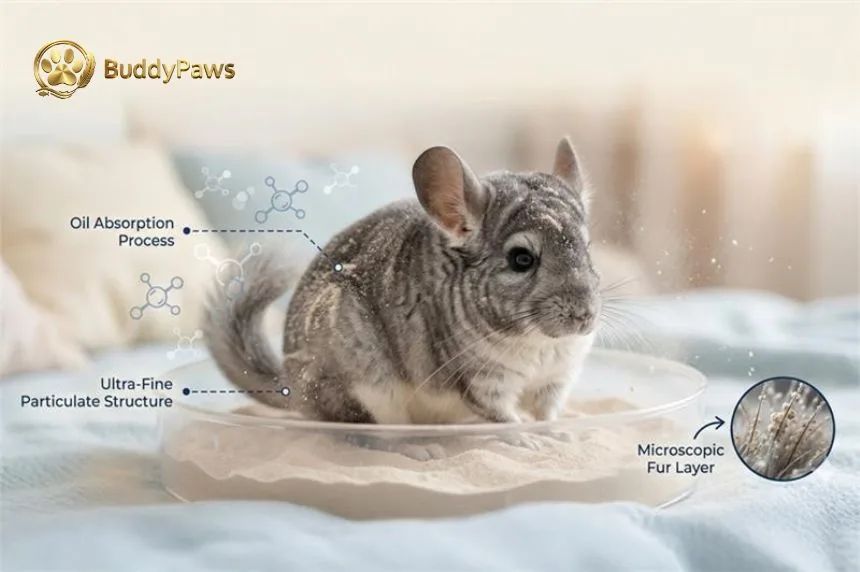
When a chinchilla rolls in dust, each tiny particle works down to the skin, lifting debris without stripping natural protection.
This natural cleansing process also helps regulate temperature and prevents matting.
By learning how dust baths work and why they matter, you’ll be better equipped to support your chinchilla’s long-term comfort, hygiene, and overall fur health.
A chinchilla dust bath works by using ultra-fine volcanic minerals to clean the fur without moisture.
When your chinchilla rolls and flips in the dust, each particle slips deep into its thick coat, absorbing oils, removing dirt, and preventing clumps from forming.
Their fur is so dense that water can cause matting or even fungal issues, so this dry-cleaning method is essential for safe chinchilla grooming.
The dust also helps regulate skin condition and keeps the coat soft, fluffy, and naturally insulated.
Regular dust baths mimic how wild chinchillas maintain hygiene, supporting both comfort and long-term fur health.
Dust absorption plays a major role in a chinchilla’s grooming routine, helping maintain a clean, healthy coat without water.
Understanding the science behind this process explains why proper dust baths are essential for long-term fur health.
Chinchilla dust is made of ultra-fine minerals designed to soak up natural oils that build on the skin and coat.
As your chinchilla rolls, the particles cling to oils and lift them away, leaving the fur clean and fresh.
Chinchillas have incredibly dense fur, and dust baths help loosen tightly packed strands.
When dust filters through their coat, it gently separates hairs, preventing matting and allowing airflow that keeps the fur soft and fluffy.
The right dust supports healthy skin by preventing moisture buildup, which is important for overall temperature care.
A dry, well-aerated coat insulates better, helping chinchillas stay comfortable in their ideal cool-temperature environment.
As chinchillas flip and twist, dust particles push out trapped debris, including small dirt pieces and loose fur.
This natural cleansing process reduces irritation and keeps the coat in its best condition without damaging the skin.
Tracking how often your chinchilla bathes using tools like a pet lovers app helps you notice changes early.
Reduced rolling or avoidance may signal stress, discomfort, or skin issues needing attention for proper fur health.
Avoiding common dust bath mistakes is essential for proper fur health bathing.
Small errors can easily disrupt your chinchilla’s coat quality, so understanding what to skip helps maintain healthy, clean, and well-insulated fur.
Coarse or low-grade dust doesn’t absorb oils properly and can irritate your chinchilla’s skin.
Always choose fine, high-quality volcanic dust to protect the coat, prevent matting, and support natural grooming behavior.
Overbathing strips essential oils, while infrequent baths cause buildup and dull fur.
Most chinchillas do best with dust baths two to four times weekly, depending on humidity, activity levels, and overall coat condition.
Dull fur, scratching, or reduced rolling may signal a problem.
Tracking your chinchilla’s habits through an app for pet lovers can help you identify changes early and adjust the bath schedule or environment accordingly.
A cramped container restricts natural rolling and flipping, preventing even dust coverage.
Choose a spacious box with high sides so your chinchilla can move freely without scattering dust everywhere.
Not all dusts are safe. Avoid mixing sand, scented powders, or unfamiliar dust types, as they can clog fur or irritate skin.
Stick to trusted chinchilla-specific volcanic dust for the safest and healthiest results.
Building a safe, effective dust bath routine starts with understanding chinchilla dust bath science.
The right setup, timing, and environment help protect your chinchilla’s coat while supporting long-term comfort and overall fur health.
The dust you choose matters. Premium volcanic dust absorbs oils efficiently and reaches deep into the coat.
Cheaper alternatives often lack the fine texture needed to clean dense fur safely without irritating the skin or causing respiratory discomfort.
Most chinchillas benefit from dust baths two to four times a week.
This routine prevents oil buildup without over-drying the coat, helping maintain natural softness and keeping their fur clean, balanced, and properly conditioned.
A roomy dust bath container allows natural rolling, flipping, and twisting key parts of chinchilla grooming.
High sides help contain dust while giving your pet space to move freely for even distribution throughout the coat.
Old dust can trap oils, droppings, and moisture, making baths less effective.
Refreshing the dust often ensures proper cleansing and protects your chinchilla from skin irritation, dull fur, and unnecessary exposure to bacteria.
Tracking your chinchilla’s rolling frequency, timing, and enthusiasm through a pet community app helps you notice changes early.
Shifts in behavior can signal stress, discomfort, or health issues that may require adjusting the dust bath routine.
Understanding chinchilla dust bath science gives you the insight you need to keep your pet’s coat healthy, soft, and properly maintained.
Chinchillas rely on these baths not just for cleanliness, but for comfort, temperature balance, and overall well-being.
When you choose quality dust, provide the right setup, and follow a consistent routine, you help protect their incredibly dense fur from moisture, matting, and skin irritation.
Paying attention to their habits also allows you to catch early signs of stress or discomfort before they turn into bigger issues.
With the right approach, dust baths become a simple, effective way to support your chinchilla’s grooming needs and maintain a clean, thriving, happy companion.
Loading blogs...