

Download Now


Share with your community!
Pet Community
Cats are often seen as mysterious and independent, leading many people to wonder whether their affection is genuine.
But do cats love their owners, or are they simply responding to food and routine? Scientific studies and behavioural research suggest that cats form meaningful emotional bonds with the people they trust.
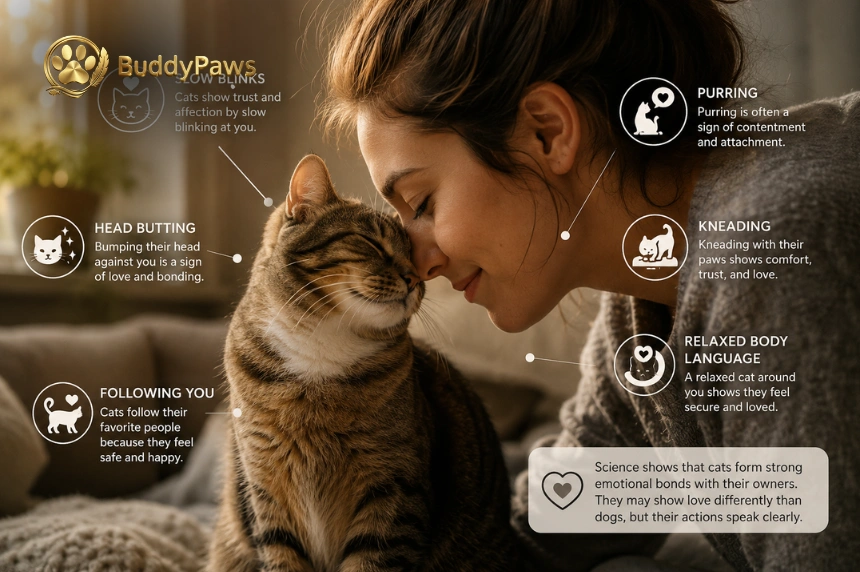
They show attachment through subtle behaviours such as purring, head-butting, slow blinking, and choosing to stay close.
Unlike dogs, cats express affection in quieter and more nuanced ways. Understanding these signals can help owners appreciate the depth of their relationship with their feline companions.
In this article, we will explore what science reveals about feline attachment, the common behaviours that indicate love, and practical ways to strengthen the bond between cats and their owners over time.
Understanding cat emotions helps explain how felines build strong relationships with the people they trust.
Although cats express affection differently from dogs, research shows they form meaningful and lasting emotional bonds with their owners.
Studies suggest cats develop attachment patterns similar to human infants. When they feel safe and cared for, they use their owners as a source of comfort, security, and reassurance in unfamiliar situations.
Feeding, grooming, playtime, and gentle interaction create predictable routines that strengthen trust. Over time, cats associate their owners with safety, comfort, and enjoyable experiences.
Cats identify their owners through familiar voices, scents, and movement patterns. This recognition supports social bonding and helps cats feel more relaxed and connected within their home environment.
Scientific studies exploring feline behaviour and signs your cat loves you reveal that cats form genuine emotional attachments.
Research shows that trust, familiarity, and positive interactions shape affectionate bonds between cats and their human companions over time.
Research from animal behaviour scientists shows that many cats develop secure attachments to their owners.
When placed in unfamiliar environments, bonded cats seek comfort and reassurance from trusted humans, demonstrating emotional connections similar to attachment patterns observed in infants and some companion animals.
Using a pet community app allows owners to monitor routines, mood changes, and affectionate behaviours.
Shared observations and expert advice help people better understand attachment patterns and identify signs that indicate trust, comfort, and positive emotional development in their cats over time.
Studies suggest purring is often associated with relaxation, contentment, and social connection.
Cats commonly purr when resting near their owners, reinforcing the idea that this vocalisation can reflect comfort and affectionate attachment rather than merely a request for food.
Behavioural research indicates that slow blinking functions as a non-threatening social signal.
Cats are more likely to slow-blink at humans they trust, and owners who return the gesture often experience stronger and more positive interactions with their pets.
When cats rub their faces against people, they deposit pheromones from their facial glands.
Scientists believe this scent-marking behaviour helps create familiarity and social cohesion, signalling that the owner is considered a trusted part of the cat’s environment and social group.
Research shows that predictable feeding, play, and gentle handling strengthen feline attachment.
Cats that experience stable routines and respectful interactions are more likely to seek proximity, initiate contact, and display affectionate behaviours toward their owners regularly.
The strength of the cat-owner bond becomes clear through subtle behaviours that reveal trust and affection.
Cats may seem reserved, but their daily actions often show deep attachment, comfort, and emotional connection with the people they love.
When cats slowly blink while looking at you, they are signalling trust and contentment.
This gentle expression is often described as a feline kiss and indicates that your cat feels safe, calm, and emotionally connected in your presence and values your companionship deeply.
Cats that shadow their owners are seeking proximity and reassurance.
Using an app for pet lovers to track routines and behaviour patterns can help owners better understand how companionship and consistency strengthen emotional attachment and make cats feel more secure throughout the day.
When cats rub their heads and cheeks against you, they deposit scent markers that identify you as part of their trusted social group.
This affectionate behaviour strengthens familiarity, reinforces territory sharing, and reflects a strong emotional bond built on safety and recognition.
Offering toys, prey, or other objects is one of the more endearing feline gestures.
Understanding common cat behaviour problems and how to fix them helps owners distinguish between instinctive hunting behaviour and genuine attempts to share and interact with trusted companions.
Cats are most vulnerable when resting, so choosing to sleep beside or on their owners demonstrates significant trust.
This behaviour shows that your cat feels protected, comfortable, and emotionally secure in your presence and enjoys close physical companionship.
Apps such as BuddyPaws help owners record purring patterns, sleep habits, and behavioural changes.
When cats purr while being petted or cuddled, they are often expressing relaxation, affection, and a strong sense of emotional well-being with their favourite humans.
Cats may express affection more subtly than many other pets, but scientific research and everyday behaviour clearly show that they form meaningful emotional bonds with their owners.
From slow blinking and head-butting to following you around the house and sleeping nearby, these behaviours reflect trust, comfort, and genuine attachment.
Understanding cat emotions helps owners recognise that love is often communicated through quiet, consistent actions rather than dramatic displays.
Daily routines such as feeding, playtime, and gentle interaction strengthen this connection over time.
By paying attention to behavioural cues and responding with patience and care, owners can build deeper relationships with their feline companions.
Whether your cat purrs in your lap or simply chooses to stay close, these signs reveal a lasting bond based on security, familiarity, and affection.
Loading blogs...