
Download Now


Share with your community!
Pet Community
You pick up your keys.
Your dog watches.
You put on your shoes.
They follow you toward the door.
Then comes the look.
For many dog owners, leaving the house brings one question to mind.
Do dogs miss their owners when they are away?
The short answer is yes. Dogs can form strong attachment bonds with the humans who care for them, and research shows that they can behave differently during separation and reunion. Adult dogs have demonstrated attachment behaviours toward their owners, including seeking proximity and using familiar humans as a source of security.
But dogs probably do not experience missing someone in exactly the same way humans do.
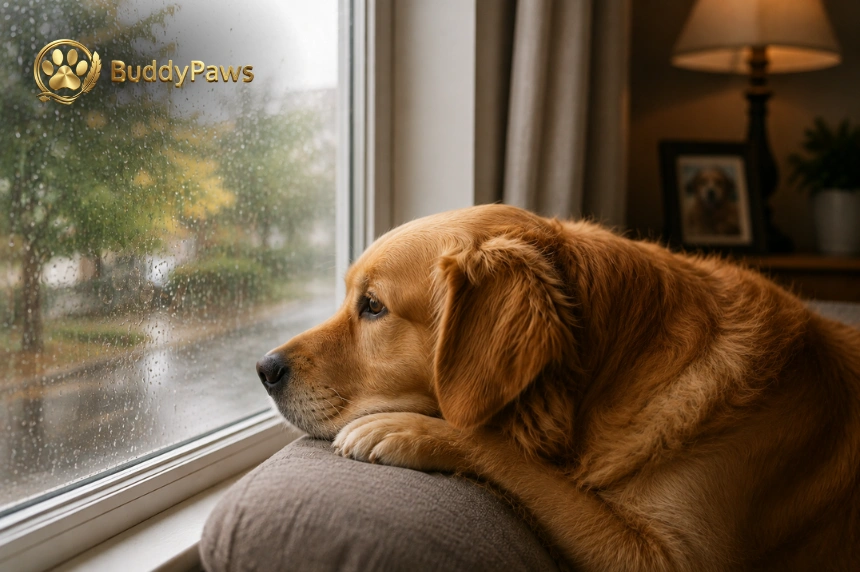
Your dog may not sit by the window thinking, "They have been gone for three hours."
Instead, they notice that a familiar person is absent.
Their routine changes.
Your scent remains around the house.
The sounds associated with you disappear.
Then when you return, everything familiar comes back at once.
For some dogs, that means a wagging tail and a toy in their mouth.
For others, it means racing toward the door as though you have been gone for months.
So what actually happens when your dog misses you?
Let us look at what science and everyday dog behaviour can tell us.
Dogs are social animals capable of developing strong relationships with specific people.
Research into dog and human attachment has repeatedly found behaviours that resemble attachment patterns seen in other social relationships. Dogs may seek proximity to their owners, become more confident exploring when their owner is present, and respond differently when reunited with their owner than when encountering an unfamiliar person.
That means when you leave, your absence matters.
Your dog notices that the person associated with food, walks, play, comfort, affection, and safety is no longer there.
This does not mean every dog becomes distressed whenever their owner leaves.
A securely attached dog may simply rest, play, eat, or sleep until you return.
But the fact that your dog remains calm does not mean they have forgotten you.
In many cases, it means they feel secure enough to cope with your absence.
If you have ever wondered how deeply pets can remember people, you may also enjoy our guide on whether pets can remember people they have not seen for years. BuddyPaws has explored how familiar scents, voices, experiences, and emotional associations can contribute to long lasting recognition.
Dogs build their lives around patterns.
They notice surprisingly small details.
The sound of your alarm.
The time breakfast usually appears.
The drawer where the leash is kept.
The shoes you wear before going to work.
The sound of your car.
Even the sequence of actions you perform before leaving can become meaningful.
That is why some dogs appear to know you are leaving before you even touch the door.
BuddyPaws has a complete guide explaining why dogs get excited or react before their owners leave the house. Dogs are excellent at learning routines and connecting particular signals with what happens next.
To your dog, picking up your bag may mean much more than picking up a bag.
It may mean:
My person is about to leave.
When we ask, "Do dogs miss their owners?" it helps to understand what the owner represents to the dog.
You are probably far more than the person who fills the food bowl.
Dogs often become accustomed to simply having their owner nearby.
You may not even be interacting.
Perhaps you are working at a desk while your dog sleeps nearby.
Maybe you are watching television while they lie on the floor.
Those quiet moments still become part of your dog's normal environment.
When you leave, that familiar presence disappears.
Dogs experience the world heavily through scent.
Your clothing, furniture, bedding, and home carry familiar smells associated with you.
These familiar cues can remain even after you leave.
Dogs learn familiar voices and tones.
They know the difference between the excited voice used before a walk and the calm voice used while relaxing.
When you are gone, those familiar sounds disappear too.
Food.
Walks.
Play.
Bedtime.
Morning cuddles.
Even seemingly boring routines create predictability.
A consistent routine can help dogs feel more secure because they know what to expect.
If you want to build more stability into your dog's day, read our guide on how to build a daily routine that keeps your dog happy.
You are probably one of your dog's main sources of interaction.
Petting.
Talking.
Playing.
Walking.
Training.
Dogs quickly learn that their favourite person is also the source of many rewarding experiences.
When that person disappears, those experiences temporarily disappear too.
Dogs cannot tell us, "I missed you."
Instead, they communicate through behaviour.
Here are some of the most common signs that your dog may be particularly attached to you or excited by your return.
Some dogs spend time near the entrance their owner normally uses.
They may recognise the sound of your car, footsteps, keys, or the lift outside the apartment.
Waiting by the door can be part of anticipation.
It does not necessarily mean the dog has been miserable the entire time you were gone.
Tail wagging.
Jumping.
Running in circles.
Bringing toys.
Whining.
Following you immediately.
A dramatic reunion is probably the clearest behaviour owners associate with being missed.
Studies have found differences in dogs' responses when reunited with their owners compared with unfamiliar people, supporting the idea that their owners have special emotional significance.
You go to the kitchen.
They follow.
You walk into the bedroom.
They follow.
Bathroom?
They are waiting outside.
Some dogs seek extra proximity after a period of separation.
Following an owner can reflect attachment, curiosity, expectation, habit, or a desire for attention.
For more on attachment behaviours, see 8 signs your pet thinks you are part of their pack.
A dog greeting you with a toy may be inviting you to play, expressing excitement, or directing their emotional energy into carrying something familiar.
Either way, it usually means your return has become an important event.
Some dogs greet returning owners with enthusiastic licking.
Licking can have several meanings, including social interaction, attention seeking, learned behaviour, and affection.
BuddyPaws explains this behaviour in more detail in why dogs lick their owners.
Your dog may become unusually cuddly after you return.
Some dogs place their head on your lap.
Others lean against you or curl up beside you.
Physical proximity can be part of the attachment relationship between dogs and their caregivers.
Dogs often learn very specific sounds.
Your car pulling into the driveway.
Your footsteps.
The front gate.
The garage door.
Even particular keys.
A dog that suddenly becomes alert when hearing these sounds may have learned that they predict your return.
Some dogs may wander into your bedroom, office, or favourite chair when you are away.
This may reflect habit, scent seeking, or simply their normal routine.
Not every dog greets their owner with chaos.
Some show attachment in quieter ways.
They may settle down soon after you return.
They might lie beside you.
They may simply appear more comfortable.
Attachment research suggests that familiar caregivers can function as a source of security for dogs.
Some dogs begin pacing, whining, following closely, or becoming restless as soon as they notice departure signals.
This can happen because dogs learn that shoes, bags, keys, or certain routines predict your absence.
However, significant distress may be more than simply "missing you."
It can sometimes indicate a separation related problem.
This is one of the most interesting questions.
We cannot currently say that dogs measure time in the same abstract way humans do.
Your dog probably does not think:
My owner has been gone exactly four hours and twenty minutes.
But dogs can respond to routines, environmental changes, hunger, light, activity patterns, scent changes, and other cues associated with the passage of time.
They may therefore distinguish between different kinds of absences without understanding clocks the way humans do.
A ten minute trip outside and an entire workday do not necessarily feel identical to your dog.
What matters most is that dogs can recognise absence and reunion.
Probably, especially if you are one of your dog's primary attachment figures.
But "missing you" does not necessarily mean your dog spends the whole day feeling sad.
Many well adjusted adult dogs spend large parts of their time alone resting or sleeping.
They may notice when you leave, settle into their routine, and become excited again when you return.
The goal is not to prevent your dog from ever noticing your absence.
The goal is to help your dog feel safe and comfortable even when you are not physically present.
Dogs can certainly notice longer disruptions to familiar routines.
If you normally spend every day together and suddenly disappear for a week, your absence changes many familiar cues at once.
However, dogs can often cope well when they remain with trusted people in a familiar or comfortable environment.
When you return, your dog may show intense excitement.
That does not mean your vacation caused emotional harm.
It simply shows that you are important to them.
Dogs can retain recognition of familiar individuals after long separations, especially when strong associations with scent, voice, behaviour, and previous experiences are involved.
Research on dog attachment also demonstrates that owners hold a unique position compared with unfamiliar people.
This is why some reunion videos after long separations can be so emotional.
A familiar smell or voice may trigger recognition even when a great deal of time has passed.
You can explore this subject further in Can Pets Remember People They Have Not Seen for Years?.
Dogs cannot understand your plans in the same way another person can.
You cannot explain:
"I will be home at 6:15 tonight."
But repetition creates predictability.
You leave.
Time passes.
You return.
This pattern happens again and again.
Over time, a secure dog can learn that being alone does not mean being abandoned forever.
This is one reason predictable routines and gradual practice with alone time can be helpful.
This distinction is extremely important.
A dog can miss you and still cope perfectly well while alone.
Separation anxiety involves significant distress associated with being left alone or separated from an attachment figure.
Possible signs can include persistent barking or howling, pacing, destruction near exits, house soiling, excessive salivation, escape attempts, or other intense distress behaviours. Veterinary sources note that these behaviours often appear specifically during the owner's absence and can begin soon after departure.
A happy reunion does not mean your dog has separation anxiety.
Following you around does not automatically mean separation anxiety either.
Look at the complete pattern.
Consider seeking professional veterinary or behavioural guidance if your dog regularly:
These behaviours can have different causes, so proper assessment matters. Separation related behaviour is not always caused by simple overattachment, and researchers increasingly recognise that multiple emotional and behavioural factors may be involved.
If the behaviour is severe or suddenly appears, speak with your veterinarian rather than assuming your dog is simply being difficult.
You cannot be beside your dog every minute.
And you do not need to be.
Helping your dog become comfortable with normal periods of separation is part of building confidence.
Dogs often feel more secure when everyday life is reasonably predictable.
Regular meal times, walks, play, toilet breaks, and rest periods can provide structure.
Our daily routine for a happy dog offers a practical starting point for building this consistency.
Food puzzles, safe enrichment toys, sniffing activities, and other appropriate forms of enrichment can make alone time more engaging.
Choose items suitable for your individual dog's size, chewing style, and behaviour.
A walk or appropriate activity before you leave can help meet some of your dog's physical and mental needs.
Exercise does not treat genuine separation anxiety by itself, but a dog whose basic needs have been met may find it easier to settle.
For dogs that are still learning to be alone, shorter periods can help them become familiar with the experience.
The goal is to teach:
Being alone is safe.
My person leaves.
My person comes back.
Some dogs respond strongly to lengthy goodbye rituals.
Keeping normal departures calm and predictable may be more helpful than making them emotionally intense.
Some dogs prefer a bed.
Others choose a sofa, crate, quiet room, or familiar corner.
The best space depends on your dog's preferences and whether confinement itself causes stress.
Many owners leave a worn shirt, blanket, or familiar bedding near their dog's resting area.
Familiar scent may provide an environmental cue associated with the owner.
However, only leave objects your dog can safely access.
If your dog chews or eats fabric when stressed, do not leave clothing where it could become a hazard.
Not necessarily.
Another dog is not a guaranteed solution to loneliness or separation anxiety.
Some dogs love canine companionship.
Others prefer being the only dog.
And a dog experiencing distress specifically because one particular person has left may still become anxious even when another pet is present.
Adopting another animal should therefore be a decision based on your ability to care for another pet and compatibility between the animals, not simply an attempt to fix separation behaviour.
If you are curious about your dog's social needs, BuddyPaws also explains 7 signs your pet wants to socialize more.
They can.
Dogs may develop particularly strong relationships with the person who spends the most time interacting with them or who is strongly associated with positive experiences.
That might be the person who:
Feeds them
Walks them
Trains them
Plays with them
Comforts them
Sleeps nearby
Spends the most time at home
But relationships differ between individual dogs.
A dog can also have meaningful attachment relationships with several members of a household.
Research has found that dogs can form secure attachment relationships with multiple people within a family.
You leave for twenty minutes.
You return.
Your dog celebrates as though you have returned from a ten year expedition.
Sound familiar?
Dogs do not need a long separation to become excited about reunion.
Your arrival brings back several rewarding things simultaneously.
Your smell.
Your voice.
Interaction.
Potential walks.
Potential food.
Play.
Attention.
Affection.
The excitement is real.
But it does not necessarily tell us exactly how your dog experienced every minute while you were gone.
A strong bond between a dog and owner can be wonderful.
You want your dog to enjoy your presence.
You want them to trust you.
You want to be part of the place where they feel safe.
But healthy attachment also includes the ability to cope when you are temporarily unavailable.
Think of the goal as:
Connected when together. Comfortable when apart.
That balance supports both the dog and the owner.
Quality interaction matters more than constantly being together.
Spend time doing things your dog enjoys.
Take walks.
Play.
Train using positive methods.
Allow sniffing and exploration.
Offer affection when your dog enjoys it.
Learn their body language.
Respect when they want space.
Build consistent routines.
And allow them opportunities to relax independently.
Dogs develop trust through repeated experiences of safety and predictability.
BuddyPaws explores this relationship further in 8 signs your pet thinks you are part of their pack, which looks at everyday behaviours that can reflect familiarity and attachment.
Your dog cannot tell you exactly what happened emotionally while you were gone.
But their behaviour can tell you something simpler.
You matter.
Your presence is familiar.
Your routines matter.
Your attention matters.
Your return changes their environment.
For dogs that have formed strong relationships with their humans, reunion can be genuinely meaningful.
And perhaps that is the best answer to the question.
Do dogs miss their owners?
Yes, the evidence strongly supports the idea that dogs form attachment relationships with their caregivers and notice separation from them.
But missing someone does not always mean suffering.
Sometimes it simply means:
Life is better when you are here.
The next time you open the door and your dog rushes toward you, remember that the reunion is not just about dinner or a walk.
You are part of your dog's world.
The sound of your voice.
Your smell.
Your routines.
The place you sit.
The walks you take together.
The quiet evenings when nothing exciting happens at all.
Those ordinary moments build familiarity and attachment over time.
That is why your absence can matter.
And that is why coming home can mean so much.
At BuddyPaws, we believe the relationship between pets and their people deserves to be understood, celebrated, and shared.
Whether you want to tell your pet's story, meet other animal lovers, discover useful pet advice, or simply connect with people who understand why your dog waiting at the door means so much, the BuddyPaws community is built for those connections.
Your dog may miss you when you leave.
BuddyPaws helps you make the time you spend together even more meaningful.
Connect with other pet parents, share your dog's moments, discover animal stories, and become part of a community created for people who genuinely love animals.
Download BuddyPaws on Google Play: https://play.google.com/store/apps/details?id=com.buddyPaws
Download BuddyPaws on the App Store: https://apps.apple.com/ua/app/buddypaws/id6756308405
Because sometimes the happiest part of your dog's day is simply seeing you come home.
Loading blogs...