Pet Community
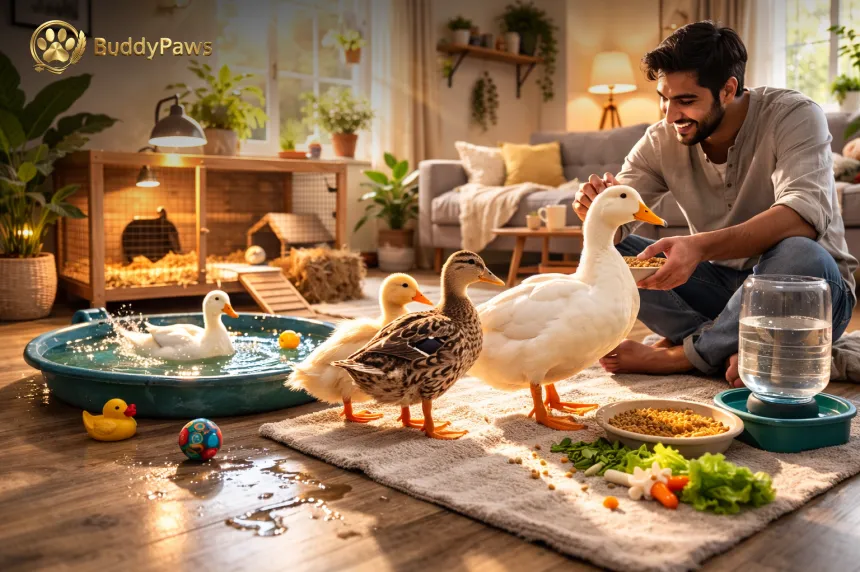
Keeping domestic ducks indoors is becoming more popular among pet parents who want a unique, affectionate, and entertaining companion.
Ducks can adapt surprisingly well to indoor life when their needs are understood and met consistently.
From proper flooring to hygiene routines, creating a safe and healthy environment is essential for long-term success.
In this guide, indoor care, including habitat design, feeding routines, and behaviour tips. Indoor ducks require planning, patience, and daily maintenance, but the payoff is for the household.
With the right setup and care habits, raising ducks indoors can be rewarding, manageable, and a fun addition to everyday home life.
Keeping ducks indoors can be fun and rewarding, but it also comes with responsibilities that new owners don’t expect. Understanding their behaviour, needs, and daily habits helps you decide if indoor duck life truly fits your home.
Indoor ducks require room to roam, explore, and stretch their wings. Their playful nature means they thrive in open areas, making cramped spaces stressful and unsuitable for long-term comfort.
Ducks splash, spill, and dabble constantly, so your indoor duck setup must stay waterproof and easy to clean. Flooring, barriers, and proper ventilation are essential for maintaining a sanitary home.
Indoor ducks produce frequent waste, and without consistentcleaning, odar and bacteria build up fast. A routine of wiping, changing pads, and refresghing waterkeeps both ducks and your home healthy.
Picking the right duck breed makes indoor care much easier. While ducks aren’t as small as pet birds, some breeds adapt far better to limited space, calmer routines, and household environments.
Call ducks are tiny, friendly, and easier to manage indoors. Their compact size, gentle behaviour, and low space needs make them one of the best choices for indoor duck enthusiasts.
Pekin ducks are affectionate and easygoing, but larger in size, with enough indoor room and soft flooring, they become loyal companions that enjoy family life and consistent human interaction.
Khaki campbells are active but adaptable. Their steady temperament and dependable behaviour patterns make them suitable for indoor owners who can provide daily enrichment and predictable schedules.
Rouens are calm, heavy-bodied ducks that enjoy relaxed environments. They do best indoors when given wide walking areas and soft bedding to support their sturdy build and gentle nature.
Checking real owner experiences on an app for pet lovers helps you understand breed specific needs. This makes choosing the right duck easier, especially if you’re new to indoor duck care.
Creating an indoor duck habitat requires planning, durability, and daily upkeep. Ducks are active, messy, and water-loving, so designing a space that’s easy to clean and comfortable ensures a healthier, happier pet.
Use rubber mats, vinyl flooring, or washable pads to prevent moisture buildup. These surfaces make duck hygiene easier by resisting spills, splashes, and daily messes that ducks naturally create.
Pine shavings, straw, or padded blankets give ducks a gentle surface for resting. Soft bedding protects their feet, absorbs moisture, and keeps the habitat cozy and slip-free.
Use spill-proof water containers or shallow trays placed over absorbent mats. Ducks must dabble, so controlled water access prevents flooding while supporting healthy, natural behavior indoors.
Exploring real setups shared in the BuddyPaws community helps you design safer layouts. Owners offer practical tips on barriers, bedding zones, and waterproof materials that work best indoors.
Add tunnels, soft toys, foraging mats, and small platforms. These keep ducks active, reduce boredom, and encourage natural behaviors like exploring, rooting, and gentle play inside their habitat.
Indoor ducks need a routine that keeps them healthy, hydrated, and clean. With the right foods, daily checks, and controlled water access, you can maintain a balanced indoor environment that supports long-term wellness.
Choose high-quality duck pellets made for adult or growing ducks. This ensures proper nutrients for feather health, weight balance, and energy without needing complicated meal planning.
Ducks must dip their bills fully to stay healthy. Refresh water multiple times daily to prevent debris buildup and reduce moisture mess around their drinking area.
Safe vegetables, herbs, and occasional fruits provide enrichment and nutrition. Offer small portions to avoid digestive issues and keep treats balanced with their main feed.
Quick health checks help catch early signs of problems. Watch for limping, discharge, unusual droppings, or low energy, which may signal the need for closer care.
Replace wet bedding, wipe splash zones, and remove old food daily. Consistent cleaning keeps odors low, reduces bacteria, and creates a safer living space for indoor ducks.
Indoor ducks are adorable, but they’re naturally messy. Managing moisture, feathers, and daily waste is key to keeping your home clean, odor-free, and comfortable for both you and your feathered companions.
Combine washable pads with absorbent bedding like hemp or pine shavings. This setup captures spills, reduces wet spots, and keeps your duck’s space fresher throughout the day.
Although designed for other pets, tarantula tank humidity tips remind us that airflow matters. Balanced ventilation prevents mold, reduces odors, and keeps indoor duck areas dry and healthy.
Ducks splash constantly, so wiping their eating zone and refreshing water helps prevent bacterial buildup. These small cleanups dramatically reduce odor and maintain a healthier indoor environment.
Use rubber mats or absorbent runners where ducks eat or dabble. They catch splashes and are easy to rinse, keeping nearby floors protected and easier to maintain.
Using a pet community app helps you stay consistent with cleaning schedules. You can set reminders, log mess patterns, and learn maintenance hacks from other indoor duck owners.
Caring for domestic ducks indoors can be a joyful and rewarding experience when you understand their needs and build routines that support a clean, healthy environment.
Ducks are affectionate, social pets, but they also require thoughtful planning from choosing the right breed to managing moisture, mess, and daily hygiene.
With the right habitat setup, balanced feeding habits, and consistent cleaning, indoor ducks can thrive comfortably alongside your family.
Paying attention to their behavior, offering enrichment, and tracking care routines helps you create a space where ducks feel safe and engaged.
While they demand more maintenance than many traditional indoor pets, the bond, personality, and companionship they offer make the effort worthwhile for dedicated pet parents.
Loading blogs...