Snail Habitat
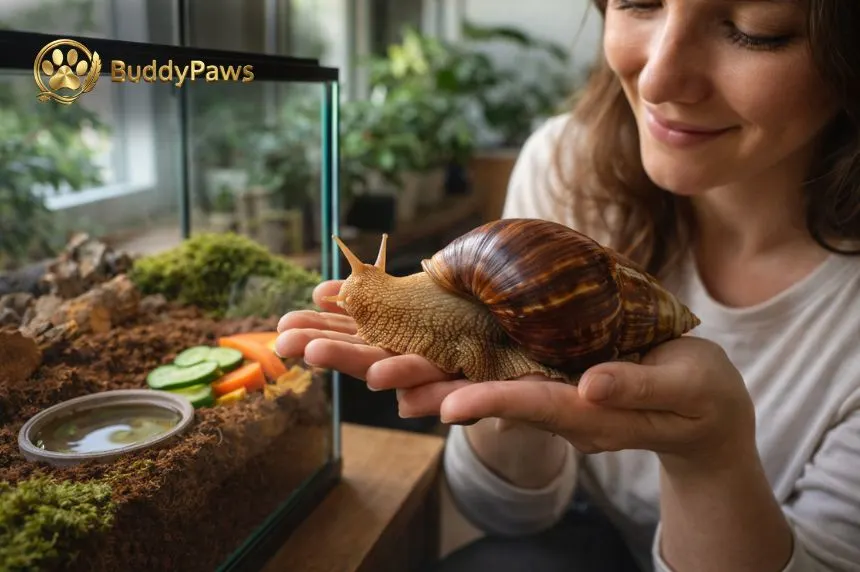
Setting up a home for your giant land snail is easier than most people expect, and this guide walks you through every step with beginner-friendly clarity.
A proper giant land snail habitat setup gives your snail the moisture, warmth, and comfort it needs to thrive.
With the right substrate, safe decor, and steady humidity, these calm, fascinating pets settle in quickly and live healthy, relaxed lives.
This guide breaks down the essentials, so you know exactly what to buy, how to arrange the tank, and what to monitor daily.
By the end, you’ll feel confident building a simple, safe habitat that keeps your giant land snail happy for years.
Understanding what giant land snails need makes building a healthy habitat much easier.
These gentle pets thrive when their environment supports natural behaviors like burrowing, exploring, and staying moist. Here are the core needs every beginner should focus on:
Giant land snails depend on steady moisture to breathe and stay active. Following a reliable snail humidity guide helps you maintain the right levels, preventing dryness and encouraging natural behaviors like climbing and nighttime exploring.
Snails thrive in warm, stable temperatures. Keeping their habitat within a comfortable range prevents stress and supports healthy eating, movement, and overall activity without sudden fluctuations.
A deep, soft substrate allows snails to burrow naturally. This supports their instincts, protects their bodies from hard surfaces, and helps retain the moisture they rely on for comfort.
Choosing the right tank size and type is a key part of building a safe, healthy habitat for your giant land snail.
The enclosure you choose influences humidity, comfort, and long-term wellbeing, so starting with the right setup makes daily care easier and more consistent.
Giant land snails need room to move, stretch, and explore. A spacious tank prevents crowding, supports natural behaviors like climbing, and gives them freedom as they grow larger over time.
A secure enclosure with minimal gaps helps maintain stable moisture levels, which is essential for snail health. This also works well for simple bioactive setups, keeping the environment naturally balanced.
Snails need fresh air, but too much airflow dries the habitat quickly. A tank with controlled ventilation, like limited mesh sections, keeps humidity steady while still allowing safe oxygen exchange.
Glass and clear plastic hold humidity far better than mesh cages. They also make it easier to observe your snail’s habits, check the substrate, and ensure moisture levels stay where they should.
Giant land snails grow steadily, so plan with a roomy enclosure. Many keepers turn to the BuddyPaws community for size recommendations that support long-term comfort and healthy movement.
Preparing the right substrate is essential for keeping giant land snails healthy, especially since they’re becoming popular among people who enjoy unusual pets.
The right base supports burrowing, moisture control, and day-to-day comfort, giving your snail a natural, stress-free environment.
Coconut fiber or organic topsoil works best because it’s gentle on your snail’s body. These materials hold moisture well and closely mimic the natural ground conditions snails prefer in the wild.
Snails absorb moisture directly through their skin, so harmful additives can quickly cause health issues. Always use pesticide-free, fertilizer-free soil that’s safe for invertebrates.
Snails love digging, especially when resting or molting. A depth of four to six inches works well, and many owners learn this through helpful tips shared on an app for pet lovers.
Slightly damp soil keeps snails hydrated and supports shell health. Mist regularly, but avoid soaking the substrate, since oversaturation encourages mold, bacteria, and other harmful conditions.
Leaf litter or soft moss boosts moisture retention and makes the enclosure feel more natural. Snails enjoy exploring and hiding under these materials, which helps reduce stress.
Creating the right balance of temperature, humidity, and lighting is crucial for a healthy giant land snail habitat.
These gentle pets depend on stable conditions to stay active, hydrated, and stress-free. With a few simple adjustments, you can maintain a comfortable environment year-round.
Giant land snails thrive in mild warmth. Keeping the enclosure between 70–78°F supports healthy movement and prevents stress caused by sudden temperature swings.
A small heat mat or gentle heat lamp works well for a giant land snail habitat setup. Position it on the side of the tank to avoid overheating while keeping the environment evenly warm.
Snails rely on moisture to breathe and move smoothly. A humidity level of 70–90% helps prevent dryness, supports shell health, and keeps their skin comfortable.
Light misting once or twice daily keeps humidity steady without soaking the substrate. This encourages natural behaviors like climbing, burrowing, and nighttime exploring.
Snails prefer dim light. Natural room lighting or a gentle LED is enough to observe them without stress. Bright lights can dry out the habitat and disrupt their routine.
Routine cleaning keeps your giant land snail healthy and the habitat running smoothly. A consistent schedule prevents mold, odor, and bacteria buildup.
These simple steps are similar to tips found in any good micro frog care guide, making them easy for beginners to follow.
Remove uneaten food, waste, and mold patches to keep the habitat fresh. This prevents harmful bacteria from building up and helps maintain proper humidity without frequent deep cleanings.
Replace sections of old or compacted substrate every few weeks. This keeps the digging environment soft, reduces hidden waste, and helps maintain the moisture levels snails depend on daily.
Clean hides, dishes, and decor with warm water whenever they look dirty. Many keepers share simple cleaning methods through a pet community app, making regular upkeep easier and less overwhelming.
A full cleaning removes old substrate, disinfects surfaces, and resets the habitat. This eliminates lingering bacteria and ensures your snail always has a safe, stable environment to explore.
Cleaning can temporarily shift habitat conditions. After resetting the tank, check the humidity and temperature to ensure they return to safe levels quickly, keeping your snail comfortable and stress-free.
Creating a healthy, comfortable home for your giant land snail is easier than it looks, especially once you understand the basics of temperature, humidity, substrate, and routine care.
With a steady setup and simple daily habits, these calm, curious pets can thrive for years.
By choosing the right tank, maintaining moisture, offering a safe environment to burrow, and keeping the enclosure clean, you’re giving your snail everything it needs to stay active and stress-free.
As you get familiar with their routines, you’ll notice how rewarding it is to watch them explore and settle into their habitat.
With consistency, patience, and a little daily attention, your giant land snail will enjoy a safe, stable home that supports a long, healthy life.
Loading blogs...