
Download Now


Share with your community!
Pet Community
Does your dog get anxious the moment you step out of the house? Separation anxiety is more common than many owners realise, and it can affect your dog’s behaviour, mood, and overall well-being.
Understanding dog separation anxiety help is the first step toward creating a calmer, more secure environment for your pet.
From excessive barking to destructive habits, these behaviours often signal emotional distress.
The good news is, with the right strategies and consistency, you can help your dog feel safe even when you’re not around.
In this guide, we’ll explore practical ways to reduce anxiety and build healthier, more confident habits over time.
Separation anxiety affects many dogs when left alone. Recognising dog anxiety symptoms early helps you respond effectively, reduce stress, and support your dog’s emotional well-being with the right care and routine.
Dogs with separation anxiety often vocalise when left alone. Continuous barking or howling is a clear sign of distress, especially if it starts shortly after you leave the house.
Chewing furniture, scratching doors, or damaging items can indicate anxiety. These actions are not misbehaviour but a response to stress and an attempt to cope with being alone.
An anxious dog may walk in circles, pace around rooms, or struggle to settle down. This constant movement reflects nervous energy and discomfort when separated from their owner.
Some dogs try to escape by digging, jumping, or pushing through doors and windows. This behaviour can be dangerous and shows a strong need to reunite with their owner.
When your dog struggles to stay calm alone, small behaviours can reveal bigger issues. Understanding these signs and exploring anxious dog solutions early can help prevent stress and long-term behavioural problems.
If your dog vocalises constantly after you leave, it often signals distress. This behaviour usually begins soon after separation and reflects discomfort, fear, or a strong need for attention.
Chewing furniture, scratching doors, or damaging items is common. These actions are often coping mechanisms, helping your dog deal with anxiety and frustration when left alone.
Dogs may follow you constantly or act unusually attached before you go. You can explore ideas through a pet social app to help manage this behaviour and build independence gradually.
Some dogs refuse to eat when left alone. This change in eating habits is often linked to stress or anxiety and can affect their overall health over time.
Even trained dogs may have accidents indoors when anxious. This is not disobedience but a stress response, showing your dog is struggling emotionally during your absence.
Training plays a key role in easing separation anxiety and building confidence. With the right leaving dog alone tips, you can help your dog feel calmer, more secure, and more independent over time.
Start by leaving your dog alone for short periods and slowly increase the time. This helps your dog adjust without stress and builds comfort with being alone step by step.
Keep exits low-key and avoid emotional goodbyes. This reduces anticipation and anxiety, helping your dog understand that your leaving is normal and not something to fear.
Provide puzzle toys or feeders to keep your dog engaged. You can also explore ideas from a pet care platform to find activities that reduce boredom and anxiety.
Praise and reward your dog when they stay calm alone or during your return. Positive reinforcement encourages relaxed behaviour and helps build confidence over time.
Encourage your dog to spend time alone even when you’re home. This builds independence and reduces reliance, making it easier for them to stay calm when you leave.
Keeping your dog calm and comfortable starts with the right environment and routine. Simple dog behaviour correction techniques can reduce anxiety, improve habits, and help your dog feel safe and relaxed daily.
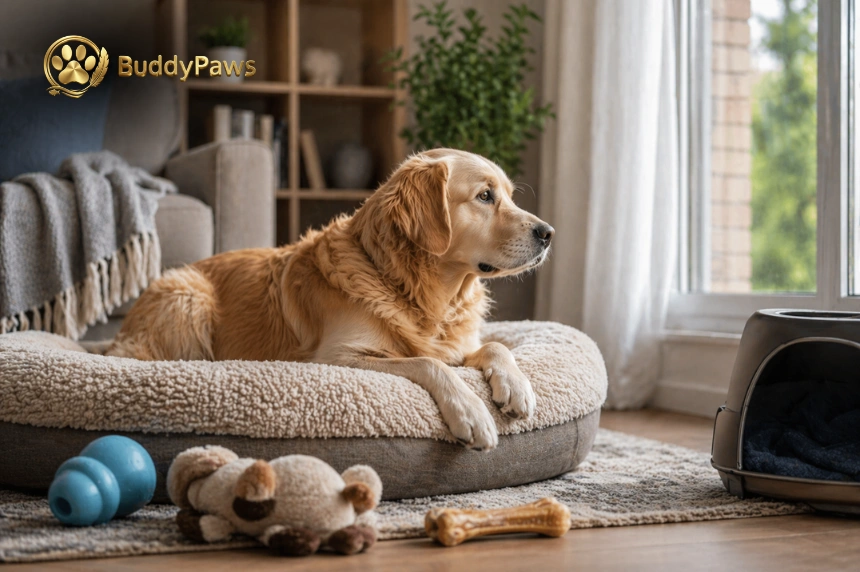
Designate a quiet area with your dog’s bed, toys, and familiar items. This comfort zone helps them feel secure, especially during stressful moments or when they are left alone.
Soft music or white noise can reduce stress and block sudden sounds. This creates a soothing environment that helps your dog relax and feel less anxious indoors.
Spend quality time playing, training, or simply relaxing together. You can also explore ideas from the Buddypaws community to keep your dog engaged and emotionally connected.
Regular feeding, walks, and rest times create stability. A consistent schedule helps your dog understand what to expect, reducing confusion and anxiety throughout the day.
Give your dog toys or items that keep them occupied. Chew toys, puzzle feeders, and familiar objects provide comfort, reduce boredom, and help maintain calm behaviour when alone.
Helping a dog with separation anxiety takes patience, consistency, and the right approach. There’s no instant fix, but small, steady efforts can create lasting change.
When you understand your dog’s triggers and respond with proper training, routines, and reassurance, you build a sense of safety and trust.
Simple steps like gradual separation, mental stimulation, and a calm environment can significantly reduce anxiety over time.
The key is to stay consistent and avoid reinforcing fearful behaviour.
With the right balance of care and structure, your dog can become more confident and comfortable being alone, leading to a happier, healthier, and more relaxed life for both of you.
Loading blogs...