

Download Now


Share with your community!
Pet community
Your home may feel safe and comfortable to you, but for your pet, it can hide unexpected stress triggers.
Many everyday items, from loud appliances to strong scents, can quietly affect their mood and behaviour.
Understanding things that stress your pet is the first step toward creating a calmer, more supportive environment.
Small changes can make a big difference in how your pet feels each day. So, what are these overlooked stressors, and how can you manage them without disrupting your routine?
In this guide, we’ll uncover common household items that may be causing stress and share simple ways to keep your pet relaxed and comfortable.
Many everyday items can quietly affect your pet’s comfort. Recognizing toxic home habits for pets helps you reduce hidden stressors and create a safer, calmer environment without making major lifestyle changes.
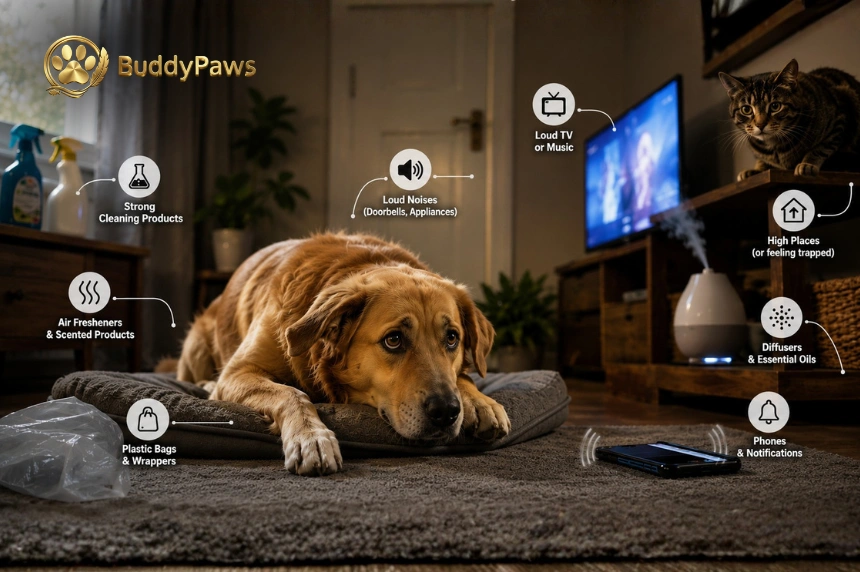
Vacuum cleaners, blenders, and hairdryers can overwhelm pets with loud, unpredictable sounds. These noises often trigger anxiety, causing pets to hide, panic, or show signs of stress during routine household activities.
Air fresheners, cleaning products, and perfumes can irritate your pet’s sensitive nose. Strong chemical smells may lead to discomfort, sneezing, or avoidance behaviour, making your home feel less safe for them.
Tight or cluttered spaces can make pets feel restricted and uneasy. Platforms like Buddypaws often highlight how open, organised environments help pets feel secure, relaxed, and more comfortable moving around freely.
Many stressors at home go unnoticed but can impact your pet daily. Identifying pet anxiety triggers early helps you create a calmer space and prevent long-term behavioural or emotional issues.
Irregular feeding, walking, or sleep schedules can confuse pets. This lack of consistency creates stress, making them feel insecure and unsure about what to expect throughout the day.
Moving furniture, adding new items, or changing spaces can unsettle pets. They rely on familiarity, so even small environmental changes may cause anxiety or unusual behaviour.
Pets need a quiet area to relax. Without a designated safe spot, they may feel overwhelmed, especially in busy households, leading to increased stress and withdrawal.
Too much noise, guests, or constant activity can overwhelm pets. A pet community platform often highlights the importance of balancing stimulation with calm periods to maintain emotional well-being.
Ignoring pets at times and overwhelming them at others creates confusion. Balanced, predictable interaction helps them feel secure, while inconsistency can lead to stress and attention-seeking behaviors.
Spotting hidden stressors at home starts with observing stressed pet signs like hiding, pacing, or sudden behaviour changes. Once identified, you can adjust your space to keep your pet calm and comfortable.
Vacuum cleaners create loud, unpredictable noise that can scare pets. Try cleaning when your pet is in another room or use quieter settings to reduce stress during routine cleaning.
Frequent phone alerts or TV noise can disturb pets. Using a pet care app with calmer settings or limiting sudden sounds helps create a more peaceful and predictable environment.
Heavy scents from sprays and diffusers can irritate your pet’s nose. Switch to mild, pet-safe options or reduce usage to avoid discomfort and breathing irritation.
Overcrowded areas restrict movement and increase anxiety. Simple pet care hacks like decluttering and creating open spaces can help your pet feel more relaxed and free to move.
Harsh lighting or flickering bulbs can make pets uneasy. Soft, stable lighting creates a calmer atmosphere and helps reduce unnecessary visual stress for your pet.
Smooth floors can make pets feel unstable. Adding rugs or mats gives them better grip, helping them move confidently without fear of slipping or injury.
High volume levels can overwhelm pets. Keeping sound levels moderate ensures your pet stays relaxed and prevents sudden anxiety caused by sharp or loud noises.
Changing furniture layout often can confuse pets. Keeping a consistent setup helps them feel secure and familiar with their surroundings.
Harsh cleaning products can irritate your pet’s senses. Opt for pet-safe cleaners and ensure proper ventilation to maintain a healthy indoor environment.
Without a calm place to rest, pets may feel overwhelmed. Create a quiet corner where they can retreat and relax whenever needed.
Constant movement and guests can stress pets. Give them space away from busy areas to help them stay calm and avoid overstimulation.
New or unusual items can make pets cautious. Introduce changes gradually so your pet has time to adjust without feeling threatened.
Irregular schedules can confuse pets and increase stress. Maintain consistent feeding and care routines to help your pet feel secure and balanced daily.
Creating a stress-free home for your pet doesn’t require major changes, just awareness and small adjustments. Many everyday items can quietly affect your pet’s comfort, but once you recognise these triggers, it becomes easier to manage them.
Paying attention to behaviour and environment helps you respond before stress turns into bigger issues.
Simple steps like reducing noise, limiting strong scents, and maintaining a consistent. Your pet relies on you to create a safe and calming space.
With a little effort and observation, you can improve their overall well-being and help them feel more relaxed, secure, and happy at home.
Loading blogs...