
Download Now


Share with your community!
Pet Community
Choosing the right pet often depends on lifestyle, space, and the level of care an owner can provide.
While mammals like hamsters, rabbits, or guinea pigs are common household pets, invertebrates such as tarantulas, millipedes, and scorpions are becoming increasingly popular.
These unusual pets attract attention because they often require smaller habitats and simpler care routines. However, they also come with unique challenges that many beginners may not expect.
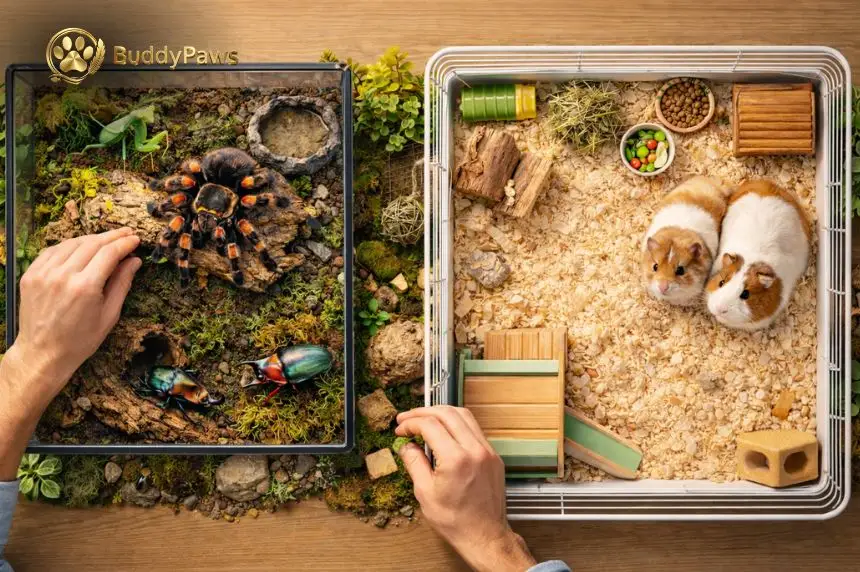
When comparing invertebrates vs mammals pets, it’s important to understand their differences in behavior, care requirements, interaction levels, and long-term responsibilities.
Looking at the pros and cons of both options can help potential pet owners decide which type of companion fits best with their lifestyle and expectations.
Pets come in many forms, and two very different categories are mammals and invertebrates. Mammal pets include animals like hamsters, rabbits, guinea pigs, and mice.
They are warm-blooded, social, and often enjoy interaction with their owners. Invertebrate pets, on the other hand, include creatures such as tarantulas, millipedes, stick insects, and scorpions.
These animals do not have backbones and usually require different types of habitats and care routines. While mammals often need more attention and interaction, invertebrates are typically quieter and more independent.
Understanding these basic differences helps potential pet owners choose a pet that matches their lifestyle, available space, and level of daily involvement.
Invertebrates have gained popularity among pet enthusiasts who want unique animals with simpler care routines. These pets often require less space and attention compared to many traditional household animals.
Many invertebrates live comfortably in compact terrariums or small enclosures. Their limited space needs make them ideal for apartments or homes where large pet habitats are not practical.
Many owners are drawn to the unusual appearance and behavior of invertebrates. Exploring these animals often highlights interesting exotic pet benefits, including learning about rare species and natural behaviors.
Unlike many mammals, invertebrates usually do not require frequent handling or playtime. This independence makes them appealing to people who prefer observing their pets rather than interacting constantly.
Invertebrates are typically silent and calm pets. They don’t create noise or demand constant attention, which makes them suitable for people who prefer peaceful and low-disturbance environments.
Interest in unusual pets has increased in recent years. Many enthusiasts share care tips, experiences, and advice through groups and forums like the buddypaws community.
Invertebrates can be fascinating pets for people exploring unusual animals and beginner pet choices beyond traditional options.
However, like any pet, they come with benefits and limitations that owners should understand before deciding.
Most invertebrates live comfortably in small terrariums or containers, making them ideal pets for apartments, dorm rooms, or homes with limited space.
Invertebrates are silent pets that rarely create noise, making them suitable for people who prefer calm environments or live in shared spaces.
Many invertebrates require simple diets such as insects, plant matter, or specialized food. Owners often learn feeding tips and care advice through a pet community app.
Invertebrates display unique behaviors like molting, web building, or burrowing, offering fascinating observation opportunities for people interested in nature and unusual animals.
Most invertebrates do not require frequent handling or social interaction, making them suitable for owners who prefer low-contact pets.
Unlike mammals, most invertebrates cannot form strong bonds with owners, which may feel less rewarding for people seeking interactive companionship.
Certain invertebrates require precise temperature, humidity, and enclosure conditions. Beginners often rely on resources like a pet millipede guide to understand proper habitat setups.
Some species may bite, sting, or become stressed when handled, so owners must be cautious and avoid frequent physical interaction.
Veterinarians who specialize in treating invertebrates are rare, making medical care more difficult if the pet develops health issues.
Friends or family members may feel uncomfortable around insects or arachnids, which can make owning invertebrate pets socially challenging in some households.
Deciding between invertebrates and mammals as pets depends on your lifestyle, available space, and the level of interaction you want. Each type offers different experiences and responsibilities for pet owners.
Mammals often require regular interaction, feeding schedules, and habitat cleaning. Invertebrates usually need less daily attention, making them a suitable option for people with busy routines.
If you live in a small apartment, invertebrates may be ideal because many are small habitat pets that live comfortably in compact terrariums or enclosures.
Mammals often enjoy interaction, handling, and bonding with owners. Invertebrates, however, are usually better suited for observation rather than regular physical interaction.
Both pet types have unique care needs. Researching diet, habitat conditions, and lifespan helps ensure you can properly meet the animal’s long-term requirements.
Gaining advice from experienced owners can help you make a better decision. Tools such as an app for pet lovers allow people to share tips and real-life pet care experiences.
Choosing between invertebrates and mammals as pets ultimately depends on your lifestyle, expectations, and level of involvement you want with your pet.
Mammals often provide companionship and interaction but usually require more daily care and attention.
Invertebrates, on the other hand, are quieter and often easier to manage, making them appealing to people who enjoy observing unique animals.
However, they may offer less social interaction compared to traditional pets. Understanding the advantages and challenges of each option helps you make a more informed decision.
By considering factors like space, time commitment, and personal preference, you can choose a pet that fits comfortably into your routine while ensuring the animal receives proper care and a healthy environment.
Loading blogs...