
Download Now


Share with your community!
Pet Community
Keeping your parrot mentally sharp is just as important as providing a healthy diet or a spacious cage.
In the wild, parrots spend most of their day searching for food, solving problems, and exploring new challenges. At home.
They rely on us to recreate that level of engagement. That's where parrot mental stimulation comes in.
With the right mix of foraging toys and simple daily brain games, you can keep your bird curious, confident, and active.
These activities reduce boredom, prevent destructive behaviour, and strengthen your bond.
This guide breaks down the best enrichment options so you can build a fun, mentally stimulating routine your parrot will look forward to every single day.
Parrots need consistent mental activity to stay healthy and emotionally balanced.
In captivity, they don’t get the natural challenges they’d face in the wild, so enrichment becomes essential for their behavior, mood, and long-term well-being.
Parrots are intelligent, active birds. Without enough mental challenges, they quickly grow bored, which often leads to screaming, chewing furniture, or feather plucking.
Engaging toys and puzzles give them something productive to focus on each day.
Parrot mental stimulation plays a huge role in keeping your bird emotionally balanced.
Activities that involve interaction, like games, training, or simple problem-solving, reduce stress and build trust. This makes your parrot feel more secure, confident, and connected to you.
Wild parrots spend hours searching for food, cracking shells, and exploring. Foraging toys mimic those natural behaviors, keeping your bird’s instincts active.
This boosts overall happiness, reduces anxiety, and helps maintain a healthier daily routine.
Foraging toys give parrots the mental challenges they naturally crave.
These toys encourage problem-solving, exploration, and active play, helping your bird stay focused and entertained throughout the day.
The right mix keeps their mind sharp and their routines exciting.
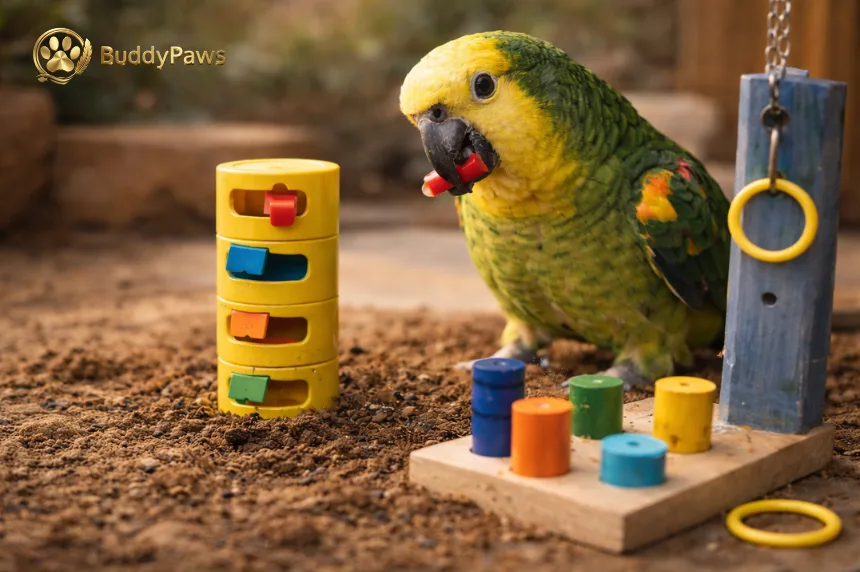
Puzzle boxes provide parrots with mental stimulation by making them work for hidden treats.
They must slide, lift, or twist pieces to access food, keeping their mind active. These toys also slow fast eaters and build daily problem-solving skills.
Paper, palm leaf, and cardboard toys let parrots chew, tear, and dig for treats. This healthily satisfies natural destruction instincts.
They’re inexpensive, enriching, and perfect for birds that love hands-on activity.
Rolling treat balls are a fun form of bird enrichment that encourages parrots to push and chase the toy to release food.
The movement keeps them active, while the reward system encourages persistence and continuous engagement.
These cups require parrots to lift lids, pull ropes, or move small parts to access snacks.
Because they hang, they add an extra layer of physical challenge and prevent boredom by mimicking natural climbing and searching behaviors.
Wood toys with crevices can be stuffed with nuts, seeds, or dried fruit. Parrots love peeling bark and digging into cracks to find rewards.
This closely mimics wild foraging and promotes healthy beak activity.
Daily brain games help keep your parrot curious, confident, and mentally active. These simple activities don’t require fancy equipment, just a little creativity and consistency.
Adding these games into your routine strengthens your bond and boosts your bird’s overall well-being.
A treat hunt is perfect for parrot mental stimulation. Hide small snacks around safe areas of the room or inside simple paper cups.
Your bird must search, explore, and problem-solve, turning a basic activity into an enriching daily challenge.
Use two or three bright cups and hide a treat under one. Lift, shuffle, and let your parrot find the reward.
Over time, they begin recognizing colors and patterns, improving memory, focus, and decision-making skills.
Create a small course using perches, ladders, or boxes. Encourage your parrot to walk, climb, and navigate through it.
This game boosts balance, confidence, and coordination while giving them a fun physical and mental workout at home.
Use a small stick or perch as a target. Reward your bird for touching it with their beak.
This beginner-friendly training builds trust, encourages focus, and reduces unwanted behaviors by giving your parrot a clear, engaging task.
Some birds enjoy tapping buttons that make sounds or following simple light cues.
Many toys also sync with an app for pet parents, allowing you to customize difficulty levels and track your bird’s progress for added enrichment.
Rotating toys keeps your parrot engaged by making their environment feel fresh and exciting.
Changing items regularly prevents boredom, encourages curiosity, and helps your bird stay mentally active without needing an endless supply of new toys.
Set a simple weekly plan to swap toys in and out of the cage. Consistent rotation introduces new challenges and prevents overstimulation.
This routine keeps your parrot alert, curious, and excited about what’s coming next.
Alternate shreddable toys, puzzles, foraging items, and climbing pieces. Switching categories keeps your bird from getting too comfortable with one style.
New textures and challenges stimulate creativity and support healthier, more balanced play habits.
Place removed toys in a bin or closet so your parrot forgets them. When reintroduced, they feel brand new.
This trick saves money, keeps enrichment fresh, and makes old favorites exciting again.
Using different treats inside the same toy revitalizes interest. A puzzle with nuts one week and dried fruit the next creates new motivation.
Small variations challenge your parrot’s problem-solving skills and boost overall engagement.
Pay attention to which toys your bird uses most. Rotate favorites less often and swap out ignored items more frequently.
Tailoring the rotation to your parrot’s personality creates a more effective, engaging enrichment routine.
Introducing new enrichment activities should always be done with care. Parrots are curious but sensitive, so a safe approach helps them adapt comfortably.
These tips make each activity fun, secure, and beneficial for their long-term well-being.
Introduce one item at a time to avoid overwhelming your bird. Slow introductions support healthy parrot mental stimulation while giving your parrot time to observe, explore, and feel safe.
Gradual exposure builds confidence and reduces any stress-related reactions.
Make sure toys contain bird-safe dyes, natural fibers, and non-toxic woods. Avoid loose metal parts or treated materials.
High-quality construction protects your parrot from accidental ingestion, sharp edges, or dangerous finishes that could harm their beak or feet.
Stay nearby when your parrot tries a new activity. Supervision lets you catch hazards early, encourage healthy play, and understand your bird’s comfort level.
This also builds trust, helping your parrot feel supported during unfamiliar experiences.
Watch for signs of fear, stress, or hesitation. If your bird seems uneasy, remove the item and reintroduce it later.
Respecting their pace prevents negative associations and ensures enrichment remains a positive, rewarding experience.
Connecting with other bird owners through a pet community app can provide valuable insights and real-life tips.
You can discover safe toy ideas, product reviews, and proven enrichment strategies that help you create a healthier, more engaging routine.
Keeping your parrot mentally active is one of the best ways to support a long, healthy, and emotionally balanced life.
With the right mix of foraging toys, daily games, and regular rotation, you can create a home environment that feels exciting and enriching every day.
Consistent parrot mental stimulation reduces boredom, prevents destructive habits, and encourages instincts that keep your bird confident and curious.
As you introduce new activities, pay attention to your parrot’s comfort level and personal preferences.
Small adjustments make a big difference in how engaged they feel. With patience and creativity, you’ll build a routine that strengthens your bond and keeps your parrot thriving for years to come.
Loading blogs...