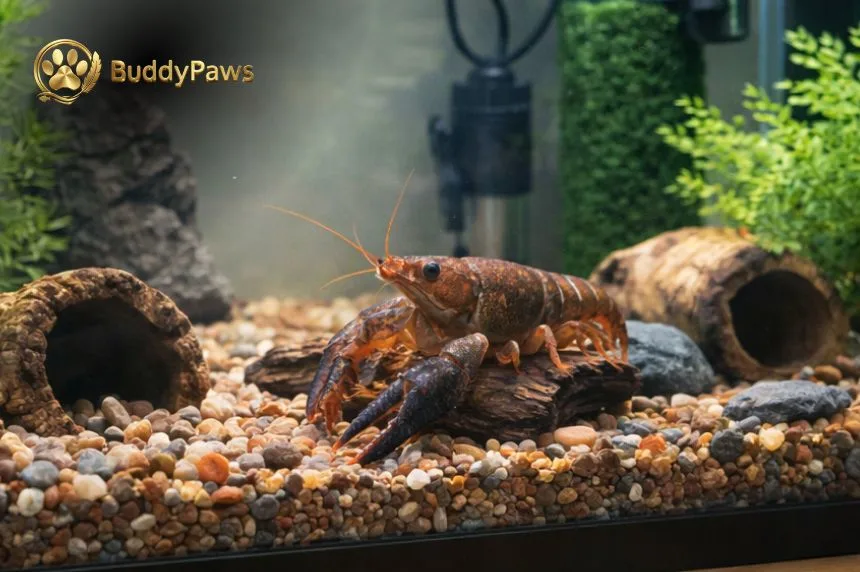
Pet Crayfish
Crayfish are fascinating freshwater creatures known for their curious behavior and unique appearance.
For beginners, creating the right environment is the first step toward keeping them healthy and active.
A proper pet crayfish tank setup focuses on clean water, secure hiding spots, and enough space for the crayfish to explore.
These animals are natural diggers and climbers, so their habitat must be both stable and escape-proof.
From choosing the right tank size to adding substrate, filtration, and decorations, each element plays a role in building a safe enclosure.
This beginner-friendly guide explains the essentials of crayfish habitat design, helping you create a balanced tank that supports natural behavior while making daily care simple and manageable.
Crayfish are active bottom-dwellers that depend heavily on their environment for safety and comfort. Understanding their natural behavior helps beginners design tanks that support hiding, digging, exploring, and healthy daily activity.
Crayfish naturally dig into substrate and hide under rocks or decorations. Providing hiding spaces and soft substrate allows them to feel secure and display natural behaviors inside the aquarium environment.
Crayfish spend most of their time exploring the tank floor, searching for food, and rearranging substrate. Like many freshwater invertebrates, they rely on stable water conditions and suitable tank structures.
Crayfish can be territorial, especially in smaller tanks. They may compete for space or hiding spots, so providing enough shelter and space helps reduce stress and encourages calmer behavior.
Selecting the correct tank and equipment is essential for keeping crayfish healthy. A well-planned enclosure provides space, stable water conditions, and safety, making daily care easier for beginners.
A 10–20-gallon aquarium works well for most pet crayfish. Adequate space allows them to explore, dig, and establish hiding areas while helping maintain stable water conditions.
Crayfish produce waste that can quickly affect water quality. Proper filtration supports clean water and healthier living conditions, which is a key part of responsible crustacean care.
Crayfish are skilled climbers and may try to escape from open tanks. A tight-fitting lid helps prevent accidents while keeping the aquarium environment safe and stable.
Using simple equipment like a thermometer and a water test kit helps track tank conditions. Stable temperature and water parameters are important for keeping crayfish comfortable and active.
Beginners can gain valuable tips from other aquarium keepers who share their experiences online. Many hobbyists exchange tank ideas and care advice through communities like the Buddypaws community.
Clean water is one of the most important parts of a healthy crayfish habitat. Stable water conditions help prevent stress, support natural behavior, and keep your crayfish active and thriving.
A good filter removes waste, leftover food, and harmful toxins from the tank. Proper filtration keeps the water clean and helps maintain a stable environment for your crayfish.
Testing water conditions such as ammonia, nitrate, and pH helps prevent sudden problems. Learning these aquarium basics helps beginners maintain a healthier environment and avoid harmful water quality issues.
Changing 20–30% of the tank water each week helps remove waste buildup. Regular water changes improve water clarity and support healthier conditions for crayfish and beneficial tank bacteria.
Uneaten food quickly pollutes aquarium water. Feeding small portions and removing leftovers helps maintain water quality while reducing the workload on your filtration system.
Keeping a simple care schedule helps maintain consistency. Some beginners use reminders or care trackers through a pet community app to monitor water changes, feeding routines, and tank maintenance.
Feeding pet crayfish properly helps maintain strong growth, healthy molting cycles, and active behavior. Offering balanced foods and following a simple routine ensures your crayfish receives the nutrition it needs.
Crayfish are omnivores that eat both plant and animal foods. A healthy diet can include sinking pellets, vegetables, algae wafers, and occasional protein sources such as small insects or shrimp.
Offer small amounts of food once daily or every other day. Controlled feeding prevents overfeeding, keeps water cleaner, and ensures your crayfish finishes most of the food provided.
Blanched vegetables like zucchini, spinach, peas, and carrots provide important vitamins and fiber. These foods also support digestion and help create a more natural feeding experience.
Leftover food can quickly break down and pollute aquarium water. Removing uneaten pieces within a few hours helps protect water quality and keeps the tank environment healthier.
Watching how your crayfish responds to food helps you adjust portions and diet variety. Healthy crayfish usually approach food quickly and show active feeding behavior during meal times.
Proper tank maintenance keeps your crayfish habitat stable and healthy. Beginners often make small mistakes that affect water quality, safety, or comfort, but simple routines can prevent the most common aquarium care problems.
Many beginners forget to check water quality, equipment, and tank conditions. Similar to lessons shared in a pet millipede guide, consistent observation helps identify small problems before they affect your pet.
Keeping too many tank mates can cause stress, fights, and poor water conditions. Crayfish often prefer space and may become territorial if the tank feels crowded or resources are limited.
Filters can lose efficiency when clogged with debris. Regularly rinsing filter media and checking equipment keeps the filtration system working properly and helps maintain cleaner water conditions.
Some owners miss routine tasks like water changes or feeding adjustments. Setting reminders or using tools in an app for pet lovers can help maintain a reliable care routine.
Crayfish are excellent climbers and may escape through small openings. Ensuring the tank lid is tightly secured prevents accidents and keeps your crayfish safely inside its habitat.
Creating a safe and healthy habitat for your crayfish begins with the right setup and consistent care.
A well-planned tank with proper filtration, clean water, secure hiding spots, and balanced feeding helps your crayfish stay active and comfortable.
Understanding their natural behavior, such as burrowing and exploring, also makes it easier to design an environment that supports their needs.
Regular tank maintenance, including water changes and equipment checks, prevents common problems and keeps the habitat stable.
Beginners who follow simple routines often find crayfish surprisingly easy to care for. With patience and attention to detail, you can build a thriving aquarium where your crayfish can grow, molt, and display its unique personality every day.
Loading blogs...