
Download Now


Share with your community!
Pet Community
Puppy potty training can feel overwhelming at first, especially for new dog owners. Accidents, confusion, and inconsistent routines are all part of the process.
The good news is that with the right approach, you can speed things up and make learning easier for your pup. Puppy potty training works best when you stay consistent, patient, and clear with expectations.
Creating a routine, rewarding good behaviour, and understanding your puppy’s signals can make a huge difference.
In this guide, you’ll learn simple, effective methods to help your puppy develop good habits quickly, reduce accidents, and build a strong foundation for long-term behaviour and a cleaner home.
Understanding your puppy’s natural potty habits is the first step to successful training. Puppies follow patterns based on eating, sleeping, and playtime, which helps you predict and manage bathroom breaks effectively.
Puppies have small bladders and need frequent bathroom breaks, often every one to two hours. Recognising this helps prevent accidents and builds a routine that supports faster and smoother potty training.
Puppies usually need to go right after eating, drinking, playing, or waking up. This predictable timing makes house training a puppy easier when you take them out consistently after these daily activities.
Common signs include sniffing the floor, circling, whining, or suddenly stopping play. Learning these early signals allows you to act quickly and guide your puppy to the correct potty spot.
A consistent routine helps your dog learn faster and reduces accidents at home. Setting clear potty times builds discipline, improves habits, and makes house training smoother for both you and your pet.
Begin training as soon as your dog arrives home. Following puppy training tips like fixed meal and potty times helps create a predictable schedule and supports faster learning with fewer indoor accidents.
Dogs need regular bathroom breaks, especially after meals, naps, and playtime. Frequent outings reduce confusion, prevent accidents, and help reinforce the right behaviour consistently during the training phase.
Consistency is key. Taking your dog out at the same time every day builds a habit, making it easier for them to understand when and where they should go.
Observe your dog’s behaviour and note patterns. Joining platforms like the BuddyPaws community can help you learn from other pet owners and improve your training routine effectively.
Every dog is different. Adjust the routine based on your dog’s age, breed, and response to training, ensuring a flexible yet consistent approach for long-term success.
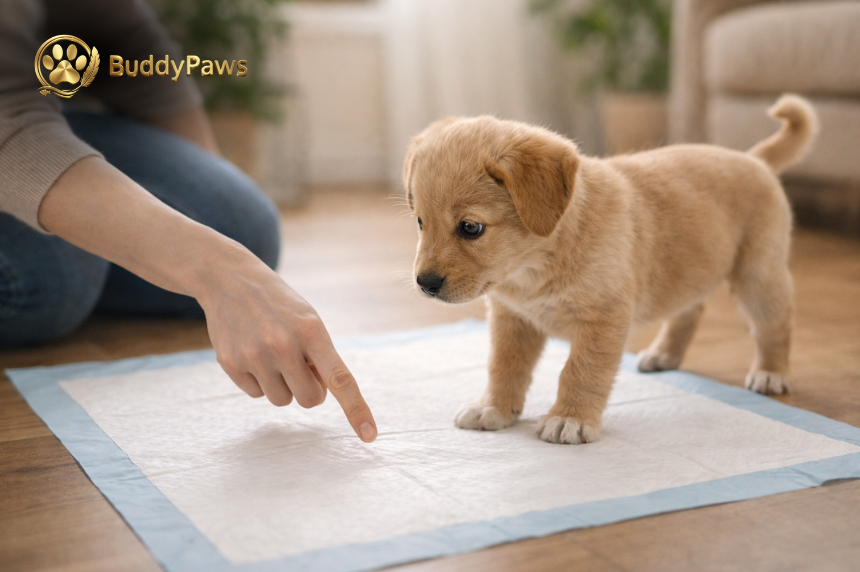
Picking a dedicated potty spot helps your dog associate a specific area with bathroom needs. This makes training clearer, reduces confusion, and supports faster learning during the early stages.
Choose a calm and easy-to-reach location. A consistent spot minimises distractions and helps your dog focus, making it easier for them to build a strong bathroom habit.
Using the same area daily supports toilet training dog routines. Repetition helps your dog quickly associate that spot with bathroom behaviour, reducing indoor accidents and confusion.
Busy or noisy spots can distract your dog. A peaceful environment allows them to feel comfortable, making it easier to relieve themselves without stress or hesitation.
Regularly clean the potty spot to avoid strong odours. A hygienic area encourages your dog to return and reinforces positive bathroom habits during training.
Leverage tools like an app for pet lovers to track potty breaks, set reminders, and stay consistent, especially if you have a busy routine or are training a young puppy.
Positive reinforcement builds trust and encourages good behavior during potty training. Reward-based methods help dogs learn faster, making training a stress-free and enjoyable experience for both pets and owners.
Give treats or praise right after your dog uses the correct spot. Immediate rewards help them connect the action with positive outcomes, reinforcing good behaviour effectively.
Use simple cues while training. Following how to train your dog at home basic commands helps your dog understand instructions clearly and improves communication during potty training.
Verbal praise and affection go a long way. Encouraging words build confidence and motivate your dog to repeat the right behaviour consistently over time.
Avoid punishment for accidents. Patience and consistency create a positive environment where your dog feels safe to learn without fear or confusion.
Join a pet community app to explore training tips, share experiences, and gain insights from other dog owners, making your potty training journey smoother and more effective.
Mistakes during potty training can slow progress and confuse your dog. Avoiding common errors helps create a smoother learning experience and ensures long-term success in building good bathroom habits.
Scolding your dog for accidents can create fear and anxiety. Instead, focus on guiding them positively and reinforcing correct behaviour to build trust and confidence.
Irregular potty times confuse your dog and delay learning. Stick to a routine to help them understand when and where they should go consistently.
Dogs often show signs like sniffing or circling. Missing these cues can lead to accidents, so stay attentive and act quickly to guide them to the right spot.
Potty training takes time and patience. Unrealistic expectations can lead to frustration, so stay consistent and allow your dog to learn at their own pace.
Leaving odours behind encourages repeat accidents. Clean thoroughly using pet-safe cleaners to remove smells and prevent your dog from returning to the same indoor spot.
Potty training your dog takes patience, consistency, and the right approach. While accidents are part of the process, sticking to a routine and using positive reinforcement can make a big difference over time.
Focus on understanding your dog’s signals, maintaining a consistent schedule, and creating a comfortable environment for them to learn.
Small, daily efforts lead to long-term success and better habits. Remember, every dog learn at their own pace, so avoid rushing the process or getting frustrated.
With time and commitment, your dog will develop reliable bathroom habits, making life easier for both of you and strengthening the bond you share.
Loading blogs...