

Download Now


Share with your community!
Pet Care
Rabbits are adorable, gentle, and incredibly loving pets but they need more care than most people realize. If you're planning to bring a bunny home or already have one hopping around your living room, it helps to understand their needs, habits, and daily routines. This Rabbit Care Guide walks you through everything essential to keep your bunny healthy, active, and truly happy.
Rabbits may seem quiet and independent, but they rely on their humans for a safe home, proper nutrition, grooming, mental stimulation, and companionship. With the right approach, your bunny will thrive and form a strong bond with you.
Let’s dive into this beginner-friendly guide built just for rabbit parents.
A lot of people assume rabbits require minimal care. In reality, they need attention, space, enrichment, and a consistent routine. They can get lonely, bored, stressed, or sick if not properly cared for.
This Rabbit Care Guide focuses on understanding these needs so you can create a safe, nurturing space for your bunny.
Rabbits should never be kept in tiny cages. They need room to stretch, hop, and explore.
A large indoor pen or roomy enclosure
Enough vertical space to stand on hind legs
A soft bedding area
A quiet corner for resting
You can also free-roam your rabbit inside your home once the area is bunny-proofed.
Rabbits love chewing, it helps keep their teeth healthy. But this also means they might chew wires, furniture, or harmful objects.
Cover electrical cables
Keep toxic plants away
Block small spaces behind appliances
Remove plastic, rubber, and sharp objects
Bunny-proofing is a huge part of responsible rabbit parenting.
Yes, rabbits can be litter trained and they learn fast.
Use a litter box with low sides
Fill it with rabbit-safe litter (never clumping cat litter)
Place hay near or above the litter box
Reward your bunny for using it
Most rabbits naturally pick up this habit once they feel comfortable.
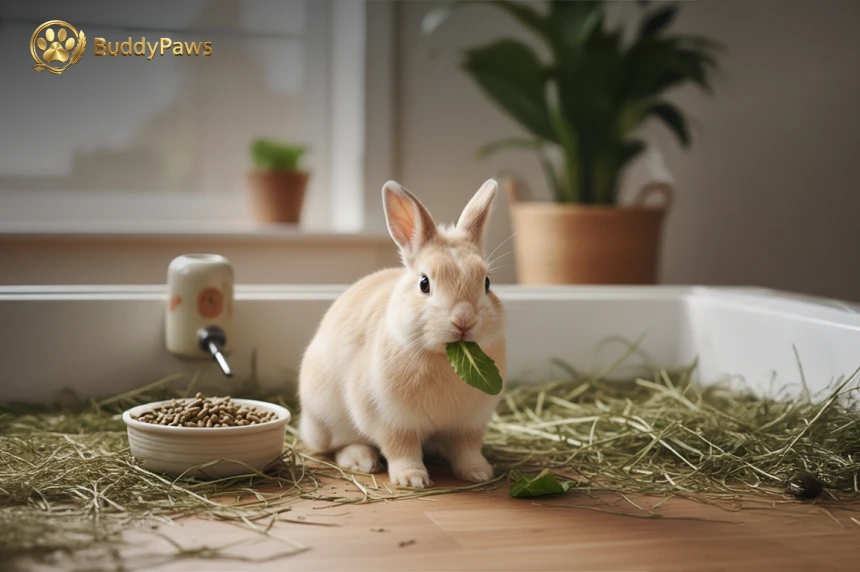
About 80% of a rabbit’s diet should be fresh hay. It keeps their digestive system healthy and prevents dental problems.
Timothy hay
Orchard grass
Meadow hay
Oat hay
Always make sure hay is fresh and available 24/7.
Greens provide vitamins, hydration, and enrichment.
Romaine lettuce
Cilantro
Basil
Spinach (in moderation)
Bok choy
Carrot tops
Introduce new veggies slowly to avoid tummy issues.
Pellets should be a small part of their daily food, not the main diet.
High in fiber
Low in sugar
Free from seeds and artificial colors
Fruits are fine as occasional treats, but never overdo it.
Apple slices
Banana pieces
Berries
Papaya
This Rabbit Care Guide keeps health first, so moderation is key.
Rabbits are prey animals, so they hide discomfort and illness extremely well.
Dental problems
Stomach issues
Parasites
Skin problems
Ear infections
Visit a rabbit-experienced vet at least once a year.
A sudden change in appetite or droppings is a major red flag in rabbits. They can go into GI stasis (a dangerous condition) if they stop eating.
Small or irregular droppings
No appetite
Lethargy
Hunched posture
If you notice these, seek vet care immediately.
Rabbits groom themselves, but they still need help.
Brush weekly (daily for long-haired breeds)
Trim nails regularly
Check ears for wax buildup
Gently remove loose fur during shedding season
Good grooming prevents health issues and keeps your bunny comfortable.
A bored rabbit becomes destructive or anxious. They need daily time outside their enclosure.
Try:
Tunnels
Cardboard boxes
Chew toys
Puzzle feeders
Hiding games
Treat-hunt games
This Rabbit Care Guide recommends at least 2–3 hours of supervised playtime daily.
Chewing is natural and healthy for rabbits. It prevents dental overgrowth.
Good options:
Wooden blocks
Hay toys
Untreated wicker
Cardboard tubes
Avoid plastic toys that can break and cause injury.
Rabbits are social animals. They enjoy bonding with humans and, often, other rabbits.
Spend time sitting near your bunny
Offer treats from your hand
Pet them gently on the head
Let them come to you at their own pace
Never force interaction, trust builds slowly.
If you want to adopt a companion rabbit:
Do it slowly:
Introduce in neutral space
Supervise all interactions
Let them bond naturally
A bonded pair becomes happier, calmer, and more confident.
Keep their area cool
Offer cool water
Add ice packs wrapped in cloth
Avoid direct sunlight
Provide warm bedding
Keep drafts away
Ensure indoor housing during cold waves
Keep their space dry
Watch for fungal infections
Avoid damp floor areas
Healthy rabbits show their joy in adorable ways.
Watch for:
Zoomies
Binkies (little jumps in the air)
Flopping on their side
Purring sounds from teeth grinding
Following you around
If you see these, your bunny feels safe and loved.
Caring for a rabbit is a rewarding experience filled with affection, trust, and gentle moments. This Rabbit Care Guide helps you understand everything your bunny needs, from diet and grooming to playtime, safety, and emotional care. With the right setup, consistent routines, and lots of love, your rabbit will live a healthy, joyful life by your side. Remember, bunnies may be quiet, but they feel deeply. Every small gesture counts, and every bit of care builds a bond that lasts forever.
Loading blogs...