Scorpion Pet Care
Scorpions may look intimidating, but many species are surprisingly low-maintenance pets when given the right environment.
For beginners interested in unusual pets, learning the basics of habitat design is the first and most important step.
A proper scorpion pet care setup focuses on safety, comfort, and replicating the animal’s natural conditions.
From selecting the right tank to managing temperature, humidity, and hiding spots, every detail plays a role in keeping your scorpion healthy.
These nocturnal arachnids thrive in quiet, stable environments where they can burrow, hide, and hunt naturally.
This beginner-friendly guide explains the essential steps to build a safe habitat, avoid common mistakes, and create a simple enclosure that supports your scorpion’s long-term wellbeing.
Scorpions are quiet, nocturnal creatures that rely heavily on their environment for comfort and security.
Understanding their natural behaviors helps beginners design habitats that support hiding, hunting, and healthy daily activity.
Most scorpions are active at night and spend daytime hours hiding under rocks, bark, or burrows. A habitat with shaded hiding spots helps replicate these natural habits and reduces stress.
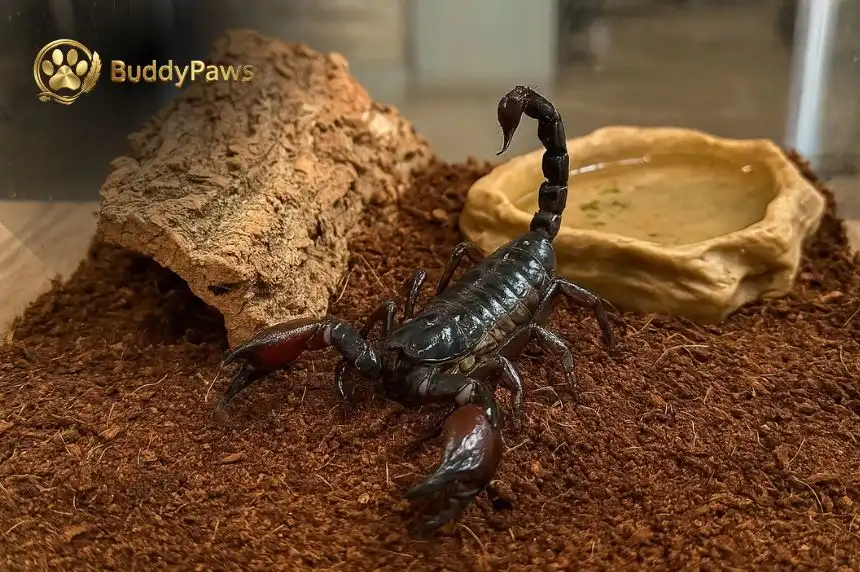
Many species thrive in warm, slightly humid environments with minimal disturbance. Beginners learning emperor scorpion care often discover that stable humidity and low lighting help these scorpions feel secure.
Scorpions naturally dig and hide to stay safe from predators. Providing deep substrate and multiple shelters allows them to display natural behaviors and maintain a calm, comfortable living environment.
Selecting the proper enclosure is a key part of a successful scorpion habitat. The right tank size, ventilation, and design help maintain safety, stability, and a comfortable environment for your scorpion.
A 5–10-gallon glass or plastic enclosure works well for most pet scorpions. Smaller tanks help maintain stable environmental conditions while giving your scorpion enough space to explore, hide, and burrow comfortably.
Good airflow prevents mold and stale air inside the enclosure. At the same time, proper humidity control is essential for species that require slightly moist environments to stay healthy and active.
Scorpions are surprisingly good climbers. A tight, ventilated lid prevents escape while maintaining airflow. Secure enclosures also protect the scorpion from outside disturbances and keep the habitat stable.
Glass tanks are commonly used because they are durable and easy to sanitize. Smooth surfaces allow quick spot cleaning and help maintain a hygienic environment for long-term scorpion care.
Before setting up a tank, beginners can benefit from advice shared by experienced hobbyists. Many keepers exchange enclosure ideas and habitat tips through online groups like the Buddypaws community.
Temperature and moisture levels play a major role in a scorpion’s health. Creating stable environmental conditions helps mimic natural habitats and allows your scorpion to stay active, comfortable, and stress-free.
Most pet scorpions thrive in temperatures between 75–85°F. Consistent warmth supports normal activity and digestion.
Use a small heat mat on one side of the enclosure to create a gentle temperature gradient.
Maintaining balanced humidity prevents dehydration and supports natural behavior like burrowing.
Using a hygrometer helps track conditions, making humidity control easier and ensuring the enclosure remains stable for your scorpion.
Occasional misting helps maintain moisture for species that require slightly humid habitats. Avoid soaking the enclosure.
A light spray keeps the substrate damp without creating overly wet or unhealthy conditions.
Good airflow prevents mold growth and stale air buildup. At the same time, the enclosure should retain enough humidity to support the scorpion’s natural environment without becoming excessively dry.
Many beginners use digital thermometers and hygrometers to monitor conditions.
Sharing setup experiences and temperature tips with other hobbyists through a pet community app can also help improve long-term habitat care.
Proper feeding and routine care are essential for keeping a pet scorpion healthy.
Simple habits like offering the right prey, maintaining cleanliness, and observing behavior help ensure long-term wellbeing.
Scorpions typically eat live insects such as crickets, roaches, or mealworms. Choose prey smaller than the scorpion’s body size to prevent injury and make feeding easier.
Most pet scorpions eat once or twice a week. A regular feeding routine supports healthy digestion and helps you monitor your scorpion's appetite, which can indicate your scorpion’s overall health.
Leftover prey can stress or harm a resting scorpion. Similar to maintaining a pet crayfish tank setup, keeping the enclosure clean by removing uneaten food helps maintain a safer environment.
A small, shallow water dish helps maintain hydration. Ensure it is stable and shallow enough to prevent accidental drowning while still allowing easy access.
Regular observation helps you notice changes in appetite, activity, or posture. Early detection of unusual behavior allows you to adjust care routines and maintain a healthier environment.
New scorpion owners sometimes make small habitat mistakes that affect comfort and health. Learning common errors early helps maintain a stable enclosure and ensures your scorpion lives in a safe environment.
Many beginners add very little substrate, limiting the scorpion’s ability to burrow. Without proper digging space, scorpions may feel stressed and unable to display natural hiding behavior.
Maintenance Tip:
Keep 3–4 inches of suitable substrate and replace sections periodically to maintain cleanliness and proper moisture balance.
Too much moisture can lead to mold growth and unhealthy living conditions. While humidity is important, constantly soaking the enclosure may harm the scorpion’s environment.
Maintenance Tip:
Lightly mist only when needed and monitor moisture levels using a hygrometer.
Some owners forget to regularly check temperature, humidity, or cleanliness. Tracking these conditions through reminders or tools in an app for pet lovers can help maintain a consistent care routine.
Maintenance Tip:
Inspect the enclosure weekly to ensure stable temperature, humidity, and overall cleanliness.
Frequent handling can stress scorpions and increase the risk of defensive stings. These animals prefer minimal disturbance and feel safest when left undisturbed in their enclosure.
Maintenance Tip:
Limit handling and focus on observation-based care instead.
Neglecting enclosure cleaning may lead to waste buildup, leftover prey, or mold. Over time, this can create unhealthy conditions for your scorpion.
Maintenance Tip:
Spot clean the habitat weekly and perform a deeper substrate refresh periodically to maintain hygiene.
Creating a safe and comfortable scorpion habitat does not have to be complicated. With the right tank, proper substrate, balanced temperature, and controlled humidity, beginners can easily build an environment that supports natural scorpion behavior.
Paying attention to feeding routines, enclosure cleanliness, and regular habitat monitoring also helps prevent many common care mistakes.
Scorpions thrive in quiet, stable spaces where they can hide, burrow, and hunt without constant disturbance.
By understanding their basic needs and maintaining consistent care habits, new owners can successfully keep these fascinating arachnids.
A well-planned setup not only keeps your scorpion healthy but also allows you to observe its unique behaviors and appreciate one of nature’s most intriguing small predators.
Loading blogs...