Snail Care
Creating a snail terrarium setup is a rewarding and calming project for beginner micro pet keepers who want an easy, low-maintenance companion animal.
Snails thrive in small, controlled environments, making them perfect for people interested in observing gentle, slow-moving creatures up close.
A well-designed terrarium helps mimic their natural habitat, providing the ideal balance of moisture, soil, plants, and hiding spaces.
For new keepers, understanding the basics of proper housing, temperature, and diet ensures your snails stay healthy, active, and stress-free.
This guide walks you through each step of a beginner-friendly snail terrarium setup, offering simple instructions and practical tips to help you build a safe, enriching environment where your tiny pets can explore, burrow, and thrive.
Choosing the right tank is the first step in proper snail care, helping beginners create a stable, comfortable habitat. The right enclosure supports humidity, safety, and overall well-being for your micro pets.
Start with a small to medium tank that gives snails room to crawl, burrow, and explore. Avoid overcrowding by selecting an enclosure suited to the number of snails you plan to keep.
Proper space promotes natural movement and reduces stress.
Glass or sturdy plastic tanks are ideal because they hold moisture well and allow easy viewing. Make sure the material is non-toxic and escape-proof.
Good visibility helps you monitor hydration, cleanliness, and overall snail health more effectively.
Look for a tank with a secure lid and small ventilation holes to maintain airflow without losing humidity.
Choose an enclosure wide enough to include terrarium plants, giving snails natural cover, climbing options, and a more enriching environment.
Setting up the right substrate and decorations is key for snails, especially for those keeping beginner pets.
A comfortable, natural environment encourages healthy behaviors, moisture retention, and stress-free living for your micro companions.
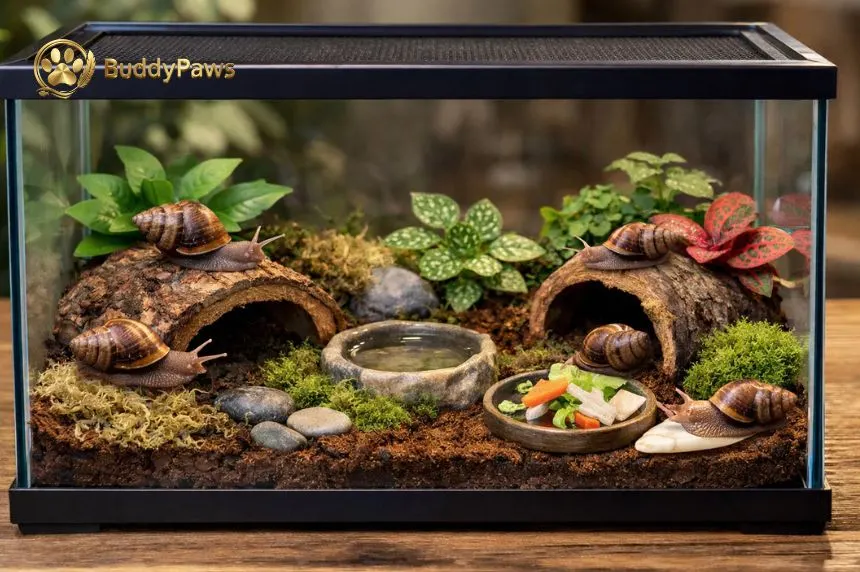
Use coconut fiber, soil, or a mix designed for terrariums to create a soft, moisture-holding substrate.
This helps snails burrow comfortably and maintains a stable environment. Avoid chemically treated soils, as snails absorb substances easily through their bodies.
Snails love to dig, lay eggs, and hide, so give them a substrate layer at least two to three inches deep.
A soft, loose base supports natural burrowing behavior while helping regulate moisture and providing a sense of security.
Add sphagnum moss or leaf litter to help with humidity control, keeping the terrarium moist but not overly wet.
Balance is essential, as too much water can cause mold, while too little can stress your snails and dry their environment.
Place cork bark, stones, and curved hides to mimic a natural habitat. These decorations allow snails to climb, rest, and explore safely.
The variety of textures supports physical stimulation while helping create a visually appealing terrarium landscape.
Live plants make the enclosure more dynamic and offer natural hiding areas. Choose snail-safe options that withstand moisture.
Tracking plant types and care tips through an app for pet lovers helps beginners maintain a thriving micro-ecosystem long-term.
Maintaining a clean snail habitat is essential for keeping beginner pets healthy and thriving.
A well-managed terrarium reduces odors, prevents harmful bacteria buildup, and ensures your snails enjoy a comfortable, stress-free environment every day.
Wipe down the terrarium walls weekly to remove slime trails and condensation. This prevents bacterial growth and keeps visibility clear.
Use warm water only avoid chemicals, as snails are sensitive and can absorb toxins through their skin and delicate feet.
Leftover vegetables and snail waste can quickly lead to mold or mites. Remove decaying food each day and lightly stir the substrate to prevent buildup.
This simple routine keeps your snails’ living space fresh and hygienic.
Replace small sections of the base material weekly to maintain a healthy substrate setup.
This prevents harmful bacteria from accumulating while preserving the beneficial micro-organisms snails rely on for natural digging and burrowing behaviors in their enclosure.
Clean rocks, bark, and hides every one to two weeks using warm water. These items collect bacteria and waste over time.
Ensure everything is fully dry before returning it to the terrarium to avoid excess moisture or mold.
Track humidity, temperature, and general cleanliness using simple tools or a pet community app.
Logging changes helps identify issues early and ensures your snails always enjoy an ideal living environment tailored to their natural needs.
Feeding micro snails properly is essential for keeping beginner pets healthy and active.
A balanced diet supports shell growth, hydration, and overall vitality, ensuring your snails thrive in their small but carefully maintained terrarium environment.
Leafy vegetables like spinach, kale, and lettuce provide essential nutrients and moisture. Always wash greens thoroughly and remove wilted pieces daily.
Rotating different leafy options ensures varied nutrition and prevents your tiny snails from becoming picky or nutrient-deficient over time.
Snails rely on strong shells for protection, making calcium crucial. Offer cuttlebone, crushed eggshells, or calcium powder sprinkled lightly over their food.
Consistent calcium access helps prevent shell thinning, deformities, and slow growth in micro snail species.
Fruits like apples, melons, or pears can be added occasionally to support energy and hydration.
Introduce small pieces and remove leftovers quickly to maintain a healthy snail terrarium setup and avoid attracting unwanted mold or fruit flies.
Never feed snails citrus, salty items, or processed foods.
These ingredients can harm their soft bodies and digestive system. Stick to simple, natural produce and observe how your snails respond to each new food introduced in their diet.
Monitoring what your snails enjoy helps you adjust their diet more effectively.
Using a pet lover's app can simplify tracking portions, feeding times, and health notes, ensuring your micro snails receive consistent and well-balanced nutrition.
Creating a thriving home for your micro snails starts with a thoughtful snail terrarium setup that supports thei daily needs.
From choosing the right tank to maintaining proper humidity, food variety, and cleanliness, every dtails plays a role in keeping these tiny pets comfortable and healthy,
Snails may be small, but they reward good care with fascinating behaviours, steady growth, and calming presence in your space.
As you refine your routine, you’ll learn what your snails prefer and how to adjust their environment for long-term, wellness.
With the right setup and little daily attention, your terrarium becomes a miniature ecosystem where your snails can live happily and naturally.
Loading blogs...