
Download Now


Share with your community!
Pet Community
In a world where businesses often rely on expensive marketing campaigns and major investments, one small railway station in Japan found an unlikely hero, a cat.
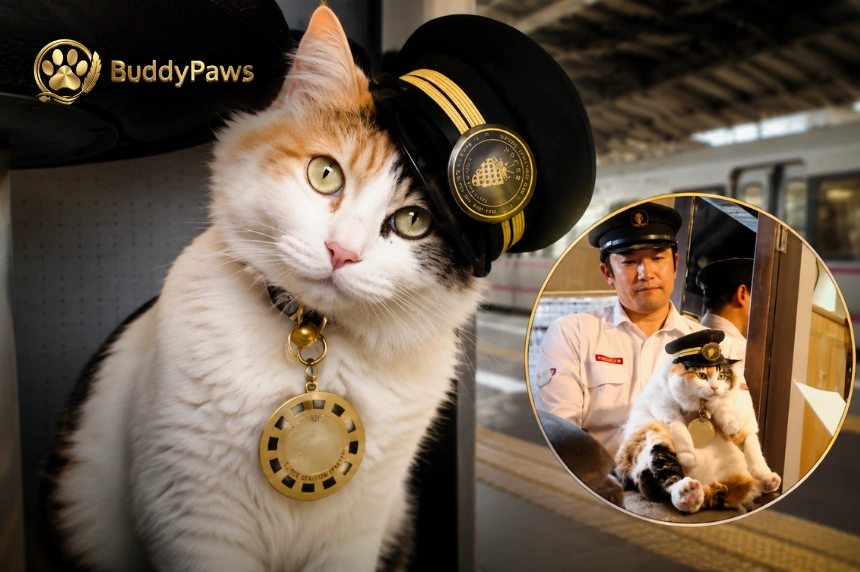
The story of Tama, a stray calico cat who became the Station Master of Kishi Station, is one of the most remarkable examples of how a simple idea can transform an entire community.
What started as a struggling rural train station facing closure soon became a popular tourist destination attracting visitors from across Japan and beyond.
Dressed in a tiny station master’s cap, Tama captured hearts, generated headlines, and helped revive a failing railway line.
Her journey from a beloved station cat to a national icon proves that sometimes the most unexpected leaders can make the biggest impact.
Kishi Station, a small railway stop in rural Japan, was on the verge of shutting down in 2006 due to declining passenger numbers and financial losses. The local train company planned to close the station and remove its staff to cut costs.
However, one unexpected resident changed everything. Tama, a friendly stray calico cat who lived at the station, had already become a favorite among local commuters. When news of the closure spread, many people were more concerned about losing Tama than the station itself.
Recognizing her popularity, the railway company made a decision that would completely transform the station’s future.
Kishi Station was struggling financially and faced permanent closure due to low passenger traffic.
Tama lived at the station and was cared for by the owner of a small shop nearby.
Residents and commuters had grown attached to the cat over the years.
Public interest in Tama encouraged the railway company to rethink its closure plans.
Appointing Tama as Station Master turned the station into a unique attraction and saved it from shutting down.
After becoming Kishi Station’s official Station Master, Tama quickly gained national attention. Her charm attracted thousands of visitors, transforming a quiet railway stop into a thriving tourist destination and generating significant economic benefits for the local community.
The railway company gave Tama an official Station Master title, complete with a small uniform cap. The unusual decision sparked media coverage across Japan, turning the cat into a beloved public figure almost overnight.
People from different parts of Japan visited Kishi Station specifically to see Tama. The steady flow of tourists increased train ridership and introduced many travelers to a station they would otherwise never have known.
As visitor numbers grew, nearby shops, cafes, and vendors experienced higher customer demand. The station's popularity created new business opportunities and brought additional economic activity to the surrounding area.
The railway company launched souvenirs featuring Tama, including toys, stationery, and collectibles. Fans eagerly purchased these items, creating a new revenue stream that further supported the station’s success.
News outlets around the world shared Tama’s story, attracting international visitors and animal lovers. The global attention helped position Kishi Station as one of Japan’s most unusual tourist destinations.
What was once a struggling station became a profitable attraction. Annual earnings increased dramatically, proving that Tama’s popularity played a direct role in helping sustain the railway’s operations.
Tama’s influence extended far beyond her role as Station Master. What began as a creative effort to save a struggling railway station evolved into a cultural phenomenon that touched millions of people.
Over the years, she became a symbol of community spirit, tourism-driven growth, and the special bond between humans and animals. Her popularity helped transform Kishi Station into a destination known worldwide.
Even after her passing, Tama’s impact continued to shape the station’s identity, proving that her contribution was not just a temporary success story but a lasting legacy that continues to attract visitors today.
When Tama passed away in 2015 at the age of 16, the response was unlike anything typically seen for a station mascot. Thousands of fans, railway employees, residents, and visitors gathered to honor her memory.
The train company held an official funeral ceremony and published a formal obituary recognizing her contributions to the railway’s success. Her passing received widespread media attention, highlighting the deep connection people felt toward her.
The event demonstrated how a once-stray cat had become a respected figure whose efforts helped preserve a local landmark and strengthen an entire community.
To ensure Tama’s spirit remained part of Kishi Station, the railway company named another cat, Nitama, as her successor. Meaning “Tama Two,” Nitama continues the tradition of welcoming passengers and delighting visitors.
Tama was also awarded the posthumous title of “Honorary Eternal Station Master,” and a shrine was built in her honor at the station. These tributes celebrate her remarkable achievements while keeping her story alive for future generations.
Today, tourists still visit Kishi Station because of Tama’s legacy, proving that her influence continues to benefit the railway and the local economy years later.
Tama’s story is a remarkable example of how unexpected ideas can create extraordinary results.
What started with a stray cat living at a small rural train station turned into one of Japan’s most inspiring tourism success stories.
Her appointment as Station Master not only saved Kishi Station from closure but also brought global attention, increased passenger numbers, and boosted the local economy.
More importantly, Tama created a sense of community and pride that continues to resonate years after her passing.
Through her successor, Nitama, and the many tributes dedicated to her memory, Tama’s influence remains alive today.
Her journey proves that innovation does not always come from complex strategies; sometimes, a simple and heartfelt decision can transform a struggling business into a lasting cultural landmark.
Loading blogs...