
Download Now


Share with your community!
Pet Community
Most of us grow up believing that wolves fear humans—or worse, that they see us as enemies. Stories, movies, and myths have painted them as dangerous predators that belong as far away from people as possible.
But every once in a while, nature tells a story so extraordinary that it forces us to rethink everything we thought we knew.
This is the true story of The Wolf Called Romeo, a wild black wolf who spent six remarkable years living alongside the people of Juneau, Alaska. He wasn't raised by humans. He wasn't rescued as a pup. He wasn't kept in captivity.
He was completely wild.
And yet, he chose friendship.
His story remains one of the most incredible examples of trust between humans and wildlife ever documented.
The story began during the winter of 2003.
Wildlife photographer and writer Nick Jans was skiing across the frozen Mendenhall Lake near Juneau, Alaska, when he noticed something unusual.
Fresh wolf tracks.
Wolves occasionally passed through the area, but they rarely stayed anywhere near human settlements. Jans assumed the animal would disappear into the wilderness within a day or two.
Instead, the tracks kept appearing.
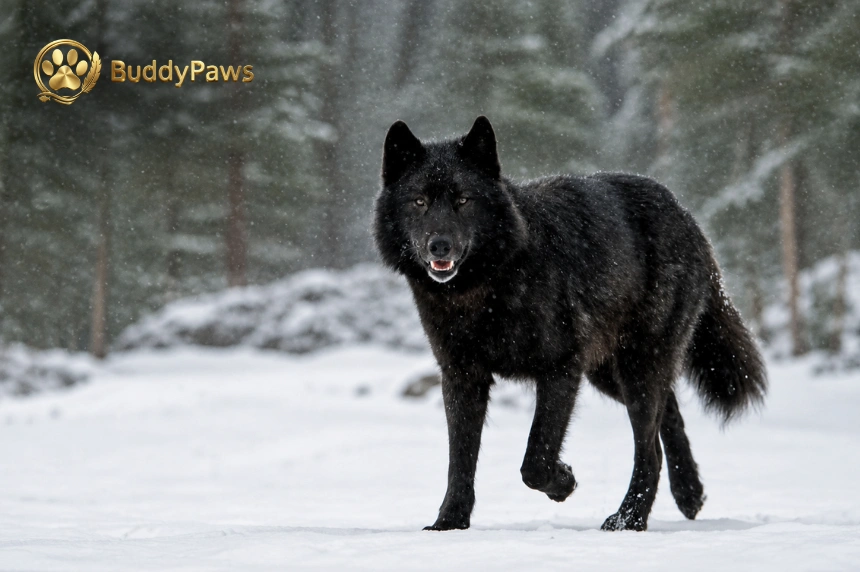
Soon, residents began spotting a magnificent jet black wolf wandering around the lake.
He was enormous.
Calm.
Confident.
And unlike any wolf anyone had ever seen.
Nick's wife, Sherrie, decided to give him a name.
Romeo.
Nobody knew that this wolf would soon become one of Alaska's most beloved wild animals.
Romeo behaved differently from almost every documented wild wolf.
Instead of avoiding people, he observed them.
Instead of running away from dogs, he approached them.
But most importantly...
He never showed aggression.
Residents were understandably cautious at first. A full grown wolf is capable of bringing down moose and deer. Seeing one walking calmly around a frozen lake was enough to make anyone nervous.
Yet Romeo never acted like a predator around the local dogs.
He simply wanted company.
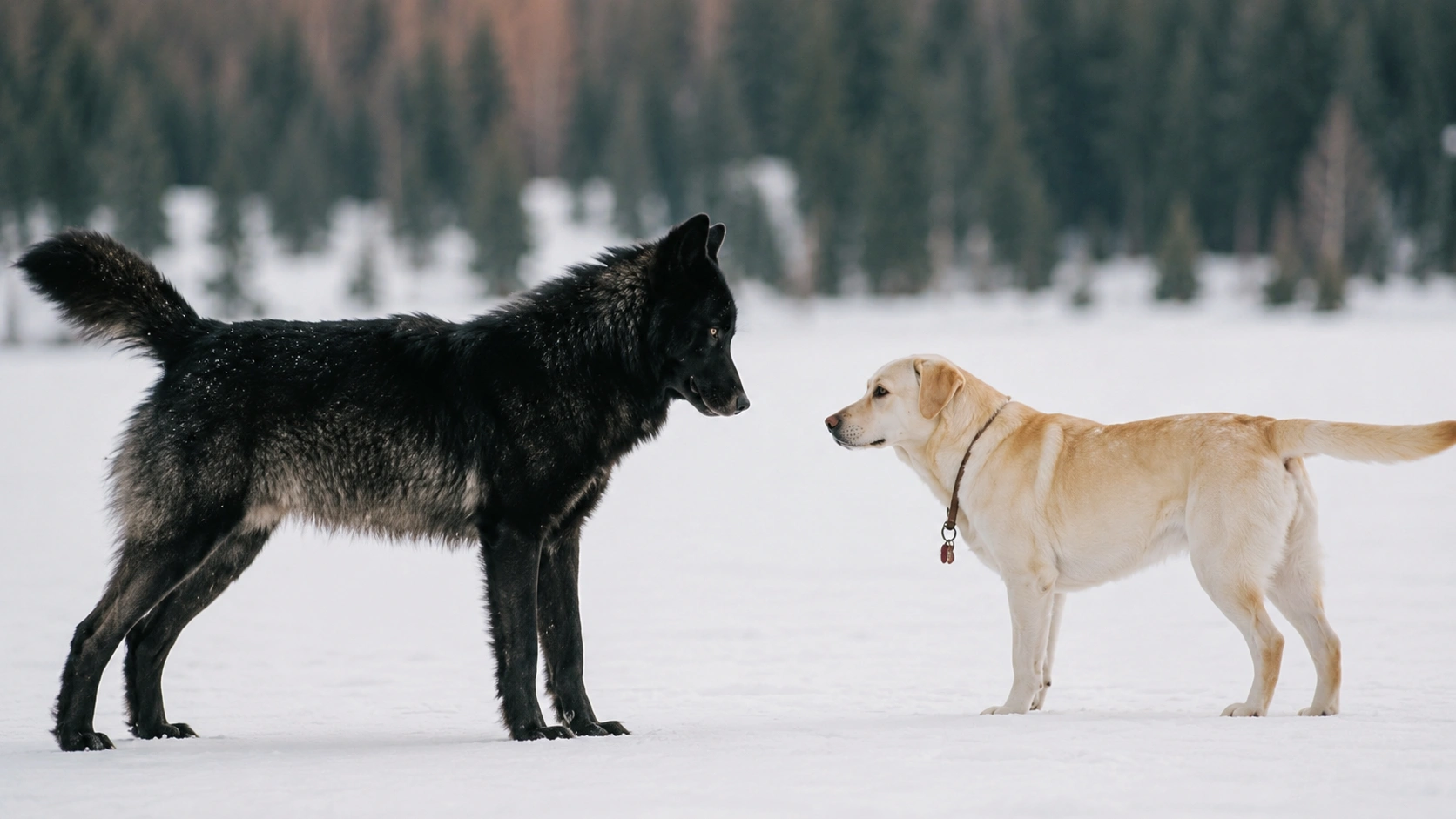
Romeo's first friendships were with dogs.
Owners would bring their pets to Mendenhall Lake for walks, and before long, Romeo would appear from the trees.
Instead of hunting them...
He played.
He chased them across the snow.
He wrestled with them.
He bowed playfully, wagged his tail, and behaved exactly like a giant playful dog.
Many dogs instantly accepted him.
Some became his closest companions for years.
Watching a wild wolf happily playing with pet Labradors, Huskies, and Golden Retrievers became a surprisingly common sight in Juneau.
People couldn't believe what they were seeing.
Romeo never rushed into human relationships.
Trust developed gradually.
Over months and then years, he became comfortable around people who respected his space.
Photographers captured incredible images.
Families watched him from a distance.
Children grew up hearing stories about the friendly wolf on the lake.
Romeo always remained wild.
He was never anyone's pet.
He came and went whenever he pleased.
That freedom made the friendship even more remarkable.
He wasn't staying because he had to.
He stayed because he wanted to.
Few people understood Romeo better than Nick Jans.
As both a wildlife photographer and writer, Jans carefully observed Romeo over many years.
Rather than sensationalizing the wolf, he documented his behavior honestly and respectfully.
Romeo challenged decades of assumptions about wolves.
He demonstrated curiosity.
Patience.
Individual personality.
And an extraordinary ability to coexist peacefully with humans without losing his wild nature.
Jans would later turn these experiences into one of the most beloved wildlife books ever written.
Even today, scientists cannot fully explain Romeo's unusual behavior.
Several theories have been suggested.
He may have become separated from his original pack.
He may simply have possessed an unusually curious personality.
Some experts believe he discovered that humans and dogs posed no threat and gradually developed confidence around them.
Whatever the reason, Romeo never depended on humans for survival.
He continued hunting naturally.
He remained physically healthy.
He was not domesticated.
That makes his story incredibly rare.
From 2003 until 2009, Romeo became part of everyday life in Juneau.
Visitors hoped to catch a glimpse of him.
Photographers traveled across the country.
Local newspapers regularly featured updates about the famous wolf.
Residents developed deep affection for him.
Yet the community also understood something important.
Romeo deserved respect.
Responsible residents avoided feeding him.
They allowed him to remain a wild animal.
Their goal wasn't to tame him.
It was simply to appreciate the incredible trust he had chosen to offer.
Every autumn, Nick Jans worried.
Each hunting season increased the danger.
Romeo trusted people.
Not everyone deserved that trust.
In 2009, the worst happened.
Romeo was illegally shot and killed by out of state hunters near Juneau.
The news devastated the community.
People who had watched him grow over six years were heartbroken.
Flowers appeared near the places where Romeo had often played.
Tributes filled local newspapers.
Many residents described losing Romeo as losing a close friend.
His death became a painful reminder that kindness and trust can sometimes leave wild animals vulnerable.
Determined that Romeo's story would never be forgotten, Nick Jans wrote A Wolf Called Romeo.
The book documents their six year relationship and explores what Romeo taught an entire community about wolves.
Rather than presenting wolves as either villains or magical creatures, Jans portrays them as intelligent, emotional, and deeply individual animals.
The book continues to inspire wildlife lovers around the world.
Romeo changed public perception of wolves in powerful ways.
His story showed that wolves are far more emotionally complex than many people realize.
He demonstrated curiosity without fear.
Confidence without aggression.
Friendship without domestication.
Most importantly, he reminded us that every wild animal has its own personality.
Romeo was not "every wolf."
He was one remarkable individual.
And perhaps that is what made him so unforgettable.
Wildlife stories often focus on conflict between humans and animals.
Romeo offered something different.
He showed what can happen when humans choose respect instead of fear.
His life encouraged countless people to learn more about wolf conservation, animal behavior, and peaceful coexistence with wildlife.
Even today, years after his passing, Romeo continues changing hearts through his story.
At BuddyPaws, we believe every animal has a story worth telling.
Whether it's a loyal dog, a rescued cat, a fearless dolphin, or a remarkable wild wolf like Romeo, these stories remind us how deeply animals can enrich our lives.
If you love reading inspiring animal stories and connecting with fellow pet lovers, BuddyPaws is a community where people who truly care about animals come together to share experiences, celebrate incredible bonds, and spread compassion.
Because every friendship whether between humans, pets, or even wildlife deserves to be remembered.
The Wolf Called Romeo was never trained.
He was never owned.
He never belonged to anyone.
Yet for six unforgettable years, he chose to spend part of his wild life alongside humans simply because he wanted companionship.
His story reminds us that trust is one of nature's rarest gifts.
It cannot be forced.
It cannot be bought.
It can only be earned.
Romeo may have disappeared from the snowy shores of Mendenhall Lake, but his legacy continues to inspire people across the world.
Sometimes the greatest friendships are the ones we never expect.
And sometimes, the wild chooses us.
Loading blogs...