

Download Now


Share with your community!
Pet Community App
Ever wondered what your pet is really up to when you walk out the door? It’s easy to assume they just nap all day, but their behaviour can tell a deeper story.
Many pet owners ask, What do pets do when alone?, and the answer often reveals important clues about their emotional and physical well-being.
From boredom to anxiety or even playful habits, these actions matter more than they seem.
In this guide, we’ll explore common behaviours pets show when you’re not home and why understanding them can help you become a more mindful, responsible pet owner.
Leaving your pet alone may seem routine, but understanding dog home-alone behaviour reveals a lot. From rest to restlessness, their actions reflect comfort, habits, and emotional well-being.
Many pets spend most of their alone time sleeping or relaxing. This is normal, especially for dogs and cats, as it helps conserve energy and pass time until you return.
Pets often explore their surroundings, checking rooms, windows, or familiar spots. This behaviour shows curiosity and helps them stay mentally active, especially if they have access to toys or safe spaces.
Some pets may feel anxious when left alone, leading to pacing, whining, or destructive behaviour. These signs indicate emotional distress and may require attention, training, or environmental changes to manage.
When your pet is alone, their behavior can vary widely. Whether it’s a cat alone at home or a dog waiting for you, these habits reveal their comfort level and emotional state.
Many pets spend hours resting while you’re away. This is normal behavior, as sleep helps pass time and conserve energy, especially when there’s limited stimulation in the environment.
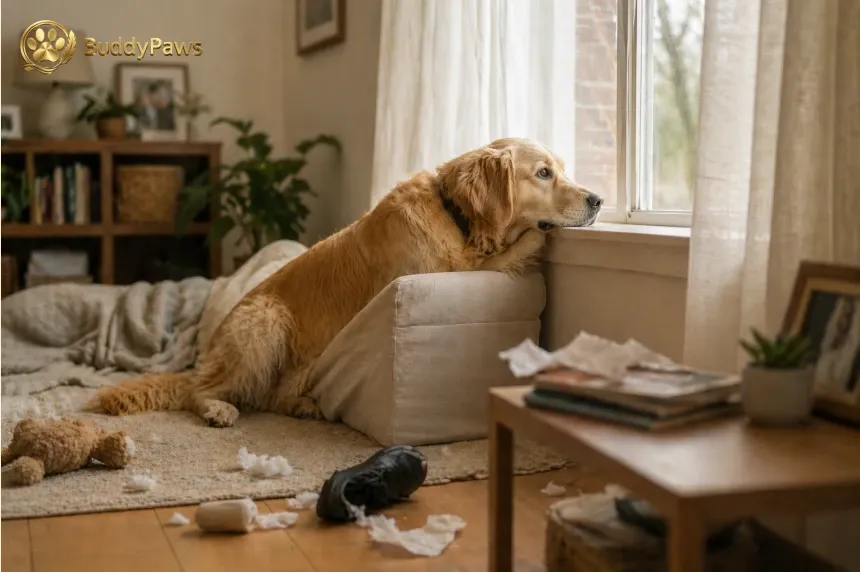
Pets often sit near doors or windows, waiting for your return. This shows attachment and awareness of your routine, as they associate these spots with your arrival and daily activity.
Some pets keep themselves entertained by playing with toys or safe household items. As discussed in the Buddypaws community, mental stimulation helps reduce boredom and supports healthier behaviour patterns.
Pets may visit their food bowls frequently or linger around feeding spots. This behaviour can be driven by routine, hunger cues, or simply a way to stay occupied during alone time.
Chewing furniture, scratching, or pacing can signal boredom or anxiety. These behaviors often occur when pets lack stimulation or feel stressed, highlighting the need for better engagement and comfort strategies.
Subtle behaviour changes can reveal deeper issues in pets. Understanding pet separation habits helps you identify early signs of stress, boredom, or anxiety before they turn into bigger behavioural problems.
While rest is normal, unusually long sleeping hours or low energy levels can signal boredom or emotional withdrawal, especially if your pet lacks stimulation or interaction throughout the day.
Pets that repeatedly walk around, circle rooms, or can’t settle down may be experiencing anxiety. This restless behaviour often reflects discomfort, uncertainty, or difficulty coping with being alone.
A sudden lack of interest in toys or playtime can indicate emotional distress. Pets may disengage when they feel bored, anxious, or mentally unstimulated for extended periods.
Irregular eating patterns, like overeating or skipping meals, can signal stress. Many tools on a pet care app help track feeding habits, making it easier to notice unusual changes early.
Chewing, scratching, or vocalising excessively can be signs of frustration or anxiety. These behaviours often occur when pets are unable to cope with loneliness or lack proper mental and physical engagement.
Paying attention to your pet’s behaviour when you’re away reveals important pet communication signs. It helps you understand their needs, emotions, and overall well-being more clearly.
Observing your pet’s behavior when alone helps you understand if they feel secure or anxious. These insights allow you to respond better and create a more supportive, comfortable environment.
Recognising patterns like boredom or stress early helps prevent destructive habits. Addressing small issues quickly ensures they don’t turn into long-term behavioural problems that are harder to correct later.
Understanding alone-time behaviour allows you to adjust routines, add stimulation, and improve comfort. This leads to a happier, healthier pet with balanced emotional and physical well-being.
When you understand your pet’s needs, your responses become more effective. This builds trust and strengthens your connection, making your pet feel more secure even when you’re not around.
Insights shared on a pet community platform often highlight how tracking behaviour improves care strategies. Learning from others helps you make informed decisions and better support your pet’s daily needs.
Understanding what your pet does when you’re not home gives you valuable insight into their emotional and physical well-being.
Their behaviours, whether calm, playful, or anxious are signals that shouldn’t be ignored.
By paying attention to these patterns, you can make small but meaningful changes to their routine, environment, and overall care.
Simple steps like adding stimulation, maintaining consistency, and addressing stress early can prevent bigger issues later.
Ultimately, being aware of your pet’s alone-time behaviour helps you become a more responsive and responsible owner. It ensures your pet feels safe, balanced, and comfortable even when you’re not around.
Loading blogs...