

Download Now


Share with your community!
Pet Coommunity
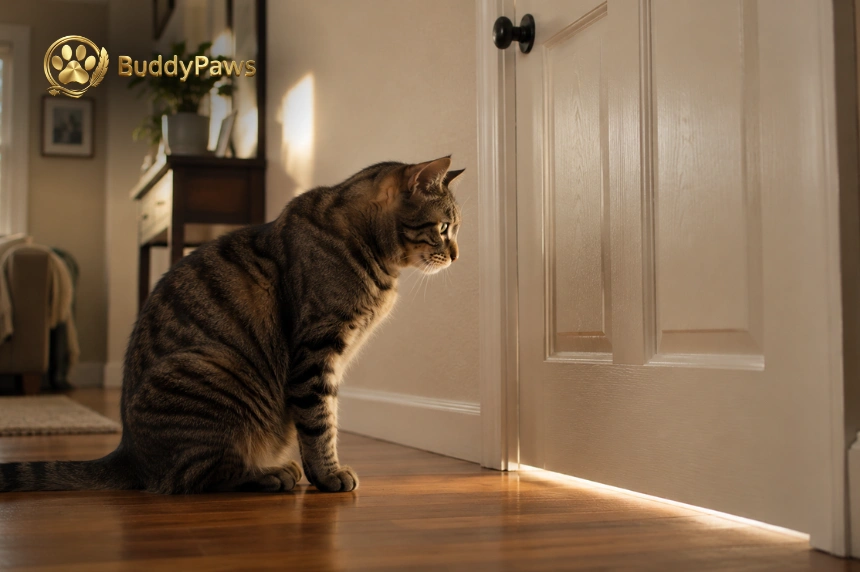
Cats are known for their mysterious and sometimes confusing behaviours, especially when it comes to closed doors around the house.
Many pet owners notice that their cats scratch, meow, or become frustrated outside a closed room, only to lose interest once the door opens.
Cats hate closed doors for several behavioural and instinctive reasons connected to curiosity, territory, control, and environmental awareness.
Unlike humans, cats often dislike barriers that limit access to spaces within their surroundings, even if they have no real intention of entering.
Closed doors can make cats feel excluded, restricted, or uncertain about what is happening behind them.
Understanding this behaviour helps pet owners respond more patiently while improving their cat’s comfort and emotional security.
In this guide, we will explore the common reasons behind this quirky feline habit and how to manage it effectively.
Cats naturally explore their surroundings to feel safe, aware, and mentally stimulated inside their environment.
Cat curiosity behaviour often becomes stronger around closed doors because barriers limit visibility, access, and environmental control, triggering a cat’s instinctive need to investigate unfamiliar situations.
Cats often become more interested in spaces they cannot access freely.
A closed door creates mystery and uncertainty, encouraging cats to investigate what may be happening behind it, even if they previously showed no interest.
Cats are naturally territorial animals that prefer monitoring their environment continuously.
Closed doors block visual and physical access, making some cats uncomfortable because they cannot fully observe or control movements within their familiar surroundings.
Even quiet rooms contain unfamiliar scents, sounds, or movement that cats can detect easily.
Their strong senses encourage investigation whenever a closed door prevents them from understanding environmental changes happening nearby inside the home.
Many pet owners notice weird cat habits involving scratching doors, meowing outside rooms, or reacting strongly to barriers indoors.
Cats often dislike blocked spaces because barriers can affect their curiosity, territory awareness, emotional comfort, and sense of environmental control significantly.
Cats naturally view their home as shared territory they can access freely whenever they choose.
Closed doors interrupt their ability to monitor spaces comfortably, creating frustration and increasing curiosity about restricted areas within the environment.
Cats are highly observant animals that enjoy monitoring household movement and daily activities.
Closed doors may make them feel excluded from important events, encouraging attention-seeking behaviour like scratching, meowing, or waiting outside rooms persistently.
Cats are instinctively curious and often investigate unfamiliar sounds, smells, or movement behind closed spaces.
Many pet owners discuss these behaviours on a pet community app to understand why barriers trigger strong curiosity and attention from cats.
Cats feel more secure when they can move freely throughout their surroundings without restrictions.
Barriers reduce their sense of control, which may increase anxiety, frustration, or repeated attempts to access blocked areas around the home.
Indoor cats lacking mental stimulation may become more focused on closed doors simply for entertainment.
Investigating barriers provides excitement, sensory engagement, and new experiences that help relieve boredom during inactive periods inside the house.
Some cats realise that scratching doors or meowing brings quick attention from owners.
Over time, this behaviour may become a habit because cats learn that reacting to barriers often results in interaction, rewards, or opened doors eventually.
Cats rely heavily on routine, territory, and environmental awareness to feel secure in their surroundings.
Understanding cat psychology helps explain why changes in access, control, or personal space can strongly influence feline emotions, reactions, confidence, and everyday behavioural patterns.
Cats feel more comfortable when they can move freely throughout familiar spaces.
Restricted access can create frustration or anxiety because closed areas interrupt their ability to monitor surroundings and maintain environmental control consistently inside the home.
Cats naturally view their home as personal territory that should remain accessible and predictable.
Sudden barriers or environmental changes may trigger defensive behaviour, excessive curiosity, or stress-related reactions connected to territorial instincts and personal security needs.
Having the freedom to explore, observe, or leave situations helps cats feel emotionally balanced and safe.
When cats lose environmental control, they may react through vocalisation, scratching, pacing, or unusual attention-seeking behaviours around restricted spaces.
Cats thrive on predictable routines involving feeding, sleeping, and environmental access patterns daily.
Many owners using an app for pet lovers also track behavioural changes and routines to better understand stress triggers affecting their cat’s comfort levels.
A closed room may create emotional tension because cats dislike uncertainty and blocked visibility.
Even without wanting to enter, some cats become frustrated simply because they cannot inspect or control what exists beyond the barrier.
Cats often associate shared spaces with safety, companionship, and routine interactions with their owners.
Being separated by closed doors can sometimes create mild social frustration, especially in cats strongly attached to human presence and household activities.
Cats often display attention-seeking behaviours like scratching doors, meowing constantly, or even sitting on laptop screens during work hours.
Managing door-related frustration requires patience, environmental enrichment, routine stability, and positive interaction to help cats feel calmer indoors.
Cats become less focused on closed doors when they have engaging activities nearby.
Interactive toys, climbing trees, scratching posts, and window perches help reduce boredom while encouraging healthy mental and physical stimulation throughout the day.
Immediately opening doors after constant meowing may encourage repetitive attention-seeking behaviour.
Waiting for calmer behaviour before responding helps cats understand that patience and quiet actions are more effective than persistent vocal frustration.
Cats feel more secure when they have cosy resting areas throughout the home.
Soft beds, elevated shelves, and quiet corners provide emotional comfort, helping reduce anxiety or curiosity connected to restricted rooms and closed spaces.
Consistent feeding, playtime, and interaction schedules help cats feel emotionally secure indoors.
Predictable routines reduce stress and uncertainty, making cats less likely to become overly frustrated or anxious when certain rooms remain temporarily inaccessible.
Many cat owners on BuddyPaws share enrichment ideas, training advice, and behavioural tips that help reduce attention-seeking habits.
Positive interaction and mental engagement often improve a cat’s confidence and reduce frustration linked to closed doors.
Rewarding calm behaviour with treats, affection, or playtime helps cats develop healthier emotional responses around closed spaces.
Positive reinforcement builds trust while reducing stress-driven behaviours like scratching, crying, or pacing near closed doors consistently.
Cats becoming frustrated by closed doors is a common behaviour linked to curiosity, territorial instincts, environmental awareness, and emotional security.
Even when cats do not actually want to enter a room, restricted access can trigger their natural desire to monitor and control their surroundings.
Behaviours like scratching, meowing, pacing, or waiting outside doors are often signs of curiosity rather than disobedience.
Providing mental stimulation, consistent routines, comfortable resting spaces, and positive interaction can help reduce frustration and attention-seeking habits effectively.
Pet owners should remain patient and avoid reinforcing excessive meowing or anxious behaviour unintentionally.
Understanding feline psychology helps create a calmer home environment while strengthening trust and communication between cats and their owners.
By responding thoughtfully to these behaviours, cat parents can support their pets’ emotional comfort and encourage healthier, more relaxed behaviour around closed doors and restricted spaces indoors.
Loading blogs...