

Download Now


Share with your community!
Pet Community
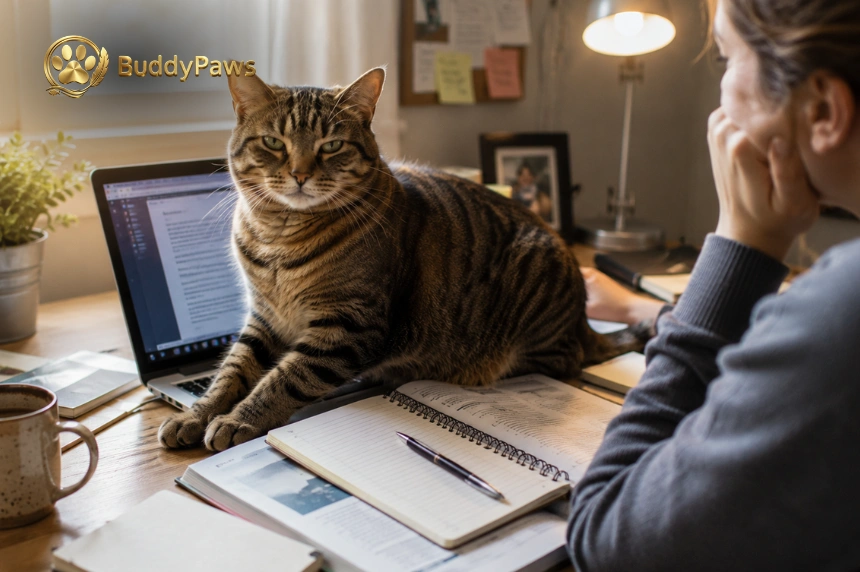
Many cat owners have experienced the funny yet frustrating moment when their pet suddenly walks across a keyboard, sits on an open book, or blocks a workspace completely.
Whether working, reading, or using devices, the cat sitting on the laptop is a behaviour surprisingly common among indoor cats.
This habit is often connected to attention-seeking, curiosity, comfort, warmth, and emotional bonding with their owners.
Cats naturally become interested in objects that receive human focus and interaction, especially when those objects seem important or frequently used.
Warm surfaces like laptops also attract cats because they provide physical comfort and a cosy resting spot.
Understanding why cats behave this way can help owners respond more patiently while creating a better balance between work time and pet interaction.
In this guide, we will explore the behavioural reasons behind this adorable feline habit and practical ways to manage it.
Cats often become more interactive when owners focus on work, reading, or devices for long periods indoors.
Attention-seeking cats naturally try to interrupt activities because they crave engagement, emotional connection, stimulation, and shared interaction with their favourite humans daily.
Cats notice when owners pay close attention to certain objects or activities.
Books, laptops, phones, and papers become more interesting because cats associate human focus with something valuable, important, or worth investigating themselves.
Many cats interrupt activities because they want affection, comfort, or interaction from their owners.
Sitting near keyboards, books, or workspaces helps cats feel emotionally connected while receiving attention, touch, and reassurance during busy household moments.
Indoor cats lacking stimulation may seek entertainment by interrupting work or daily tasks.
Without enough playtime, climbing opportunities, or mental enrichment, some cats develop habits focused on gaining attention through playful or persistent behaviour.
Cats naturally prefer warm, active, and comfortable environments where they feel secure and emotionally connected with their surroundings.
Cat behaviour explained through daily habits often shows that busy spaces provide warmth, stimulation, safety, and opportunities for social interaction indoors.
Cats are naturally drawn to warm areas because heat helps them conserve energy and feel physically comfortable.
Laptops, blankets, couches, and sunny spots often become favourite resting places where cats can relax peacefully for long periods.
Cats enjoy spaces where movement, sounds, and daily activities constantly happen around them.
Busy environments provide mental stimulation and help indoor cats stay curious, alert, and engaged with household routines and social interactions throughout the day.
Many cats prefer staying close to their humans because it provides emotional security and companionship.
Some pet owners use a pet community app to learn more about attachment-based feline behaviours and healthy ways to encourage social interaction.
Cats often choose central locations like desks, sofas, or countertops because these spots help them observe their surroundings comfortably.
Elevated or frequently used areas allow cats to monitor household activity while feeling secure and protected indoors.
Cats feel calmer in spaces carrying familiar human scents because these smells create emotional reassurance and territory recognition.
Frequently used items like books, pillows, laptops, or clothing naturally attract cats seeking comfort and environmental familiarity daily.
Cats quickly learn that sitting in busy spaces often results in attention, petting, or interaction from owners.
Positive responses unintentionally reinforce this behaviour, encouraging cats to repeatedly choose active household areas for engagement and comfort.
Cats are naturally curious animals that form strong emotional bonds with their owners over time.
Clingy cat habits often develop because cats seek comfort, stimulation, security, and interaction while staying closely connected to people and activities inside the home.
Cats become curious about objects, sounds, and activities that attract human attention regularly.
Busy environments stimulate their senses, encouraging investigation and making them more likely to interact with laptops, books, keyboards, or personal belongings nearby.
Cats that feel emotionally attached to their owners often stay physically close throughout the day.
Following people from room to room helps cats feel secure, socially connected, and involved in daily household routines and activities consistently.
Cats rely heavily on observation to understand environmental changes and daily routines.
Watching human activities closely allows them to monitor movement, recognise patterns, and satisfy their instinctive need for awareness and environmental control indoors.
Indoor cats sometimes develop attention-seeking behaviours when they lack enough mental enrichment or playtime.
Many owners use an app for pet lovers to discover enrichment activities, training ideas, and ways to keep curious cats mentally engaged successfully.
Cats are strongly comforted by familiar scents connected to their owners and personal environments.
Sitting on frequently used items helps cats feel emotionally safe while reinforcing their sense of belonging and connection within the household space.
Strong attachment sometimes encourages cats to interrupt work, reading, or screen time to gain interaction.
Cats often learn that sitting nearby increases affection, conversation, or physical attention from owners during busy daily activities indoors.
Cats often seek attention through behaviours like blocking workspaces, climbing keyboards, or demanding interaction unexpectedly.
Since cats hate closed doors and restrictions, gentle redirection techniques work better than punishment when encouraging calmer behaviour and creating positive indoor routines successfully.
Providing a soft bed, cat tree, or cosy blanket near your workspace gives cats an appealing resting spot.
Cats are more likely to stay nearby calmly when they have a comfortable space designed specifically for them.
Puzzle feeders, moving toys, and interactive play sessions help redirect a cat’s energy away from laptops or books.
Mental stimulation keeps cats entertained while reducing boredom-driven attention-seeking behaviour during work or reading activities indoors.
Giving treats or praise when cats relax quietly encourages positive habits naturally.
Reward-based training helps cats understand that calm behaviour receives attention, reducing the need to interrupt activities repeatedly for interaction or stimulation throughout the day.
Regular play sessions help cats release energy and feel emotionally satisfied.
Cats receiving enough attention, exercise, and engagement are usually less likely to interrupt workspaces or seek constant interaction during busy household activities consistently.
Many pet owners on BuddyPaws share practical enrichment ideas, calming routines, and training advice for managing attention-seeking cat behaviour.
Community experiences often help owners discover stress-free solutions that improve indoor behaviour successfully over time.
Punishing cats or locking them away may increase stress, frustration, or attention-seeking behaviour further.
Gentle redirection, patience, and positive reinforcement help maintain trust while encouraging healthier emotional responses and calmer interactions around workspaces consistently.
Cats sitting on laptops, books, keyboards, and other frequently used objects is a common behaviour linked to curiosity, comfort, warmth, and emotional bonding.
Many cats naturally seek attention during activities because they enjoy interacting closely with their owners and being involved in daily routines.
Objects receiving human focus often become more attractive to cats, especially warm surfaces like laptops that provide both physical comfort and stimulation.
While this behaviour may sometimes interrupt work or reading, it is usually a sign of affection, trust, and social connection rather than mischief.
Providing alternative resting spaces, regular playtime, mental stimulation, and positive reinforcement can help redirect attention-seeking behaviour gently without causing stress.
Understanding feline behaviour more patiently allows cat owners to create a balanced environment where both productivity and pet interaction can coexist comfortably while strengthening the bond between cats and their humans over time.
Loading blogs...