

Download Now


Share with your community!
Pet Community
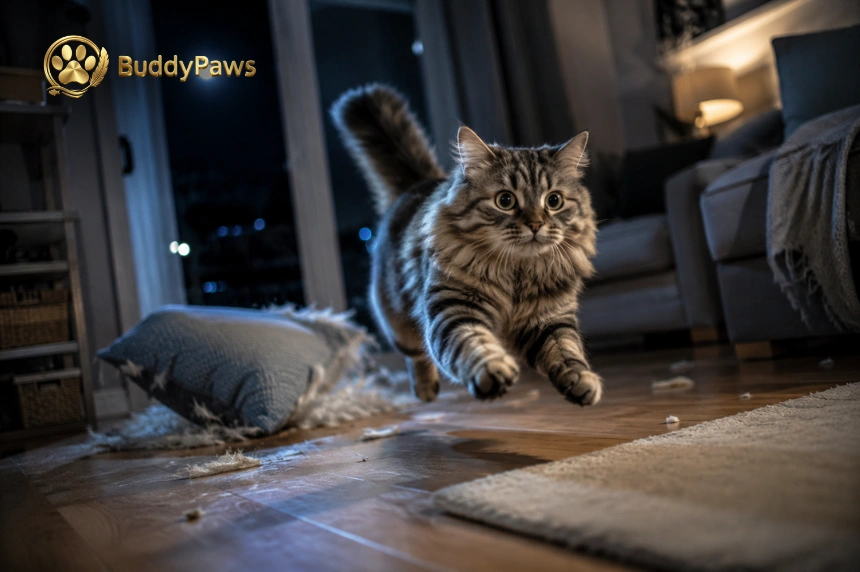
If your cat suddenly races through the house, leaps onto furniture, and dashes from room to room after dark, you are witnessing one of the most common feline behaviours.
These energetic bursts, often called cat zoomies at night, are usually a normal expression of instinct and excess energy. Cats are naturally crepuscular, meaning they are most active at dawn and dusk when their wild ancestors hunted.
Indoor cats may release pent-up energy through short, intense sprints that seem chaotic but are completely healthy.
In this article, we will explore the science behind nighttime zoomies, how hunting instincts and daily routines influence this behaviour, and when excessive running could signal stress, boredom, or an underlying health issue that deserves closer attention from pet owners.
Understanding crazy cat behaviour begins with recognizing that nighttime zoomies are a natural way for cats to release energy, follow hunting instincts, and respond to environmental triggers after long periods of daytime rest.
Indoor cats spend many hours sleeping and conserving energy. Sudden nighttime sprints help them burn excess energy, stretch muscles, and satisfy their natural need for short bursts of intense physical activity.
Cats are most active at dawn and dusk because their wild ancestors hunted during these hours. Evening zoomies reflect this inherited rhythm and prepare them for instinctive stalking and chasing behaviours.
Changes such as feeding times, new toys, visitors, or unexpected sounds can trigger energetic bursts. Cats may respond by running, jumping, and racing through the house as part of normal stimulation.
Understanding a cat running at night begins with the instincts that make cats active after sunset. Their bodies are designed for short hunting bursts, balancing long daytime rest with focused movement.
Cats inherit crepuscular rhythms that make dawn and dusk their preferred hunting periods.
Evening activity allows them to practise stalking, chasing, and pouncing behaviours, satisfying instincts that once helped their wild ancestors capture prey efficiently.
A pet community app helps owners track zoomies, play sessions, and sleep patterns.
Shared observations reveal how evening bursts follow feeding schedules, boredom, or environmental changes, making feline behaviour easier to understand and compare with.
Indoor cats often lack opportunities to hunt real prey, so nighttime running acts as instinct rehearsal.
Chasing toy shadows or imaginary targets provides mental enrichment, sharpens coordination, and releases stored energy that might otherwise lead to problems.
Because why cats sleep so much relates to energy conservation, long daytime naps restore muscles and sharpen senses.
Rest prepares cats for brief, intense activity periods when their brains and bodies are primed for stalking.
Light levels, household noise, and owner routines can activate a cat's internal clock.
Opening cabinets or initiating play may signal that conditions are ideal for exploration, exercise, and instinct-driven behaviour throughout the home.
Regular evening play with wand toys and puzzle feeders channels hunting instincts productively.
Providing structured activity before bedtime reduces zoomies, supports healthy weight management, and helps cats settle more calmly during the night indoors, peacefully.
Understanding hyperactive cats helps owners decide whether nighttime running is playful or concerning.
Most zoomies are harmless, but sudden behavioural changes deserve closer observation and timely veterinary attention when needed.
Cats often sprint after long naps to release stored energy and stretch their muscles.
If your cat eats well, grooms regularly, and behaves normally during the day, these nighttime bursts usually reflect healthy instinctive activity.
Kittens and young adults naturally have higher energy levels and stronger hunting instincts.
Frequent nighttime running, jumping, and chasing are common developmental behaviours that usually decrease as cats mature and settle into predictable household routines.
Joining a community for animal lovers can provide enrichment ideas that reduce boredom.
Interactive toys, climbing structures, and scheduled play sessions help redirect excess energy and minimise repeated nighttime zoomies indoors for healthier sleep patterns.
A noticeable increase in running, hiding, vocalising, or aggression may indicate environmental stress.
New pet visitors, routine disruptions, or loud noises can trigger hyperactivity and should be addressed through reassurance and environmental adjustments at home.
Nighttime running accompanied by appetite loss, vomiting, disorientation, or litter box changes may suggest pain, thyroid disease, or neurological issues.
Veterinary evaluation is recommended when unusual energy appears alongside other concerning symptoms in your cat.
BuddyPaws helps owners log activity, sleep, feeding, and behavioural changes over time.
Organised records make it easier to identify triggers, monitor trends, and share useful information with veterinarians during health evaluations and treatment planning discussions.
Nighttime zoomies are one of the most entertaining and natural feline behaviours.
Understanding the causes of car zoomies at night helps owners recognise that these sudden bursts of energy are usually linked to hunting instincts, built-up energy, and crepuscular activity patterns.
Kittens are young cats that are especially prone to racing through the house, while boredom and lack of stimulation can intensify the behaviour.
In most cases, nighttime running is completely normal when cats continue eating, grooming, and using the litter box regularly.
However, sudden changes accompanied by vomiting, disorientation, aggression, or appetite loss may signal stress or an underlying medical issue.
By providing enrichment, scheduled play, and close observation, owners can support healthy activity patterns and ensure their cats remain happy, stimulated, comfortable, and thriving in the home environment.
Loading blogs...