
Download Now


Share with your community!
Pet Community
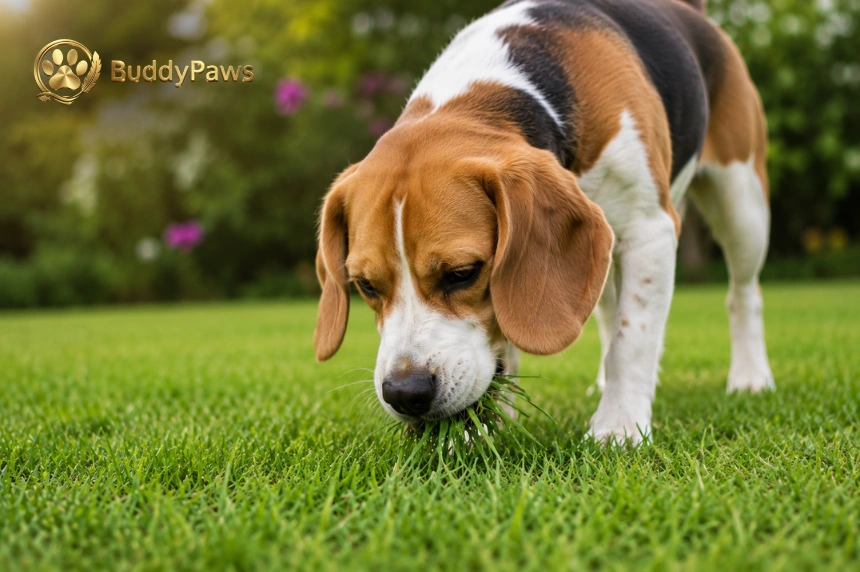
You take your dog outside, they sniff around for a few minutes, and suddenly they start chewing grass like it is part of their breakfast.
Naturally, you start wondering, why does my dog eat grass?
Grass eating is surprisingly common among dogs. In many cases, it is completely normal. Dogs may eat grass because they enjoy its taste, want to explore, are bored, or simply because the behavior has become part of their routine.
Sometimes, however, frequent grass eating can occur alongside digestive discomfort or other health concerns.
The important thing is to look at how often your dog eats grass and what other symptoms appear with it.
Here are the most common reasons behind this curious canine habit.
There is no single explanation that applies to every dog.
Common reasons include:
Let us look at each reason more closely.
Sometimes there is no complicated explanation.
Your dog may just enjoy eating grass.
Fresh grass can have an interesting smell, texture, and taste, especially after rain or during periods of new growth.
Some dogs carefully select a few blades and continue walking.
Others stop at the same grassy patch every day.
Occasional grass eating is generally less concerning when your dog:
Dogs have plenty of habits that seem strange from a human perspective.
Grass eating can simply be one of them.
Dogs experience the outdoors very differently from us.
A simple patch of grass may contain smells left by:
Your dog may sniff, lick, chew, and taste objects as part of exploring their surroundings.
This is one reason dogs can spend several minutes investigating a patch of ground that looks completely ordinary to us.
Understanding these small behaviors can tell you a lot about your pet. You can also explore 8 signs your pet thinks you are part of their pack to learn more about everyday behaviors connected with your dog's relationship with you.
Another possible explanation for why dogs eat grass involves fiber.
Grass contains fiber, and fiber plays an important role in normal digestion.
However, grass eating does not automatically mean your dog's diet is deficient.
If your dog already eats a complete and balanced diet, avoid randomly adding supplements or changing food simply because they occasionally chew grass.
Instead, talk to your veterinarian if you notice:
A veterinarian can help determine whether nutrition is actually contributing to the behavior.
This is probably the most common explanation pet owners hear.
Dogs sometimes appear to seek out grass when they are experiencing nausea or digestive discomfort.
The key is to look at the behavior surrounding the grass eating.
A dog calmly chewing three or four blades during a walk is different from a dog frantically searching for grass while appearing uncomfortable.
Watch for symptoms such as:
If these symptoms continue, contact your veterinarian.
This is another extremely common question.
Some dogs eat grass and then vomit shortly afterward.
But that does not necessarily mean the grass caused the vomiting.
Two possibilities exist.
Your dog may have been experiencing nausea and sought out grass because they felt uncomfortable.
Eating a large amount of grass can sometimes irritate the stomach and contribute to vomiting.
An occasional episode in an otherwise healthy dog may not be serious.
However, you should contact your veterinarian if vomiting is:
Repeated vomiting should never simply be blamed on grass eating.
Dogs need more than food, water, and a place to sleep.
They also need mental stimulation.
A bored dog may develop unusual behaviors simply because there is nothing more interesting to do.
Grass eating may become one of those activities.
Your dog may need more stimulation if they:
Try introducing:
If your dog seems especially interested in companionship, read 7 clear signs your pet wants to socialize more.
You can also explore why a pet friendship app can help pet owners if your dog enjoys meeting and interacting with compatible pets.
Dogs quickly learn patterns.
Imagine this:
Your dog starts eating grass.
You immediately call them.
You walk toward them.
You offer a treat to make them stop.
Your dog may eventually learn that:
Eating grass gets my human's attention.
The behavior can then become reinforced even if grass was not particularly interesting in the beginning.
This does not mean you should ignore unsafe behavior.
It simply means you should pay attention to what happens immediately before and after your dog starts eating grass.
Sometimes the surrounding pattern explains the behavior.
Dogs experience stress too.
Some dogs respond by:
In some cases, unusual eating behaviors may appear during stressful periods.
Think about whether anything recently changed in your dog's life.
Possible triggers include:
A predictable routine can help many dogs feel more secure.
You can read how to use a pet parenting app to manage your pet's routine for more ideas on creating consistency around feeding, activities, and everyday care.
Pica describes persistent consumption of objects that are not normally considered food.
A dog with pica may repeatedly eat things such as:
Eating a few blades of grass does not mean your dog has pica.
But if your dog compulsively eats grass along with other nonfood materials, speak with your veterinarian.
Medical, nutritional, or behavioral factors may need to be investigated.
In many cases, yes.
Occasional grass eating is generally less concerning when your dog is otherwise:
What matters most is whether the behavior suddenly changes.
If your dog rarely ate grass before and suddenly begins eating large amounts every day, pay attention.
A sudden behavioral change can be more meaningful than the behavior itself.
Grass itself is not always dangerous.
The bigger concern is what might be on the grass.
Outdoor grass can potentially contain:
This means a dog casually nibbling untreated grass in your garden is very different from eating vegetation from an unfamiliar lawn.
Avoid allowing your dog to eat grass that may have recently been treated with lawn chemicals.
Some dogs simply enjoy eating grass regularly.
Daily grass eating is not automatically a medical problem.
However, ask yourself:
If several of these changes are happening together, talk with your veterinarian.
Not necessarily.
A healthy dog occasionally eating a few blades of clean, untreated grass may not need to be stopped.
However, discourage grass eating if:
The goal is not necessarily to eliminate every blade of grass.
The goal is to keep your dog safe.
If grass eating has become excessive, focus on the possible cause.
Try:
Regular activity can reduce boredom and provide healthy physical stimulation.
Exercise needs vary depending on your dog's age, breed, health, and personality.
Walks are not only about physical exercise.
Sniffing is valuable mental enrichment for dogs.
Give your dog safe opportunities to explore instead of rushing every walk.
Reward based training can help redirect your dog away from unsafe grass, plants, food, or other objects.
Regular meal times, exercise, play, and rest can help your dog feel secure.
You can learn more in our guide to creating a daily routine for a happy dog.
Grass eating deserves veterinary attention when it appears alongside other concerning symptoms.
Contact your veterinarian if your dog experiences:
You should also seek help if your dog simply seems noticeably different from normal.
Pet parents often recognise subtle changes before more obvious symptoms appear.
If you have been wondering why does my dog eat grass, there is usually no reason to panic.
For many dogs, grass eating is simply a normal habit.
They may enjoy the taste, explore with their mouths, seek stimulation, or occasionally eat grass when their stomach feels uncomfortable.
The most important thing is to watch the overall pattern.
A happy and healthy dog occasionally nibbling grass is very different from a dog suddenly eating large quantities while vomiting or showing other signs of illness.
Understanding your dog's everyday habits makes it much easier to recognise when something truly changes.
And those everyday behaviors are part of what makes every pet unique.
Every dog has their own strange habits, favorite activities, personality, and little routines.
BuddyPaws gives pet parents a place to share those experiences, connect with other animal lovers, find compatible pet friends, and celebrate everyday life with their pets.
You can also discover more pet care and behavior content through the BuddyPaws community.
Download BuddyPaws on Google Play: https://play.google.com/store/apps/details?id=com.buddyPaws
Download BuddyPaws on the App Store: https://apps.apple.com/ua/app/buddypaws/id6756308405
Loading blogs...