

Download Now


Share with your community!
Pet Community
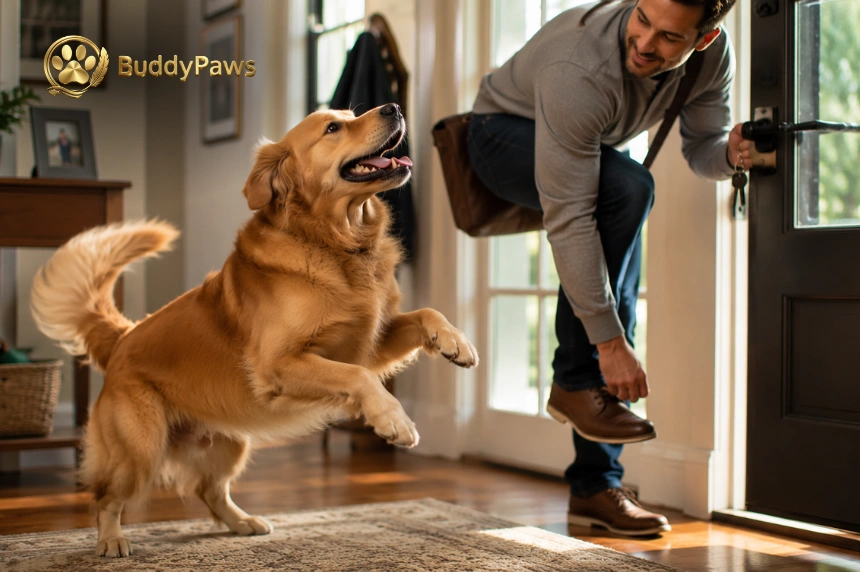
Many dog owners notice their pets suddenly becoming overly excited, restless, clingy, or energetic right before they leave the house.
Some dogs start jumping, barking, pacing, or following their owners from room to room as departure time approaches.
Dogs react before their owners leave because dogs are highly observant animals that quickly learn daily routines, sounds, and behavioural patterns connected to departures.
Simple actions like picking up keys, wearing shoes, or grabbing a bag can signal that their owner is about to leave.
For some dogs, this excitement comes from anticipation or attention-seeking behaviour, while others may experience mild stress or separation anxiety.
Understanding why this behaviour happens can help pet owners respond calmly and support their dog’s emotional comfort.
In this guide, we will explore the reasons behind pre-departure excitement and ways to manage it effectively.
Dogs are highly observant animals that quickly connect daily actions with upcoming events and routines. Dog routine recognition allows them to predict departures by noticing repeated behaviours, sounds, movements, and environmental patterns happening before their owners leave home.
Dogs carefully observe routines like wearing shoes, picking up keys, locking doors, or carrying bags. Repeated exposure helps them associate these actions with departures, causing excitement or emotional reactions before owners actually leave the house.
Dogs become familiar with sounds linked to departure routines, such as alarms, door handles, or vehicle noises. They also recognise timing patterns, understanding when owners usually leave for work, errands, or regular daily activities consistently.
Dogs pay close attention to facial expressions, movement speed, posture, and emotional energy during departure preparation. Subtle body language changes help dogs predict when owners are about to leave, triggering excitement, stress, or attention-seeking behaviour.
Dogs often react emotionally to daily departure routines because they strongly connect owner's behaviour with temporary separation. Separation anxiety signs may appear as excitement, clinginess, pacing, or barking when dogs anticipate changes connected to their owner leaving home.
Some dogs become excited before departures because routines create stimulation and attention. Actions like moving around quickly, grabbing belongings, or talking loudly increase energy levels, making dogs more active and emotionally alert before owners leave.
Dogs that feel emotionally attached to their owners may experience stress when separation approaches. Anxiety-related behaviours such as whining, pacing, trembling, or excessive following often appear when dogs sense their owner preparing to leave the house.
Dogs easily memorise predictable schedules and environmental patterns connected to departures. Many pet owners use a pet parenting app to track routines, monitor behaviour changes, and identify emotional triggers affecting their dog’s reactions before separation periods.
Dogs are sensitive to human emotions and body language during daily interactions. Stress, rushing, frustration, or nervous energy from owners can influence canine behaviour, increasing excitement or anxiety before departure routines begin consistently.
Dogs naturally enjoy companionship, playtime, and social engagement with family members. Some dogs become restless before departures because they anticipate loneliness, boredom, or reduced interaction while owners remain away from home temporarily.
Dogs without enough exercise, enrichment, or mental activity often react more strongly during departure routines. Excess energy and boredom can increase hyperactive behaviour, barking, or clinginess when owners prepare to leave the house regularly.
Dogs often display emotional and behavioural changes before their owners leave home for daily activities. Smart dog behaviour allows pets to recognise routines, predict departures, and react through excitement, attention-seeking actions, stress responses, or increased emotional attachment patterns.
Some dogs become energetic before departures because they associate routines with activity, attention, or future rewards. Jumping, tail wagging, and playful behaviour often reflect excitement rather than stress or negative emotional reactions during departure preparation.
Dogs may bark, follow owners closely, or demand affection before departures to gain extra interaction. These behaviours often happen because dogs understand that leaving routines reduces social contact and companionship temporarily throughout the day.
Certain dogs show pacing, whining, restlessness, or clinginess before owners leave because they feel anxious about temporary separation. Emotional attachment and routine dependence can increase stress-related behaviours during pre-departure moments at home.
Dogs learn predictable household patterns by observing repeated actions and timing consistently. Many pet owners discuss these behavioural patterns through a pet community app to better understand emotional triggers and improve departure-related training techniques effectively.
Dogs often react to their owner’s stress, rushed movements, or emotional energy before leaving the house. Nervous or hurried behaviour from owners can unintentionally increase a dog’s excitement, confusion, or emotional discomfort during departures.
Dogs are social animals that naturally prefer staying close to their families throughout daily routines. Pre-departure excitement may reflect a desire for companionship and inclusion rather than disobedience or problematic behaviour around owners leaving home.
Some dogs become overly excited, anxious, or restless during departure routines, often leading to jumping, barking, or dogs ignoring commands completely. Consistent training techniques and calm interactions can help dogs feel more relaxed and emotionally secure before owners leave home.
Dogs often mirror their owner’s emotional energy during departures. Remaining calm, avoiding dramatic goodbyes, and maintaining relaxed body language helps reduce overstimulation and prevents dogs from becoming excessively excited before leaving home consistently.
Leaving the house for short periods regularly helps dogs become more comfortable with temporary separation. Gradual exposure teaches dogs that departures are normal and reduces emotional reactions connected to longer absences or changing routines successfully.
Positive reinforcement encourages dogs to stay relaxed during pre-departure moments. Giving treats, praise, or affection only when dogs remain calm helps strengthen emotionally balanced behaviour while reducing jumping, barking, or attention-seeking reactions effectively.
Interactive toys, puzzle feeders, or chew treats help redirect a dog’s attention during departure routines. Mental stimulation keeps dogs occupied, reducing stress and preventing them from focusing excessively on their owner preparing to leave home.
Dogs feel more emotionally secure when feeding, walks, playtime, and departures happen consistently. Many pet owners on BuddyPaws share routine-building tips that help reduce anxiety, improve behaviour stability, and support calmer daily transitions successfully.
Punishing dogs for excitement or anxiety can increase confusion, fear, and emotional stress during departures. Patient training, calm communication, and supportive routines help dogs develop healthier emotional responses and improve behaviour consistency over time.
Dogs becoming excited before their owners leave the house is a common behaviour connected to routine recognition, emotional attachment, anticipation, and environmental awareness.
Dogs naturally observe daily habits, sounds, and body language patterns that signal departures, causing excitement, clinginess, or attention-seeking reactions.
While some dogs simply respond with enthusiasm, others may experience mild stress or separation-related anxiety during these moments.
Consistent routines, calm communication, positive reinforcement, and gradual training can help dogs feel more secure and emotionally balanced before departures.
Providing mental stimulation and avoiding dramatic goodbyes also reduces overstimulation and helps maintain calmer behaviour.
Pet owners should remain patient and understand that dogs often react emotionally because of their strong bond with their humans.
By using supportive training techniques consistently, owners can improve their dog’s confidence, reduce hyperactive reactions, and create healthier daily departure experiences over time.
Loading blogs...