

Download Now


Share with your community!
Pet Community
Cats often display unique behaviours that leave owners curious about what their pets may be thinking or trying to communicate.
Some cats prefer independence, while others stay close and seem to follow their owners from room to room throughout the day.
This behaviour can feel sweet, surprising, and sometimes even confusing for pet parents.
Understanding feline habits can help owners build stronger relationships and better recognise their cat’s emotional and physical needs.
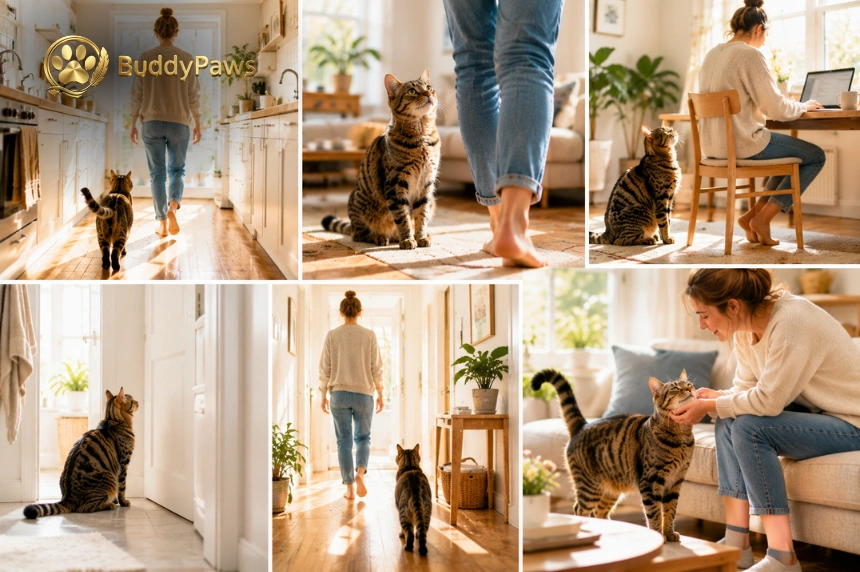
If you often notice that your cat follows you everywhere, there may be several reasons behind this behaviour.
Cats may follow people because of affection, curiosity, routine habits, attention-seeking behaviour, comfort, or environmental changes that influence how they interact with the people they trust most.
Clingy cat behaviour can sometimes make owners wonder why their cats stay close and follow them throughout daily activities.
Cats may follow people for emotional, social, or environmental reasons that help them feel secure and connected naturally.
Cats often develop trust with their owners and may follow them because familiar people create a sense of safety.
Staying nearby can help cats feel emotionally secure and more comfortable within their surroundings during daily routines.
Cats are naturally curious animals that enjoy observing movement and exploring changing environments around them.
Following owners allows them to investigate activities, monitor surroundings, and satisfy their interest in what is happening nearby.
Cats quickly learn to connect owners with food, playtime, affection, and comfort throughout daily interactions.
Positive experiences can encourage them to stay close and follow familiar people regularly as part of their routine behaviour patterns.
Cat attachment signs can appear through behaviours such as following, staying nearby, or seeking constant interaction during daily routines.
Understanding these actions can help owners recognise what their cats may be trying to communicate through their behaviour naturally.
Cats may follow owners because they want attention, playtime, or social interaction during the day.
Seeking engagement is a common behaviour that helps cats strengthen relationships and satisfy their emotional and mental stimulation needs effectively.
Cats often stay close to people they trust because familiar individuals create a sense of comfort and security.
The following behaviour can reflect emotional attachment while showing that your cat feels relaxed and safe in your presence.
Many conversations within a pet community app discuss how cats use everyday behaviours to maintain social bonds with owners.
Following people regularly may be your cat’s way of strengthening relationships and staying connected with trusted companions naturally.
Cats are naturally observant animals that enjoy monitoring movement and changes around them.
Following owners allows them to understand activities happening nearby while satisfying curiosity about daily routines and household interactions effectively.
Cats quickly associate people with feeding schedules, treats, and positive experiences over time.
The following behaviour may sometimes happen because they expect food, rewards, or enjoyable activities based on familiar routines.
Some cats seek emotional comfort by staying close to their owners during different situations.
The following behaviour may sometimes indicate that your cat feels more secure, relaxed, and emotionally supported when near trusted family members.
Many cat owners wonder why is my cat obsessed with them when their pet constantly stays nearby throughout daily activities and routines.
The following behaviour is usually normal, although sudden changes or excessive patterns may sometimes require closer observation and attention from owners.
Cats commonly follow owners around feeding times or before favourite activities because they recognise familiar schedules and routines.
This behaviour is usually normal and reflects learned expectations developed through repeated daily interactions and positive experiences consistently.
If your cat becomes unusually restless or continues following outside normal routines, behavioural changes or environmental stress factors may require closer observation and further attention.
Cats often stay close to trusted owners because familiar people provide comfort, safety, and emotional reassurance during daily interactions.
The following behaviour generally reflects trust, emotional attachment, and a healthy connection with people they feel secure around naturally.
If your cat suddenly becomes overly dependent or shows visible anxiety during separation, emotional stress or behavioural concerns may require additional evaluation and attention.
Cats are naturally curious animals and may follow owners simply to observe movement and understand activities happening nearby.
Curiosity-based following generally represents healthy behaviour and helps satisfy their interest in surrounding events and changing household situations effectively.
If curiosity suddenly becomes obsessive or develops into unusually intense following behaviour, changes in environment or emotional patterns should be observed.
Many discussions within an app for pet lovers explain how cats maintain social bonds through daily interactions and companionship.
Following owners regularly can be a natural behaviour that helps cats strengthen relationships and remain involved in household activities continuously.
If social following gradually changes into clingy behaviour with visible distress signs, emotional or behavioural concerns may require closer observation and support.
Cats may follow owners more frequently after moving homes, introducing new pets, or experiencing routine changes.
Staying close during unfamiliar situations often helps them feel safer, more emotionally secure, and better supported while adjusting to changes successfully.
Persistent nervousness, hiding behaviour, or excessive following during adjustment periods may sometimes indicate stress-related concerns requiring additional attention from owners.
Small changes in the following patterns can happen naturally because of age, environmental adjustments, or daily routine changes.
Minor behavioural variations are generally expected and considered normal throughout different stages of a cat’s life naturally.
A sudden and dramatic increase in following behaviour, especially alongside unusual symptoms, may sometimes require professional veterinary guidance and closer monitoring.
Many pet owners often wonder whether cats love their owners. When they notice affectionate behaviours and close interactions daily.
Building a healthy bond with cats requires trust, consistency, patience, and positive experiences that strengthen long-term relationships naturally.
Cats develop stronger emotional connections when owners regularly spend time interacting through play, grooming, or simple companionship activities.
Consistent interaction helps strengthen trust while making cats feel more comfortable, secure, and emotionally connected over time.
Cats appreciate affection but also value personal space and independence in different situations.
Respecting boundaries helps create trust while allowing cats to feel safe and maintain comfortable interactions without experiencing stress or discomfort.
A secure and enriching environment supports both physical and emotional well-being for cats every day.
Comfortable resting areas, toys, climbing spaces, and peaceful surroundings help improve happiness while strengthening the overall relationship with owners naturally.
Rewarding desired behaviours with treats, praise, or affection helps cats associate interactions with positive experiences.
Positive reinforcement strengthens trust while encouraging healthy communication patterns and improving the bond shared between owners and pets effectively.
Many pet owners share useful experiences and relationship-building tips through communities such as BuddyPaws.
Learning from others can help owners understand feline behaviour better while discovering ways to strengthen emotional connections with their cats successfully.
Cats generally feel more secure when feeding schedules, play sessions, and daily routines remain predictable.
Consistency helps reduce uncertainty while creating a stable environment that supports trust, emotional comfort, and stronger long-term relationships naturally.
Understanding why cats follow their owners can help pet parents better recognise the emotions, needs, and behaviours their pets express every day.
The following behaviour is often a natural sign of trust, comfort, curiosity, affection, or routine-based interaction rather than something unusual.
In many situations, cats stay close because they feel emotionally secure and enjoy being around the people they trust most. However, sudden or excessive changes in behaviour may sometimes indicate stress, environmental adjustments, or other concerns that deserve closer attention.
Observing your cat’s body language and daily habits can provide valuable insights into what they may be trying to communicate.
By creating a supportive environment, respecting boundaries, and spending quality time together, owners can strengthen healthy relationships and build lasting emotional connections with their cats.
Loading blogs...