
Download Now


Share with your community!
Pet Community
Microchipping is one of the simplest yet most effective ways to keep your pet safe.
Unlike collars or tags that can fall off or get lost, a microchip provides a permanent form of identification that stays with your pet for life.
It is a tiny device implanted under the skin that contains a unique ID number that veterinarians or shelters can scan.
This small step can make a huge difference if your pet ever goes missing, significantly increasing the chances of a safe return.
Beyond recovery, microchipping also adds an extra layer of security and peace of mind for pet owners, making it an essential part of responsible pet care today.
Pet microchipping is a simple and safe procedure where a tiny electronic chip is implanted under your pet’s skin. This chip stores a unique identification number that helps veterinarians and shelters identify your pet if they ever get lost.
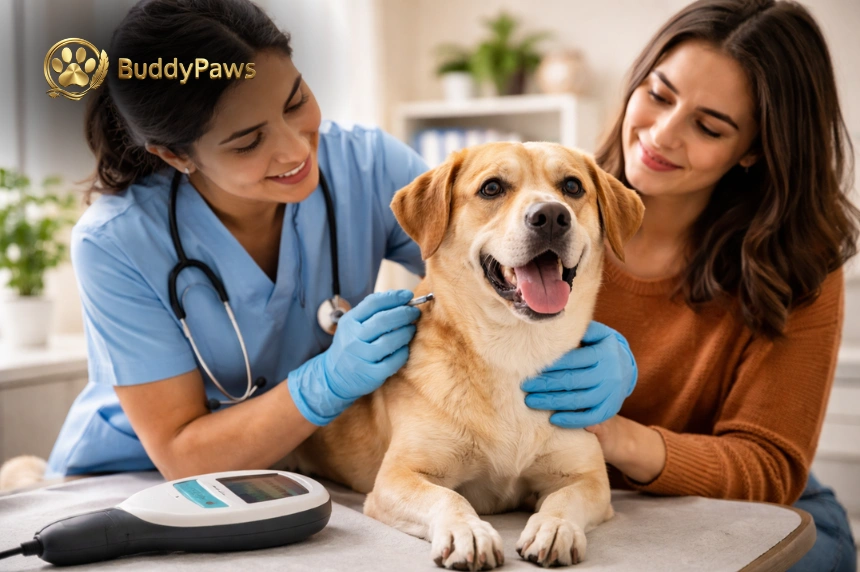
A veterinarian inserts the microchip just under your pet’s skin, usually between the shoulder blades. The procedure is quick, similar to a vaccination, and does not require surgery or anaesthesia.
If your pet is found, a vet or shelter uses a scanner to read the chip. The scanner displays the unique ID number linked to your contact details in a database.
Once the ID is retrieved, the database is accessed to find your contact information. This allows the finder to quickly reach you and safely reunite you with your lost pet.
Microchipping offers a reliable and long-term solution to keep your pet safe and identifiable. It provides peace of mind for owners while ensuring that lost pets have a much higher chance of returning home safely.
Unlike collars or tags that can fall off, a microchip stays with your pet for life. It provides a permanent form of identification that cannot be easily lost, damaged, or removed.
Microchipped pets are more likely to be reunited with their owners quickly. Shelters and veterinarians can scan the chip and access your contact details, speeding up the recovery process significantly.
If your pet is stolen or lost, a microchip helps prove ownership. This makes it easier for authorities or shelters to identify your pet and return it to you safely.
Once implanted, a microchip does not require batteries or regular maintenance. Many pet owners also use a pet community app to stay connected, but the microchip itself works passively for lifelong identification.
Microchips are widely used and can be scanned at most veterinary clinics and animal shelters. This universal system increases the chances of identifying your pet, even if they are found far from home.
Knowing your pet has a secure and permanent ID helps reduce stress. Pet owners feel more confident, especially when travelling or in crowded places, as microchipping adds an extra layer of protection.
Microchipping plays a crucial role in reuniting lost pets with their owners quickly. It provides a reliable identification system that works even when collars or tags are missing, helping ensure a faster and safer return.
When a lost pet is found, shelters or veterinarians can quickly scan the microchip. This instantly reveals a unique ID number, allowing them to begin the process of identifying the pet’s registered owner.
The microchip ID is linked to a secure database containing the owner’s contact details. This makes it easy for shelters or vets to reach out immediately and inform you about your pet’s location.
Many owners also use an app for pet lovers to share updates and alerts about lost pets. Combined with microchipping, this increases visibility and improves the chances of a faster reunion.
Collars and tags can break or fall off, but a microchip stays securely under your pet’s skin. This ensures your pet can still be identified, even without any visible identification.
Microchipped pets are identified faster at shelters, reducing the time they spend in holding areas. Quick identification helps avoid unnecessary delays and allows pets to return home sooner.
Pets with microchips have a higher chance of being returned to their owners. The reliable identification system ensures fewer mix-ups and improves overall success in reuniting lost pets with families.
Before microchipping your pet, it’s important to understand how the process works and what responsibilities come with it. Being informed helps you make the right decisions and ensures your pet stays safe and properly identified.
Microchipping is a simple process performed by a veterinarian. It feels similar to a routine injection and usually doesn’t require anaesthesia. Most pets tolerate it well with minimal discomfort.
A microchip does not track your pet’s real-time location. It only stores an identification number that can be read with a scanner, so it works only when someone scans your pet.
The microchip is only useful if your contact information is current. Always update your phone number and address in the database to ensure you can be reached if your pet is found.
After implantation, you must register the microchip with a reliable database. Without registration, the chip cannot link back to you, making it ineffective in helping reunite you with your pet.
Joining platforms like the buddypaws community can be helpful. It allows pet owners to share information, spread awareness, and get support, increasing the chances of finding lost pets quickly.
Ask your vet to scan the microchip during routine visits to ensure it’s still working properly. Regular checks confirm that the chip is functioning and can be read when needed.
Microchipping is a simple step that delivers long-term protection for your pet. It works quietly in the background yet plays a critical role if your pet ever goes missing.
By providing permanent identification, it increases the chances of a safe and quick reunion.
However, the effectiveness of a microchip depends on responsible ownership, including proper registration and keeping your contact details updated.
While it doesn’t replace collars or GPS trackers, it adds a reliable layer of security that every pet should have.
Taking the time to microchip your pet today can save you from stress and uncertainty in the future, making it an essential part of modern, responsible pet care.
Loading blogs...