
Download Now


Share with your community!
Pet Community
Not every pet has to be a dog or a cat. Around the world, many people are choosing unusual legal pets that stand out and offer a completely different companionship experience.
From tiny primates to exotic reptiles, these animals can be both fascinating and rewarding to own when cared for properly.
The key is understanding local laws, habitat needs, and long-term responsibilities before bringing one home.
While these pets may seem unconventional, many are perfectly legal in multiple countries under specific regulations.
In this guide, we’ll explore 10 unusual pets you can legally own and what makes each one a unique addition to your life.
An unusual pet is typically an animal you don’t see in everyday households, often due to its exotic background or specialised care needs. Still, rarity doesn’t always mean restriction.
Many governments permit legal exotic pets if they are safe to own and don’t threaten local ecosystems.
Factors like temperament, size, and ease of care often influence these laws. For pet owners, the appeal lies in having something unique, but responsibility matters just as much.
Knowing what qualifies as both unusual and legal helps you choose a pet that fits your lifestyle without crossing any legal boundaries.
Many people today are exploring small exotic pets that are easy to care for as alternatives to traditional companions. These unique animals offer personality, charm, and manageable care requirements for curious, responsible pet owners.
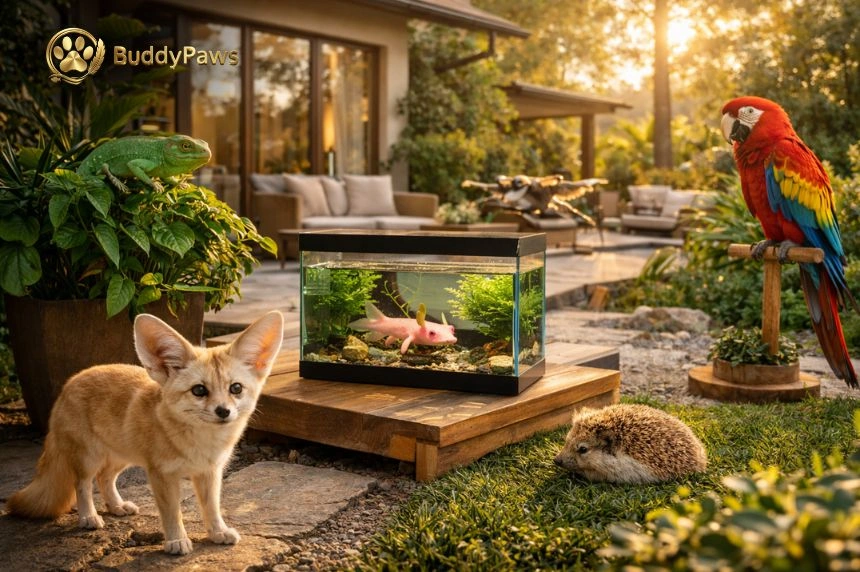
Hedgehogs are small, quiet, and low-maintenance pets. They require a warm enclosure, a simple diet, and gentle handling, making them a great choice for beginners seeking a unique yet manageable companion.
Sugar gliders are social, playful marsupials that bond closely with owners. They need companionship, a balanced diet, and space to glide, but their affectionate nature makes them rewarding pets.
Leopard geckos are hardy reptiles known for calm behaviour. They thrive in simple terrariums and need minimal upkeep, making them ideal for first-time exotic pet owners using an app for pet lovers.
Fennec foxes are energetic and intelligent pets with large ears and playful personalities. They require space, patience, and training but can adapt well in experienced households.
Axolotls are fascinating aquatic pets with unique regenerative abilities. They require clean, cool water and minimal handling, making them visually captivating and relatively easy to maintain.
Tarantulas are quiet, space-efficient pets needing minimal attention. With proper habitat setup and occasional feeding, they are surprisingly easy to care for and suit owners who prefer low interaction.
Mini pigs are intelligent and trainable animals. They require space, mental stimulation, and a proper diet but can form strong bonds and behave similarly to traditional household pets.
Capybaras are gentle, social rodents that are uncommon as pets in many regions. They need large spaces and access to water, making them better suited to experienced owners with outdoor setups.
Chinchillas are soft, active animals that thrive in cool environments. They require dust baths, a proper cage, and a balanced diet, offering a clean and engaging pet experience.
Hermit crabs are low-maintenance pets perfect for small spaces. They need a humid environment, proper shells, and simple feeding, making them suitable for beginners and younger pet enthusiasts.
Many exotic animals look appealing, but owning one comes with real responsibility. Before choosing a unique companion, it’s important to understand the commitment, care needs, and legal factors involved in raising an exotic pet.
Laws vary by country and state. Some exotic pets require permits or are restricted entirely. Always check local regulations to avoid legal issues and ensure responsible ownership.
Exotic pets often need specific diets, habitats, and environmental conditions. Unlike cats or dogs, their care routines can be complex and require detailed knowledge.
Many exotic animals live longer than expected. Some can live for decades, so you must be ready for a long-term responsibility before bringing one home.
Not all vets treat exotic animals. Finding a qualified exotic pet veterinarian can be challenging, so it’s important to research available care options in advance.
Some exotic pets require large enclosures, temperature control, or outdoor space. Make sure your home can provide a safe and comfortable environment.
Owning an exotic pet comes with legal responsibilities that every owner must understand. Using a pet community app can help you stay informed, connect with experts, and follow the right legal guidelines.
Laws differ across regions, so always check local and state regulations before legally bringing any exotic pet into your home.
Some animals require official permits or licences, ensuring you meet safety and care standards set by authorities for responsible ownership.
Certain exotic species are completely banned due to environmental risks, public safety concerns, or their potential impact on native wildlife.
Transporting exotic pets across borders involves strict documentation, including health certificates and approvals from authorities to ensure legal compliance.
Failing to follow regulations can result in heavy fines, legal trouble, or confiscation of your pet by local authorities.
Caring for unusual pets requires proper knowledge, patience, and commitment. Each species has unique needs, so understanding their habitat, diet, and behaviour is essential for keeping them safe, healthy, and comfortable.
Provide a warm, quiet environment with proper bedding and hiding spots. Feed high-quality food and handle gently to build trust while avoiding stress or sudden environmental changes.
Leopard geckos are among the exotic pets you can own with ease. Maintain a clean terrarium, proper temperature, and balanced diet to ensure their health and comfort.
Keep axolotls in clean, cool water with proper filtration. Avoid frequent handling and monitor water quality regularly to maintain a safe and stress-free aquatic environment.
Chinchillas need a cool, dry space with proper ventilation. Provide dust baths, a nutritious diet, and safe chew items to support their dental health and active lifestyle.
Sugar gliders are social and need companionship. Engage with communities like the Buddypaws community to learn care tips, diet plans, and ways to keep them mentally stimulated.
Choosing an unusual pet can be an exciting and rewarding experience, but it also comes with serious responsibility.
These animals often require specialised care, proper environments, and a clear understanding of legal regulations.
Taking the time to research and prepare ensures both you and your pet can thrive together. From meeting dietary needs to creating safe habitats, every detail matters when caring for exotic companions.
It’s also important to stay informed through reliable sources and communities that support responsible ownership.
When approached with care and commitment, unusual pets can bring unique joy, companionship, and a truly one-of-a-kind bond into your life.
Loading blogs...