

Download Now


Share with your community!
Pet Community
Bonding with a sugar glider takes patience, consistency, and a gentle approach, but the results are worth every minute.
These tiny marsupials are naturally cautious, so earning their trust means learning how they communicate and what makes them feel safe.
In this guide, you’ll find practical sugar glider bonding tips that help you build a calm, positive connection from day one.
Whether you’re working with a young glider or bringing home a shy rescue, simple routines like using bonding pouches, offering familiar scents, and spending quiet time nearby can make a huge difference.
With steady effort and the right techniques, your sugar glider will start to recognize you as a source of comfort, safety, and companionship.
Knowing your sugar glider’s personality helps you build trust and strengthen your bond.
Each glider is unique, so understanding their temperament, preferences, and comfort levels makes bonding smoother and more enjoyable.
Every sugar glider has a distinct temperament; some are bold, while others are shy or cautious.
Spend time quietly watching their reactions, movements, and vocalizations to understand how they naturally respond to new experiences.
Study your glider’s behavior during different times of the day. Notice what excites, scares, or comforts them.
Recognizing their habits and sensitivities helps you interact more gently, reducing stress and encouraging trust.
Sugar gliders communicate through subtle signals. Learn to identify signs of stress, relaxation, or curiosity.
Understanding these cues prevents overwhelming them and supports a positive bonding environment where trust can grow naturally.
Creating a calm environment is essential for bonding with your sugar glider.
A peaceful space reduces anxiety, supports natural behavior, and helps your glider feel safe enough to build trust with you.
Choose a peaceful room where your sugar glider can relax without sudden noises or fast movements.
A quiet environment helps them feel secure, making bonding interactions calmer and more successful.
Because sugar gliders are nocturnal pets, use dim lighting during active hours to maintain comfort.
Soft, low light supports instincts and keeps your glider relaxed while exploring and bonding.
Sugar gliders thrive in stable temperatures. Avoid drafts, extreme heat, or dryness.
Consistent warmth and humidity help reduce stress, keeping your glider comfortable and more open to trust-building interactions.
Place items carrying your scent in their enclosure. Familiar smells reassure sugar gliders and help them gradually recognize you as safe, making each bonding session more comfortable and productive.
Consider using an app for pet lovers to track habits, routines, and comfort patterns.
Organized care tools help you understand your glider’s needs, making the environment calmer and bonding easier.
Building trust with your sugar glider takes patience and consistency. Following daily routines and applying simple sugar glider bonding tips helps your glider feel secure, encouraging positive interactions and stronger companionship.
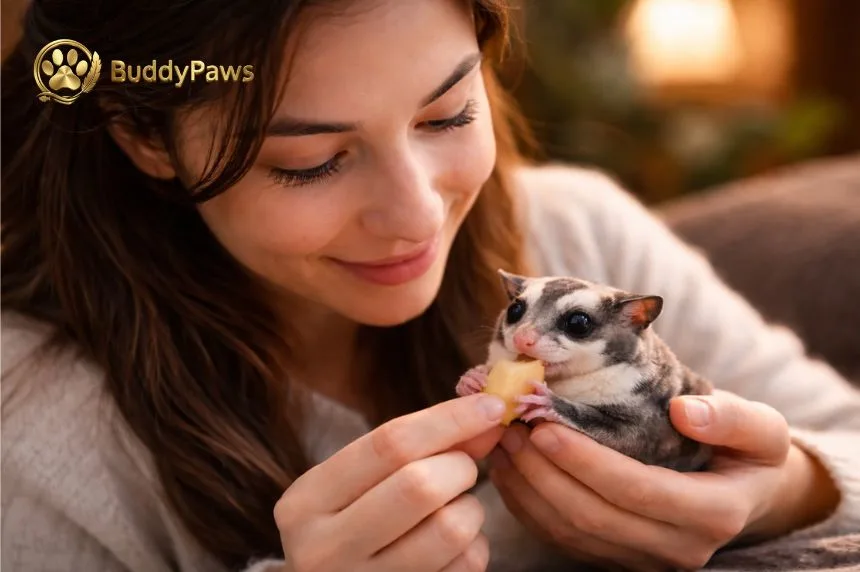
Present small, healthy treats by hand each day. This slow, gentle approach teaches your glider to associate your presence with safety and rewards, strengthening trust in a comfortable, positive way.
Using BuddyPaws to log interactions helps you understand your glider’s comfort levels. Tracking patterns makes bonding easier, ensuring each daily routine supports trust-building and matches your glider’s unique behavior.
Sit calmly beside the enclosure to let your glider observe you. This consistent, non-intrusive presence teaches them you’re safe, helping build trust through familiarity and predictable daily interactions.
Speak softly and move slowly around your glider each day. Quiet, predictable actions help reduce stress, allowing your glider to feel more comfortable and open to bonding opportunities.
Carry your sugar glider in a bonding pouch for short periods. This close contact provides warmth and familiarity, helping your glider feel secure and deepening trust through gentle, consistent exposure.
Using a bonding pouch is one of the easiest ways to help your sugar glider feel secure. These simple techniques support calm interaction, gradual trust, and relaxed daily bonding experiences.
Begin with brief pouch sessions to avoid overwhelming your glider. Quiet environments and slow movements help them feel safe, creating a positive foundation for long-term trust-building and comfort.
Select a soft, breathable bonding pouch designed for pocket pets to ensure comfort and safety. Proper materials support airflow, warmth, and a cozy environment that encourages gentle, stress-free bonding.
Wearing the bonding pouch throughout the day allows your glider to learn your scent and rhythm. This regular exposure strengthens comfort, helping them associate you with security and companionship.
Speak gently while carrying the pouch to reassure your glider. Calm, soothing tones build familiarity, reduce anxiety, and help establish trust during each bonding session, encouraging consistent progress.
Allow your glider to leave the pouch at their own pace. Respecting boundaries builds confidence, helping them feel in control, which strengthens comfort and supports healthier, more trusting interactions.
Using treats and scent-based methods can greatly improve bonding with your sugar glider. Just like reading a quail pet care guide, understanding their unique instincts helps create trust through gentle, consistent sensory cues.
Hand-feeding small treats helps your glider connect your presence with something rewarding. This gentle method encourages approachability and strengthens trust as they begin viewing you as a safe, pleasant companion.
Place a clean cloth with your scent inside their sleeping pouch. This method helps them recognize your smell, easing nervousness and encouraging deeper comfort during bonding interactions over time.
Provide treats in moderation to avoid dependence or overly excited behavior. Balanced use encourages calm bonding sessions while supporting healthy habits and long-term trust-building without food-driven stress.
Combine scent familiarity with quiet tones or slow gestures. This holistic approach reassures your glider, helping them feel safe while gradually associating your presence with comfort, care, and reliability.
Using a pet community app lets you track progress, learn tips, and connect with other owners. Sharing experiences helps refine bonding techniques while supporting confidence through helpful, interactive guidance.
Bonding with a sugar glider is a rewarding journey that blends patience, consistency, and an understanding of their sensitive nature.
By using techniques such as scent familiarity, gentle handling, bonding pouches, and positive reinforcement, you create an environment where trust can grow naturally and steadily.
Sugar gliders thrive when they feel safe, heard, and respected, so small daily habits, such as soft talking, slow movements, and predictable routines, make a significant difference in strengthening your relationship.
As you continue practicing these methods, you’ll notice your glider becoming more confident, affectionate, and eager to interact.
With time and dedication, your sugar glider will view you not just as a caretaker, but as a true companion they trust and enjoy being close to.
Loading blogs...