Frog Care Guide
Keeping African dwarf frogs is easier than many new owners expect, and this micro frog care guide walks you through everything you need to know before bringing them home.
These tiny, fully aquatic frogs are active, fun to watch, and thrive in small, well-maintained aquariums.
With the right tank setup, clean water, and a simple feeding routine, they can live long, healthy lives.
This guide breaks down their behavior, habitat needs, and daily care in a way that’s beginner-friendly and easy to follow.
Whether you’re setting up your first frog tank or looking to improve your current setup, you’ll find clear, practical steps to help your African dwarf frogs stay safe, comfortable, and happy.
Understanding how African dwarf frogs behave helps you create a tank where they feel secure and active.
Their movements, routines, and quirks are simple once you know what to look for. These tiny frogs thrive when their environment matches their instincts.
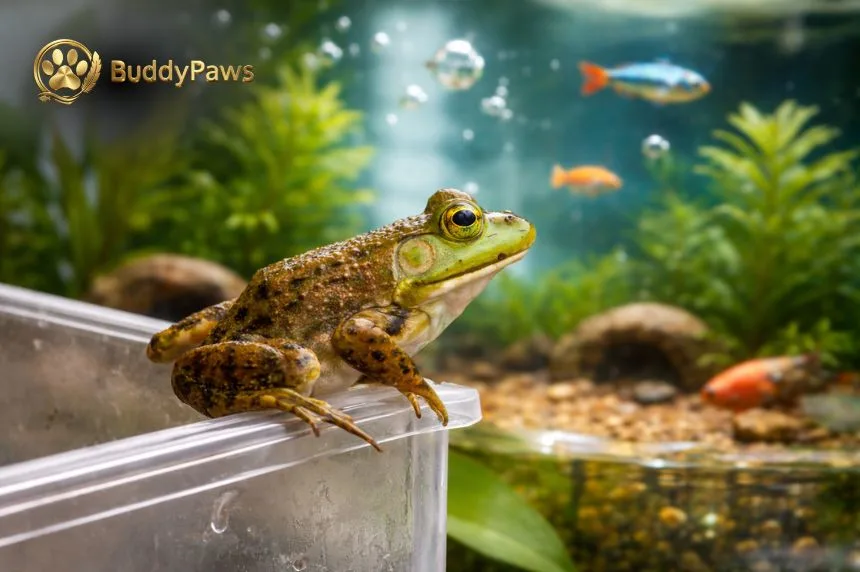
African dwarf frogs enjoy exploring their tank at a slow, steady pace. They swim up for air often, interact with tank décor, and move most during the evening when the environment feels calm.
These frogs rely on water vibrations rather than sharp vision. This is why aquatic frog care focuses on stable water flow, gentle filtration, and calm tank mates that won’t startle them.
African dwarf frogs spend a lot of time resting on plants, rocks, or the substrate. This behavior is normal and helps them conserve energy, especially after active swimming or feeding sessions.
A proper habitat keeps African Dwarf Frogs healthy and active, even in a nano tank setup. Planning your tank size, layout, and equipment early helps prevent stress, illness, and common beginner mistakes.
African Dwarf Frogs need enough swimming room, so a 10-gallon tank is ideal.
It supports stable water conditions, easier maintenance, and space for enrichment. Larger volumes reduce harmful parameter swings and stress.
These frogs are surprisingly good climbers, so a tight lid prevents escapes.
Choose mesh or ventilated covers to ensure airflow while maintaining humidity. A secure top keeps your frogs safe and comfortable.
Avoid strong currents, as these frogs prefer calm water. A sponge filter works best, offering quiet biological filtration without stressing them.
Clean water helps prevent infections and promotes long-term health and activity.
Add plants, caves, and décor to help frogs feel secure and stimulate natural behaviors.
Community tips from the BuddyPaws community often recommend silk plants and smooth ornaments to prevent injury and stress.
Consistent parameters reduce health risks. Keep temperatures between 75–80°F and monitor ammonia, nitrite, and nitrate levels.
Stable, conditioned water supports good appetite, active behavior, and long-term wellness in your frogs.
Regular maintenance keeps African Dwarf Frogs healthy, active, and stress-free.
A clean tank supports stable water parameters, prevents harmful bacteria buildup, and ensures your frogs thrive in a safe, well-balanced aquatic environment.
Weekly 20–30% water changes help amphibian beginners maintain stable conditions. Removing waste and replenishing clean water prevents toxin buildup, supports the nitrogen cycle, and keeps the frogs’ habitat consistently healthy.
Use a gravel vacuum to remove debris trapped in the substrate. Regular cleaning reduces ammonia sources, prevents unpleasant odors, and helps maintain reliable water chemistry for long-term frog health and comfort.
Rinse filter media in old tank water instead of tap water to preserve beneficial bacteria. This protects biological filtration, stabilizes water parameters, and reduces the risk of stress or illness in your frogs.
Gently remove algae from glass and décor to preserve visibility and water quality. Using aquarium-safe tools prevents damage and supports safer environments, often shared through helpful tips in a pet community app.
Test your water for ammonia, nitrite, nitrate, and pH. Regular checks allow early detection of problems, helping you maintain a clean, stable, and comfortable environment for your African Dwarf Frogs.
Feeding African Dwarf Frogs correctly ensures healthy growth, smooth digestion, and long-term well-being.
A balanced diet, proper feeding schedule, and suitable food types help mimic their natural habits and support a thriving aquatic lifestyle at home.
Provide frozen bloodworms, brine shrimp, and high-quality frog pellets. Rotating foods ensures balanced nutrition, prevents boredom, and helps your frogs maintain strong energy levels and healthy immune systems.
Feed your frogs once daily or every other day, depending on age and activity. A consistent routine supports digestion and fits perfectly with any micro frog care guide focused on long-term health.
A shallow feeding dish keeps food contained and prevents it from sinking into gravel. This reduces waste, maintains water clarity, and makes it easier to monitor your frog’s appetite and health.
Discard leftover food within 20 minutes to prevent water contamination. This small habit protects water quality, reduces bacterial growth, and helps create a cleaner, safer environment for your frogs.
Observe your frogs during feeding to understand their appetite. If they consistently leave food behind, reduce portions. If they eagerly finish meals, consider offering a little more while maintaining balance.
African Dwarf Frogs are generally hardy, but they can still experience health issues if their environment or diet isn’t properly managed.
Just like any prairie dog pet guide emphasizes prevention, understanding risks early helps keep your frogs thriving and stress-free.
Bloating occurs when frogs retain excess fluid due to poor water quality or internal infections. It leads to swelling, discomfort, and difficulty swimming, making early detection crucial for their well-being.
How to prevent: Maintain clean water, perform regular tank changes, avoid overfeeding, and monitor ammonia levels closely.
White fuzzy patches often indicate fungal growth caused by dirty water, weakened immunity, or unhealed injuries. These infections spread quickly and require immediate attention to protect your frog’s health.
How to prevent: Keep water parameters stable, avoid sharp décor, and quarantine injured frogs until healed.
Loss of appetite signals stress, poor water conditions, or illness. Frogs may hide, become inactive, or ignore food, making monitoring essential—especially when using an app for pet lovers to track habits.
How to prevent: Offer varied foods, maintain ideal temperatures, and reduce tank stressors like strong currents or aggressive tankmates.
A serious bacterial infection causing reddened limbs, lethargy, and rapid decline. It often stems from contaminated water or weakened immunity, requiring immediate medical intervention for survival.
How to prevent: Keep the tank exceptionally clean, avoid overcrowding, and quarantine new additions before introducing them.
Improper shedding happens when frogs can’t fully remove old skin due to low humidity, poor nutrition, or stressful environments. Stuck skin can restrict movement and increase infection risks.
How to prevent: Maintain proper humidity, provide a balanced diet, and ensure the tank setup supports stress-free living.
Caring for African Dwarf Frogs is a rewarding experience, whether you’re a first-time aquatic pet owner or expanding your home aquarium.
These tiny frogs bring personality, charm, and calm energy to any setup, making them ideal for beginners and seasoned keepers alike.
With the right tank environment, balanced diet, and consistent maintenance routine, your frogs can live long, healthy lives. Always pay attention to their behavior, water quality, and eating habits. Small changes can reveal a lot about their overall well-being.
By staying informed and proactive, you’ll create a safe, thriving habitat that supports every stage of their life. Use this guide as your go-to resource and enjoy the fun of keeping micro frogs at home.
Loading blogs...