

Download Now


Share with your community!
Pet Community
Some childhood stories sound more like legends than real life.
The story of Marcos Rodríguez Pantoja is one of them.
Born in Spain in 1946, Marcos endured a difficult childhood before being sent into the Sierra Morena mountains while still a young boy. After the goatherd caring for him died, Marcos was left largely alone in the wilderness.
What followed became one of Spain’s most famous stories of a feral child.
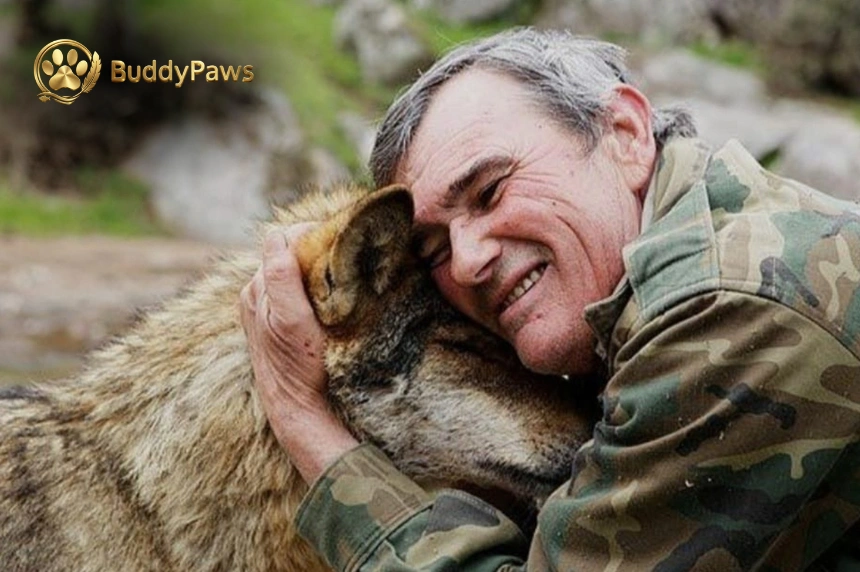
For roughly 12 years, Marcos lived away from normal human society, surviving among the mountains and wild animals. He later described wolves as companions and remembered those years as among the happiest of his life. His experience became the inspiration for the 2010 film Entrelobos, or Among Wolves.
Marcos died in August 2026 at the age of 80, but his extraordinary story continues to raise questions about survival, belonging, animals, and what it truly means to feel at home.
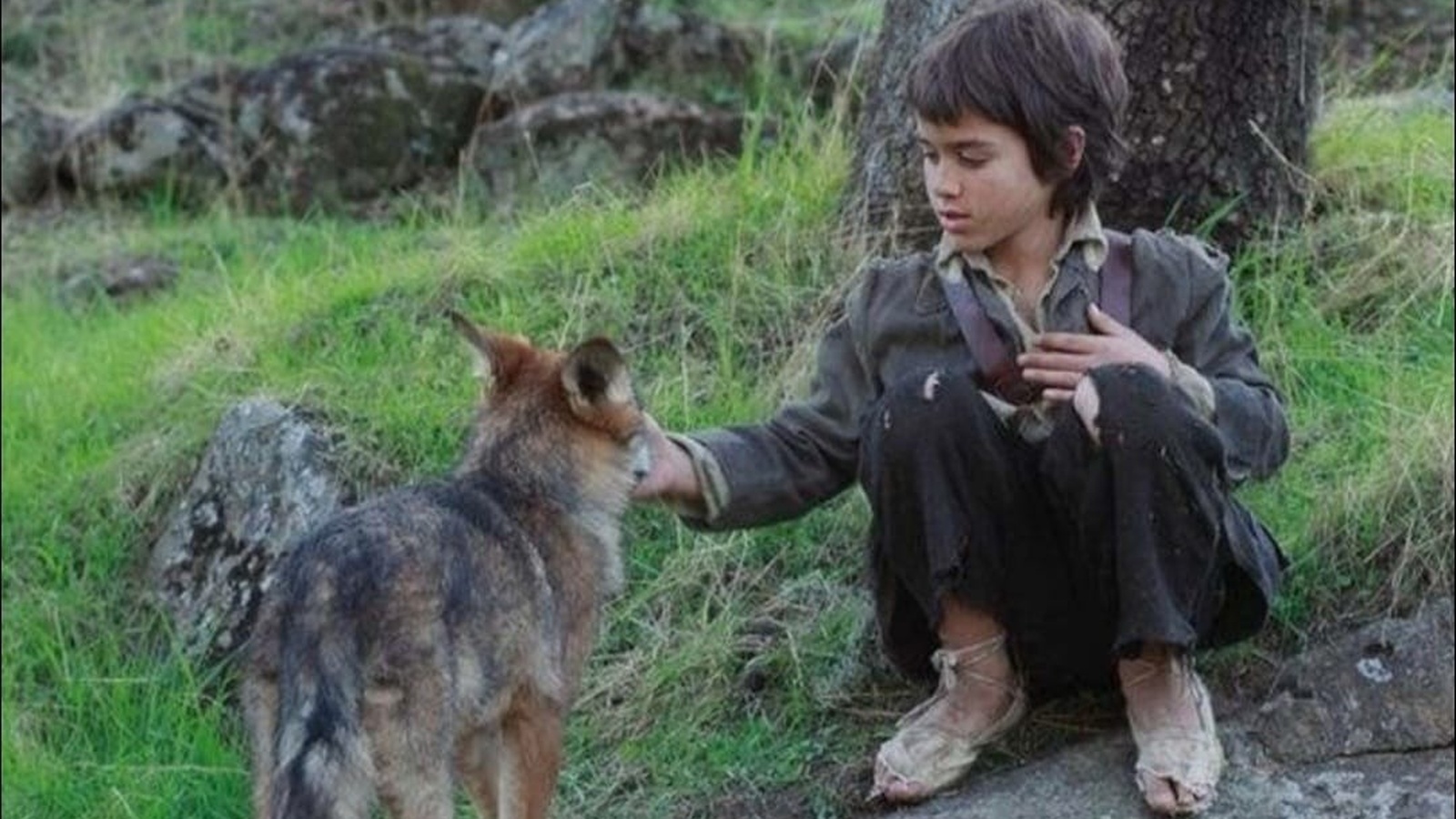
Marcos was born in Añora, Córdoba, Spain, in 1946.
His early childhood was difficult. His mother died when he was young, and later accounts describe an unhappy home life involving poverty and mistreatment.
When Marcos was around six or seven years old, his father sent him to work with an elderly goatherd in the Sierra Morena mountains. The man taught him essential survival skills, including how to understand the landscape and find food.
Then the goatherd died.
Marcos was still only a child.
Instead of returning to ordinary society, he remained in the mountains.
Life in Sierra Morena required Marcos to understand an environment that offered no guarantees.
He later described learning by watching animals. Their behavior could reveal where food was available, where water might be found, and how to survive in the landscape.
He ate what he could find and became skilled at navigating the mountains.
But the part of his story that made him famous was his relationship with wolves.
Marcos later recalled finding wolf cubs and eventually interacting with their mother. According to his own account, the wolf initially frightened him but later accepted his presence and shared food with him.
Over time, Marcos came to describe the wolves as his family.
His story shares an unusual theme with BuddyPaws stories such as Green the Wolf, where the relationship between a human and a wolf challenged simple ideas about how different species can respond to one another.
The phrase “raised by wolves” makes Marcos’s story sound almost mythical.
The reality is more complicated.
Marcos was old enough to have already learned language and basic survival skills before he became isolated. He also had experience from the goatherd who had taught him how to live in the mountains.
So he was not an infant literally raised from birth by wolves.
However, Marcos consistently maintained that he lived near wolves, interacted with them, and regarded them as companions during his years in Sierra Morena. His case later attracted researchers, journalists, filmmakers, and academics interested in feral children and human isolation.
The most accurate way to understand his story is as a child who spent years isolated from ordinary human society while living among wildlife and who remembered wolves as an important part of his survival.
Marcos remained in the mountains until 1965.
By then, he was 19 years old.
For approximately 12 years, he had lived without stable contact with society. He learned to imitate animal sounds and became deeply familiar with the behavior of the creatures around him.
Later accounts describe him mimicking wolves and other wildlife with impressive accuracy.
What sounds like an adventure from the outside was also a life shaped by isolation.
Marcos had adapted to a world of forests, caves, animals, weather, and survival.
Then humans returned.
In 1965, Marcos was found and returned to human society.
The transition was extremely difficult.
Reports describe him as having lost much of his ordinary speech and struggling with social behaviors most people learn gradually throughout childhood.
Modern society also introduced things that were unfamiliar to him.
Cars, crowds, money, work, social expectations, and complicated human relationships were all part of a world he had largely missed.
For Marcos, returning to civilization did not automatically mean returning home.
In later interviews, he repeatedly said that adapting to human society was harder than living in the mountains.
The emotional heart of Marcos’s story is not simply that he survived.
It is that he remembered the wilderness with affection.
He often described his years in Sierra Morena as the happiest period of his life. After returning to society, he experienced exploitation, disappointment, and difficulty understanding the behavior of people around him.
At times, he reportedly wanted to return to the wolves.
But according to his later accounts, that connection could not simply be recreated.
This makes his story especially interesting when compared with what we know about animal memory and recognition.
Animals use scent, routine, past experience, and familiarity to recognize individuals. BuddyPaws explores this further in Can Pets Remember People They Haven’t Seen for Years?, which explains how long term social memories can remain meaningful even after separation.
Wild wolves, however, live within complex social structures, and a human returning years later should never be expected to simply rejoin a pack.
Marcos’s life eventually reached a much wider audience.
Director Gerardo Olivares became fascinated by his experiences and developed the 2010 film Entrelobos, which dramatized Marcos’s childhood in Sierra Morena.
Marcos himself even appeared briefly in the film.
Olivares later spent significant time with him, returning to the landscapes where Marcos had lived and hearing the story directly from the man who had experienced it.
The film helped transform Marcos from a little known Spanish feral child into an internationally recognized example of an extraordinary human wildlife story.
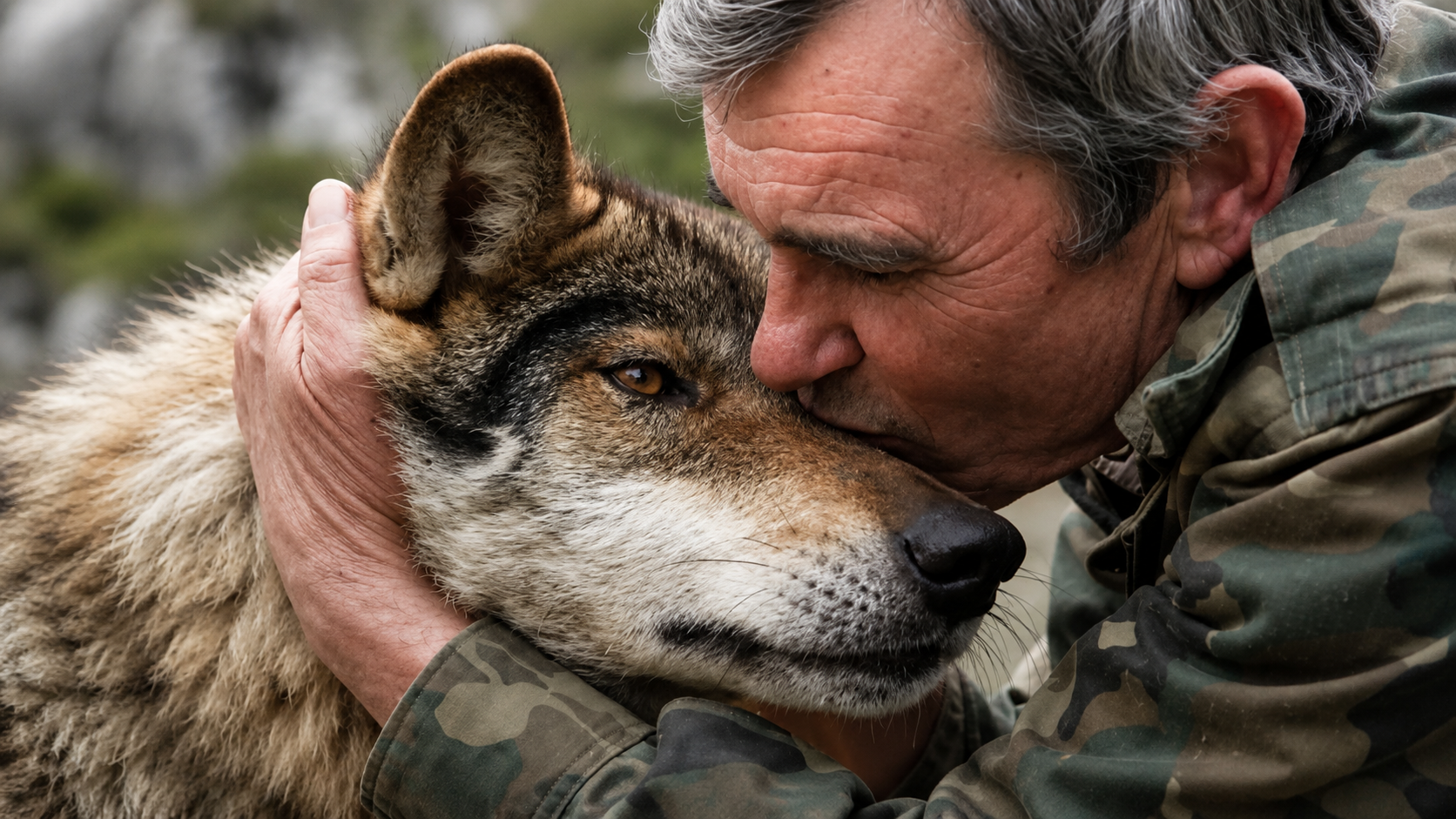
Wolves occupy a strange place in human imagination.
They have been feared as predators, celebrated as symbols of wilderness, and turned into characters in countless myths and stories.
Real wolves are neither villains nor magical guardians.
They are intelligent, social wild animals.
That distinction matters when discussing Marcos.
His experience should not encourage people to approach wolves or attempt to recreate relationships with them.
Instead, it reminds us that the interaction between humans and wildlife can sometimes be more complicated than simple categories such as friend or enemy.
The story of The Wolf Called Romeo provides another example. Romeo was a completely wild wolf who repeatedly approached people and dogs near Juneau, Alaska, creating an unusual relationship with the local community.
Both stories are extraordinary precisely because they are unusual.
Marcos Rodríguez Pantoja died on August 15, 2026, in Ourense, Spain. He was 80 years old.
By then, decades had passed since his life in Sierra Morena.
The wolves he remembered were long gone.
The boy who entered the mountains had lived most of his adult life in human society.
Yet the years among the animals remained central to how people remembered him and how he remembered himself.
His life became the subject of academic research, documentaries, interviews, books, and film.
But underneath all of that attention was the story of a child who had been left in an environment where survival seemed almost impossible.
And somehow, he adapted.
Marcos’s story should not be romanticized as proof that children are better off living outside human society.
His childhood involved abandonment, hardship, and isolation.
But his story does reveal something remarkable about adaptation and connection.
It reminds us that:
His life also demonstrates why animal relationships continue to fascinate us.
Sometimes connection develops in places where nobody expects it.
BuddyPaws has explored that same idea through stories such as Owen and Mzee, where two completely different species formed an extraordinary bond after a period of upheaval.
Marcos spent roughly 12 years away from normal human society.
For most people, those years would sound frightening.
For him, they became memories of freedom, animals, mountains, and a life he said made him happy.
His story is not simply about a boy who lived with wolves.
It is about what happens when a child is forced to survive, adapts to another world, and then discovers that returning to the world of humans can be just as difficult as leaving it.
At BuddyPaws, we celebrate extraordinary stories that help us understand animals and the relationships humans form with them.
Download BuddyPaws today: https://linktr.ee/buddypaws01
Marcos Rodríguez Pantoja spent decades back among people, but the mountains and the wolves remained part of him until the end.
Loading blogs...